















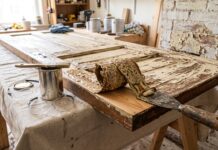

A fresh chip in wood always seems to happen in the most visible spot: the front edge of a table, the corner of a cabinet door, the middle of a hardwood floor, or the top of a deck board where everyone steps. The damage may look small, but once raw wood is exposed, it can collect dirt, absorb moisture, and become harder to hide later.
The repair that works best depends on what was actually chipped. If the broken piece is still there, I always try to save and reattach it first because the grain and color already match. If the piece is missing, the right fix depends on the surface: wax sticks for small finished-furniture chips, hard wax for hardwood floors, wood filler for paint-ready trim, epoxy putty for deeper missing corners, and exterior-grade filler for outdoor wood.
The goal is not just to fill the hole. A good wood chip repair should bond well, sand or level cleanly, match the surrounding color, and be sealed so the damage does not come back after cleaning, foot traffic, sunlight, or moisture.

Quick Answer: What Is the Best Way to Fix a Chip in Wood?
The best way to fix a chip in wood depends on the extent of the damage. If you still have the broken piece, glue it back with wood glue and clamp it. For small chips in finished furniture, use wax sticks or touch-up markers. For deeper chips, use wood filler or two-part epoxy putty. For hardwood floors, hard wax repair kits usually blend best. When working with outdoor wood, apply exterior-grade filler and seal the repair to protect it from moisture.
First Rule: Save the Chipped Piece
If the exact piece of wood broke off and you can find it, keep it. Reattaching the original chip with wood glue often yields the least visible repair because the grain, color, and shape already match.
Best Wood Chip Repair Method by Damage Type
Before you buy a repair kit, identify what kind of chip you have. This table gives you the fastest way to choose the right fix.
| Damage Type | Best Repair Product | Best For |
|---|---|---|
| Clean broken piece still available | Wood glue and clamp | Furniture corners, trim edges, cabinet chips |
| Tiny surface chip | Wood touch-up marker or wax stick | Finished furniture, cabinets, small scratches |
| Medium chip in unfinished wood | Stainable wood filler | Unfinished furniture, raw trim, small gouges |
| Deep missing corner or large chip | Two-part epoxy wood putty | Furniture corners, doors, structural-looking repairs |
| Hardwood floor chip | Hard wax floor repair kit | Floors that need flexible color-matched repair |
| Chipped veneer | Veneer patch, wax filler, or color-matched filler | Thin wood veneer on furniture or cabinets |
| Painted wood trim chip | Wood filler, primer, paint | Baseboards, door casing, painted cabinets |
| Outdoor wood chip | Exterior wood filler and exterior sealer | Decks, patio furniture, sheds, outdoor trim |
Tools and Materials You May Need
You do not need every product for every repair. Choose the items that match your damage type.
- Wood glue
- Painter’s tape or clamps
- Putty knife or plastic scraper
- Wood filler
- Two-part epoxy wood putty
- Hard wax repair sticks
- Wax melting tool or repair iron
- Wood touch-up markers
- Stain pens or gel stain
- 120-grit, 180-grit, and 220-grit sandpaper
- Utility knife or chisel
- Tack cloth or microfiber cloth
- Primer and paint for painted wood
- Clear coat, polyurethane, or exterior sealer
Step 1: Clean and Inspect the Chip
Every good wood repair starts with a clean surface. Dirt, loose fibers, dust, wax, oil, and old finish can stop glue or filler from bonding properly.
- Remove loose splinters with tweezers or a utility knife.
- Do not enlarge the chip unless loose fibers prevent a clean repair.
- Wipe dust away with a dry cloth or tack cloth.
- If the surface is greasy, clean lightly with a mild cleaner and let it dry.
- Test-fit the broken piece if you still have it.
If the chip is damp, rotten, soft, or crumbly, stop and investigate moisture damage. Filling rotten wood without fixing the moisture source is only a temporary cosmetic patch.
Method 1: Reattach the Original Chipped Piece
If the broken piece is intact, this method is usually the cleanest repair. The color and grain already match, so you avoid the hardest part of filler repair: color blending.
How to Reattach a Wood Chip
- Clean the chipped area and the broken piece.
- Dry-fit the chip to make sure it sits correctly.
- Apply a thin layer of wood glue to both contact surfaces.
- Press the chip back into place.
- Wipe away the squeeze-out with a damp cloth.
- Clamp gently or hold with painter’s tape.
- Let the glue cure according to the label.
- Lightly sand or touch up the finish if needed.
Pro Tip: Do Not Over-Clamp
Clamping too hard can squeeze out too much glue or shift a small chip out of place. Use firm, even pressure, not crushing force.
Method 2: Fix a Small Chip in Finished Wood Furniture
Small chips in finished furniture usually do not need heavy sanding or deep filler. A wax stick, fill pencil, or wood touch-up marker may be enough.
This method works best for:
- Small chips on table edges
- Cabinet dings
- Minor chair damage
- Small scratches with exposed lighter wood
- Tiny dents in stained furniture
How to Repair a Small Furniture Chip
- Clean the chip and remove loose fibers.
- Choose a wax stick or marker slightly lighter than the wood.
- Fill the chip with wax or color the exposed wood.
- Blend with a slightly darker shade if needed.
- Buff lightly with a soft cloth.
- Add a clear touch-up finish if the repair looks dull.
For the most natural look, use more than one color. Real wood is rarely one flat shade. A lighter base with thin darker grain lines often looks more convincing than one dark blob of color.
Method 3: Fix a Medium Chip With Wood Filler
Wood filler is best for chips in raw, unfinished, or paint-ready wood. It hardens, sands smooth, and can often be stained or painted. However, stainable does not always mean invisible. Wood filler rarely absorbs stain exactly like real wood.
Use wood filler for:
- Unfinished furniture
- Painted wood before repainting
- Small to medium gouges
- Trim repairs
- Cabinet chips that will be painted
How to Use Wood Filler for a Chip
- Clean the chip and remove loose fibers.
- Press wood filler firmly into the damaged area.
- Slightly overfill the chip so you can sand it flush.
- Let the filler dry fully.
- Sand with 120-grit or 180-grit, then finish with 220-grit.
- Stain, paint, or seal the repair.
If the chip is on a visible stained surface, test the filler and stain on scrap wood first. Some fillers dry lighter, darker, or more opaque than expected.
Method 4: Fix a Deep Chip or Missing Corner With Epoxy Wood Putty
For larger chips, missing corners, damaged furniture legs, and deeper gouges, two-part epoxy wood putty is often stronger than standard filler. It can be shaped before it cures and sanded after it hardens.
Epoxy is best for:
- Large missing chips
- Broken corners
- Door edge damage
- Furniture feet and legs
- Repairs that need more strength than standard filler
How to Repair a Large Wood Chip With Epoxy
- Clean and dry the damaged area.
- Roughen slick surfaces lightly so epoxy can grip.
- Mix the two-part epoxy putty until the color is uniform.
- Press it firmly into the chip.
- Shape it slightly proud of the surface.
- Let it cure completely.
- Sand it flush and refine the shape.
- Prime, paint, stain, or color-match the repair.
Important Epoxy Tip
Leave a little extra epoxy above the surface because you will sand it flush after curing. Do not rely on heavy staining to hide epoxy on a clear-finished surface; it usually needs careful color blending with markers, pigments, paint, or grain lines.
Method 5: Repair a Chip in a Hardwood Floor
Hardwood floors are tricky because they get walked on, cleaned, bumped, and exposed to movement from seasonal humidity changes. A hard, poorly bonded filler may crack or pop out if the floor flexes.
For small to medium floor chips, a hard wax wood floor repair kit is often the best cosmetic solution. These kits include colored wax sticks that are melted into the damaged area, leveled, and blended with the surrounding floor.
How to Fix a Chipped Hardwood Floor With Hard Wax
- Clean the chip and remove dust.
- Choose wax colors that match the floor.
- Melt small amounts of wax into the chip.
- Layer colors to mimic the wood tone.
- Let the wax cool.
- Scrape or level the excess with the kit tool.
- Add grain lines with a darker marker if needed.
- Buff gently with a soft cloth.
If the floor chip is deep, wide, blackened, water-damaged, or located in a high-traffic area, a flooring pro may need to patch, replace a board, or refinish the area.
Method 6: Fix a Chip in Wood Veneer
Wood veneer is a thin layer of real wood glued over a substrate. It is common on furniture, cabinet doors, tabletops, and older pieces. Veneer chips require a gentler approach because there may not be much real wood to sand.
Use caution if the chip is on veneer. Aggressive sanding can go through the thin top layer and make the damage worse.
Small Veneer Chips
For small veneer chips, use wax filler, a color-matched repair marker, or a small amount of tinted filler. Blend carefully and avoid sanding beyond the damaged spot.
Larger Veneer Chips
For larger missing veneer, the best repair may be a veneer patch. This means cutting a small matching piece of veneer, gluing it into the missing area, trimming it flush, and matching the finish.
Veneer patching takes patience. If the piece is valuable, antique, or highly visible, professional furniture restoration may be worth it.
Method 7: Fix Chipped Painted Wood Trim
Painted wood is usually easier to repair than stained wood because the final paint layer hides the filler. This method works well for baseboards, door trim, window casing, painted cabinets, stair risers, and painted furniture.
How to Repair a Chip in Painted Wood
- Scrape away loose paint or splinters.
- Sand the edges lightly.
- Apply wood filler or paintable repair compound.
- Let it dry completely.
- Sand smooth with 220-grit paper.
- Prime the repaired spot.
- Paint to match the surrounding trim.
Do not skip primer if the filler is porous or the old paint is glossy. Primer helps the topcoat blend and prevents dull spots.
Method 8: Fix Chips in Outdoor Wood
Outdoor wood repairs need to survive moisture, sunlight, heat, cold, and movement. Indoor filler can fail quickly outside, especially on decks, patio furniture, fences, sheds, and exterior trim.
For outdoor wood, use an exterior-grade wood filler or exterior epoxy repair product. After shaping and sanding, seal the repair with outdoor-rated stain, paint, polyurethane, spar varnish, or deck sealer depending on the surface.
How to Repair an Outdoor Wood Chip
- Make sure the wood is dry.
- Remove loose fibers, dirt, and failing finish.
- Apply exterior wood filler or exterior epoxy.
- Let it cure fully.
- Sand smooth.
- Seal all exposed wood and repair edges.
- Reapply exterior finish as needed.
If the damaged area is soft, rotten, or crumbling, filler alone is not enough. Remove rot and repair the cause of moisture before patching.
Wood Filler vs Wood Putty vs Epoxy vs Wax
Choosing the wrong product is the fastest way to get a repair that cracks, stains badly, looks obvious, or falls out. Here is the difference.
| Product | Hardens? | Best Use | Avoid Using It For |
|---|---|---|---|
| Wood filler | Yes | Sandable repairs, unfinished or painted wood | Flexible floor repairs or perfect stained finish matching |
| Wood putty | Usually stays slightly pliable | Small nail holes and finished wood touch-ups | Deep chips that need sanding and shaping |
| Epoxy wood putty | Yes, very hard | Large chips, missing corners, stronger repairs | Repairs where natural stain absorption must be perfect |
| Hard wax | Cools firm but remains repairable | Finished floors, furniture touch-ups, color blending | Raw structural repairs or outdoor exposed damage |
How to Color Match a Wood Chip Repair
Color matching is what separates an obvious patch from a professional-looking repair. The filler may fix the shape, but the color and grain make it disappear.
Color Matching Tips
- Start lighter than the surrounding wood.
- Add darker tones gradually.
- Use two or three marker colors instead of one flat color.
- Draw fine grain lines after the base color dries.
- Match sheen as well as color — glossy, satin, and matte reflect light differently.
- Test stain or marker on a hidden area first.
- Step back several feet to judge the repair in normal light.
For stained furniture, the hardest part is matching both the base color and the grain. If the repair looks too flat, add very thin darker lines with a fine-tip marker to imitate grain.
How to Seal the Repair
A chip repair is not finished until it is protected. Bare filler, exposed wood fibers, or color marker alone can wear away, absorb moisture, or look dull.
Choose the finish based on the surface:
- Furniture: Clear furniture touch-up finish, polyurethane, lacquer touch-up, or wax polish.
- Hardwood floors: Floor-safe clear finish or the finish recommended by the repair kit.
- Painted trim: Primer and matching paint.
- Outdoor wood: Exterior stain, paint, spar urethane, or deck sealer.
- Cabinets: Matching paint, clear coat, or cabinet touch-up finish.
Common Mistakes to Avoid
- Using drywall spackle on wood: It is not durable enough for most wood repairs.
- Skipping cleaning: Dust and oils prevent good bonding.
- Underfilling the chip: Filler should be slightly proud before sanding.
- Sanding veneer too aggressively: You can burn through the thin wood layer.
- Using indoor filler outdoors: Outdoor moisture can destroy the repair.
- Choosing one dark marker: Real wood needs layered color.
- Ignoring rot: Filler cannot solve active moisture damage.
- Not sealing the repair: Exposed filler or bare wood can fail faster.
Do Not Patch Structural Damage
If the chip is in a load-bearing beam, stair tread, deck support, railing post, or structural framing, do not treat it as a cosmetic filler job. Structural wood damage should be inspected and repaired properly.
When to Call a Professional
Many chips are easy DIY repairs, but some damage is best left to a professional. A bad repair on an expensive floor, antique table, custom cabinet, or structural piece can cost more to undo later.
Call a pro if:
- The chip is large and highly visible.
- The piece is antique, valuable, or custom-built.
- The repair involves hardwood floor board replacement.
- The wood is rotten, soft, or water-damaged.
- The damage is on stairs, railings, decks, or structural wood.
- You need a perfect stain or finish match.
- The chip is in veneer and the missing area is large.
- You tried a repair and it still looks obvious.
Need Help With a Bigger Wood Repair?
If the damage is on flooring, cabinets, stairs, decks, or custom woodwork, compare local home repair pros before making the problem worse.
Sponsored affiliate link. Contractor availability and services vary by location.
Final Thoughts
Learning how to fix a chip in wood starts with choosing the right repair method. If you still have the broken piece, glue it back. If the chip is small and the wood is already finished, use wax or touch-up markers. If the chip is deeper, use wood filler or epoxy putty. If it is a hardwood floor, hard wax repair kits often blend better than rigid filler. If it is outdoor wood, use exterior-grade products and seal the repair carefully.
The repair does not have to be perfect under a magnifying glass. It only needs to look natural from normal viewing distance, feel smooth to the touch, and be protected from moisture and wear.
Take your time with cleaning, shaping, sanding, color matching, and sealing. That is what turns a visible patch into a repair most people will never notice.
Frequently Asked Questions About Fixing a Chip in Wood
How do you fix a chip in wood?
Clean the damaged area, remove loose splinters, choose the right repair product, fill or glue the chip, sand it smooth, color-match the repair, and seal it. Use glue if you still have the broken piece, wood filler for unfinished or painted wood, epoxy for larger chips, and wax repair kits for finished floors or furniture.
Can I glue a wood chip back on?
Yes. If you still have the original chipped piece and it fits cleanly, wood glue and a clamp often create the best repair because the grain and color already match.
Is wood filler or wood putty better for chips?
Wood filler is usually better for chips that need sanding, painting, or staining. Wood putty is better for small touch-ups, nail holes, or finished surfaces where a flexible cosmetic fill is enough.
What is the best filler for a large chip in wood?
Two-part epoxy wood putty is often best for large chips, missing corners, or deeper repairs because it cures hard, can be shaped, and is stronger than standard filler.
How do you fix a chip in stained wood furniture?
For small chips, use wax sticks or touch-up markers. For deeper chips, use filler or epoxy, then color-match with stain markers and fine grain lines. Finish with a clear protective coat that matches the sheen.
How do you fix a chip in a hardwood floor?
For small to medium chips, use a hard wax floor repair kit. Melt color-matched wax into the chip, level it, add grain detail if needed, and buff. Larger or water-damaged floor chips may require board replacement or professional repair.
Can I use spackle to repair chipped wood?
Spackle is not the best choice for most wood repairs. It is made for walls, not durable wood surfaces. Use wood filler, epoxy, wax, or paintable wood repair compound instead.
How do you fix a chip in wood veneer?
Small veneer chips can be filled with wax or color-matched filler. Larger missing veneer usually needs a veneer patch. Avoid aggressive sanding because veneer is thin and easy to sand through.
How do you fix chipped painted wood trim?
Remove loose paint, sand lightly, fill the chip with wood filler, let it dry, sand smooth, prime, and repaint. Primer helps the repair blend with the surrounding painted surface.
How do you repair a chip in outdoor wood?
Use exterior-grade wood filler or exterior epoxy, let it cure, sand it smooth, and seal it with outdoor-rated paint, stain, polyurethane, or deck sealer. Do not fill over rotten or wet wood.
Will wood filler take stain like real wood?
Not always. Even stainable wood filler may absorb stain differently than real wood. Test first and use touch-up markers or grain lines to improve the match.
When should I call a professional for chipped wood?
Call a professional if the chip is in expensive hardwood flooring, antique furniture, custom cabinetry, stairs, railings, decks, structural wood, or if the damage includes rot or water damage.