


















Last winter, my heating bills skyrocketed, and every time I walked past the front door, I could feel a freezing draft blowing across the tile floor. During a heavy rainstorm, I noticed water seeping in along the bottom of the door, creating a wet streak that reached halfway across the entryway. I had a massive gap under front door threshold, and the old wood front door threshold was completely rotted and warped.
At first, I considered a simple front door threshold repair, maybe some caulk and a new rubber strip. But when I pulled up the old threshold, I saw the subfloor was starting to soften. Hiring a handyman to install a full front door threshold would have cost $400–$600. Instead, I decided to tackle the front door threshold replacement myself. I upgraded to an adjustable front door threshold and added a proper front door threshold seal. The entire job took one Saturday afternoon and cost me under $120. The drafts disappeared, water no longer enters, and my heating bills dropped noticeably.
I am sharing my complete DIY homeowner guide so you can do the same. Whether your threshold is leaking, letting in cold air, or just plain ugly, replacing it is one of the easiest and highest-ROI home improvements you can make.
The Freezing Draft That Cost Me Hundreds
A worn or missing front door threshold is more than an annoyance — it is a direct highway for cold air, water, insects, and energy loss. In my case, the gap under the front door threshold was letting in 20–30 cubic feet of cold air every minute. That single leak added hundreds of dollars to my winter heating bills and created a constant cold spot in the entryway.
Water intrusion worsened it. Every heavy rain pushed moisture under the door, rotting the wood subfloor and encouraging mold. I realized I was facing a repair front door threshold job that would soon turn into a much bigger (and more expensive) floor repair if I waited. Doing the job myself saved me money and gave me full control over the seal’s quality.
Front Door Threshold Repair vs. Replacement
Sometimes a simple repair is enough. If the threshold is still structurally sound but the rubber sweep or weatherstripping is worn, you can often fix it with a new door sweep and fresh caulk. But if the wood is soft or cracked or the metal is bent and corroded, a full front door threshold replacement is the only lasting solution.
In my case, the wood front door threshold was spongy, and the vinyl cap was missing pieces. Water had wicked into the subfloor, so I had no choice but to replace the entire assembly. The good news is that replacement is beginner-friendly and requires only basic tools: a pry bar, a reciprocating saw, a drill, a caulk gun, and a screwdriver.
Choosing the Right Material (Wood vs. Aluminum)
A traditional wood front door threshold looks warm and matches older homes, but it rots quickly if not perfectly sealed. I avoided wood this time because I wanted something that would last.
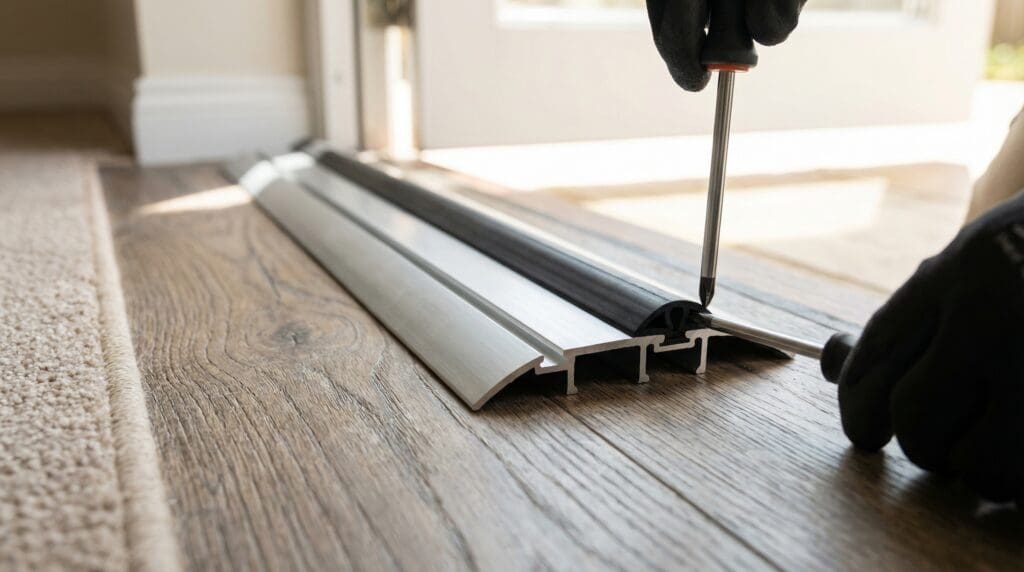
The modern solution is an adjustable front door threshold — usually an aluminum base with a vinyl or rubber cap that you can raise or lower with adjustment screws. This design lets you create a perfect seal against the bottom of the door, no matter how much the door or frame has shifted over time. It is rot-proof, easy to install, and comes in several finishes to match your door hardware.
I chose a 36-inch adjustable aluminum threshold with a heavy-duty rubber seal. It costs $65 and comes with a 10-year warranty against rust and warping.

My Step-by-Step Front Door Threshold Installation Guide
This is a true beginner project. I completed it in about two hours.
- Remove the old threshold: Turn off the power to any nearby outlets. Use a pry bar to lift the old threshold. If it is nailed down, cut the nails with a reciprocating saw. Remove any old caulk or sealant from the subfloor.
- Clean and prep the subfloor: Scrape away any rotted wood or old adhesive. Vacuum thoroughly. If the subfloor is soft, cut out the damaged section and patch it with pressure-treated plywood.
- Measure and cut the new threshold: Measure the exact width between the door jambs. Cut the new threshold to fit using a fine-tooth saw. Test-fit it dry before applying any caulk.
- Apply three thick beads of exterior-grade silicone caulk: Run a generous bead along the subfloor where the threshold will sit. This creates a waterproof barrier and prevents future water intrusion.

- Complete the front door threshold installation: Set the new threshold into the wet caulk. Screw it down securely using the provided screws or stainless deck screws. Adjust the height of the vinyl cap until it just touches the bottom of the door when closed (you want a light seal, not a tight bind).
Adding the Final Front Door Threshold Seal
Even with a perfect threshold, the door sweep is critical. A worn or missing sweep leaves a gap that lets air and water sneak through. I replaced mine with a heavy-duty rubber sweep that screws to the bottom of the door. It compresses against the new threshold, creating an airtight seal.

Frequently Asked Questions
How hard is it to replace a front door threshold?
It is a beginner-friendly DIY project that typically takes 1 to 2 hours using basic hand tools.
How do I fix a gap under my front door threshold?
If you have an adjustable threshold, turn the screws counterclockwise to raise the cap. Otherwise, you may need a new door sweep or a thicker threshold seal.
Do I need to caulk under a door threshold?
Yes, applying a high-quality silicone sealant under the threshold is critical to prevent water from rotting the subfloor.
Final Thoughts from My Own Entryway
Replacing my old, rotted wood front door threshold with an adjustable front door threshold and a proper front door threshold seal was one of the easiest and most effective upgrades I have done. The freezing drafts are gone, water no longer enters during storms, and my heating bills dropped noticeably. The entire project cost less than $150 and took one afternoon.
If you feel cold air at the bottom of your front door or see water stains after rain, do not ignore it. A new threshold is a cheap, fast fix that protects your home and your wallet.
Want More Home Maintenance & DIY Hacks? 🏡
Join our growing community of homeowners. Get our smartest blueprints, tool reviews, and money-saving tips delivered straight to your inbox.
100% Free. No spam. Unsubscribe anytime.