













The best outdoor privacy screens for wind are not always the tallest, prettiest or cheapest panels on Amazon. In a windy yard, the screen has to do two jobs at once: block the view and stay where you put it.

That second part is where most bad purchases happen. A lightweight privacy screen can look perfect in listing photos, then wobble, slide, bend or topple the first time a storm rolls through. Solid panels catch wind like a sail. Tall freestanding screens need a wide base, heavy ballast or real anchors. Fabric screens need proper tension and UV-rated fasteners. Metal screens need stable posts or base plates, not wishful thinking.
That is the exact problem I would solve first: patios, decks, balconies, side yards and backyards where you need privacy but cannot ignore wind. For a broader style-focused comparison, start with our best metal privacy screens article. This page goes deeper on wind resistance, anchoring, surface type and which screen style is safest for your setup.
- Best overall for windy patios: Heavy-duty metal privacy screen panels anchored to concrete, posts or a structural frame.
- Best freestanding option: A planter box privacy screen filled with soil, gravel and plants for extra weight.
- Best for fences: Privacy fence screen mesh attached with UV-rated zip ties or clips, not cheap indoor ties.
- Best for balconies: Perforated or semi-open balcony screen panels with secure rail attachment and landlord/HOA approval.
- Best storm strategy: Use removable, foldable or retractable screens if your area gets severe gusts.
- Biggest mistake: Buying a tall solid freestanding screen with a narrow base and expecting it to survive heavy wind.
Here is the fast buyer version before the full guide. Match the screen to your surface first, then choose the style.
| Option | Best For | Why It Works in Wind | Check Price |
|---|---|---|---|
| Heavy-Duty Metal Privacy Screens | Patios, side yards, modern backyards | Rigid panels can work well when bolted to concrete, posts or a proper frame. | Amazon |
| Planter Box Privacy Screens | Freestanding patio privacy | Soil, gravel and plants add ballast, making the screen more stable than narrow-foot panels. | Amazon |
| Privacy Fence Screen Mesh | Chain-link fences and open railings | Wind can pass through mesh better than solid panels, but fasteners must be UV-rated and secure. | Amazon |
| Corten Steel Privacy Panels | Permanent landscape screens | Heavier steel panels can be very stable when installed on posts or footings. | Amazon |
| Concrete Anchors & Base Weights | Securing screens properly | The anchor system is often more important than the screen itself. | Amazon |
If you are comparing outdoor privacy screens, planter screens, mesh panels, concrete anchors or base weights on Amazon, it is worth checking whether a Prime trial or discounted Prime plan is available before checkout.
Good fit for: metal privacy screens, planter boxes, mesh fence screens, base weights, masonry anchors, outdoor zip ties, patio hardware and other backyard privacy supplies.
Disclosure: Garden Frontier may earn a commission or bounty from eligible Amazon sign-ups. Prime terms, eligibility, pricing and benefits can change.
Why Wind Changes the Privacy Screen Buying Decision
A privacy screen is basically a vertical surface standing in moving air. The more solid and taller it is, the more wind force it has to resist. That is why a screen that works in a protected courtyard may fail on an exposed deck, balcony, hilltop or side yard.
For windy areas, you want at least one of these advantages:
- Weight: Heavy steel, planter boxes, gravel or concrete ballast help resist tipping.
- Anchoring: Bolts, posts, brackets, stakes or structural fasteners keep the screen attached.
- Permeability: Slats, mesh or perforated panels let some wind pass through.
- Lower height: A shorter screen catches less wind than a tall solid panel.
- Removability: Foldable or removable screens can be stored before storms.
- Structural support: Posts set in concrete are stronger than narrow freestanding feet.
Outdoor Privacy Screens I’d Compare First for Wind
1. Heavy-Duty Metal Privacy Screens — Best Overall for Windy Patios
A metal privacy screen for wind is the best starting point for many patios because metal panels can be rigid, durable and attractive without looking like a temporary fix. The key is installation. A metal screen resting on two tiny feet is not the same as a metal screen bolted to concrete or mounted between posts.
Look for powder-coated steel or aluminum panels, wide base plates, multiple mounting holes, compatible posts and a design that is not one giant solid wall. Decorative cutouts can help reduce wind pressure slightly while still providing privacy.
- Best for: Patios, side yards, modern gardens, pool equipment screening and outdoor seating areas.
- Pros: Durable look, strong privacy, good design options, can be anchored securely.
- Cons: Needs real anchoring; solid panels can still catch heavy wind.
Check Heavy-Duty Metal Privacy Screens on Amazon
2. Planter Box Privacy Screens — Best Freestanding Option for Wind
For renters, patios and spots where you cannot drill into concrete, a planter box privacy screen is usually smarter than a narrow-foot freestanding panel. The planter gives the screen a wider base, and once filled with soil, gravel and plants, it adds meaningful weight.
This is one of the best-looking solutions because it combines privacy with greenery. Use upright plants such as ornamental grasses, compact evergreens, bamboo in contained planters or tall annuals to soften the structure.
- Best for: Patios, renters, small yards, deck edges and areas where drilling is not allowed.
- Pros: Adds weight, looks natural, easy to reposition before filling, good for plants.
- Cons: Still not storm-proof; tall plants and trellis panels add wind load.
Check Planter Box Privacy Screens on Amazon
3. Privacy Fence Screen Mesh — Best for Fences and Open Railings
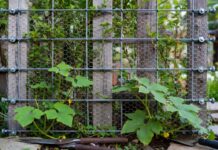
If you already have a chain-link fence, metal railing or open fence structure, privacy fence screen mesh can be a practical wind-friendly option. Mesh does not act like a solid wall because some air passes through it.
The weak point is fastening. Cheap zip ties can become brittle in sun and snap in gusts. Use UV-rated outdoor zip ties, grommeted mesh, proper spacing and a secure fence or railing behind it. The support structure needs to handle the added wind load.
- Best for: Chain-link fences, dog runs, pool fences, balconies with railings and temporary privacy.
- Pros: Affordable, flexible, lets some wind through, easy to trim or replace.
- Cons: Depends on the fence behind it; poor fasteners fail quickly.
Check Privacy Fence Screen Mesh on Amazon
4. Corten Steel Privacy Panels — Best Permanent Landscape Screen
Corten steel privacy panels are heavier and more permanent than many decorative garden screens. They develop a weathered rust-colored patina and can look excellent in modern, desert, prairie, industrial and naturalistic landscapes.
Because they are heavy, they can be excellent in wind when installed correctly. Because they are heavy, they also need proper posts, footings, lifting help and careful placement. This is not the best “move it around the patio” option.
- Best for: Permanent garden screens, side yards, modern landscaping and high-end privacy projects.
- Pros: Heavy, durable, architectural look, strong privacy when properly installed.
- Cons: More expensive, heavy to handle, runoff staining can matter near pale concrete or stone.
Check Corten Steel Privacy Panels on Amazon
5. Retractable Side Awning Screens — Best Removable Wind Strategy
A retractable side awning screen is not the strongest option during heavy wind, but it has one major advantage: you can close it when you do not need it. For light breeze and occasional privacy, that can be better than leaving a tall screen exposed 24/7.
Use this type only where you can mount it securely to a wall and receiver post. Retract it before storms, strong gusts or when you leave the home for extended periods.
- Best for: Patios, decks and seating areas needing occasional privacy from one side.
- Pros: Retractable, clean look, good for temporary privacy and sun blocking.
- Cons: Not for heavy wind; fabric can tear or stress mounts if left open during gusts.
Check Retractable Side Privacy Screens on Amazon
Comparison Table: Which Privacy Screen Handles Wind Best?
| Screen Type | Wind Strength | Best Surface | Must-Have Detail |
|---|---|---|---|
| Anchored metal screen | High when installed correctly | Concrete, posts, structural frame | Base plates, bolts, posts or footings |
| Planter box screen | Medium to high with enough ballast | Patio, deck, renter spaces | Wide planter filled with heavy material |
| Fence screen mesh | Medium if support fence is strong | Chain-link fence, railing | UV-rated ties and grommets |
| Corten steel panel | High when post-mounted | Landscape beds, permanent installations | Posts set in concrete |
| Retractable side awning | Low to medium only when open | Wall-mounted patios | Retract before wind |
How to Secure an Outdoor Privacy Screen from Wind
The screen is only as wind-resistant as the installation. If the anchor point is weak, the best panel in the world is still a hazard.
Concrete Patio
For concrete, use the manufacturer’s recommended hardware or suitable masonry anchors. Mark carefully, drill clean holes, blow out dust and tighten base plates evenly. Do not install into cracked, thin or crumbling concrete without professional help.
Deck
Do not simply screw a tall screen into deck boards and hope for the best. Boards are not structural enough for heavy wind loads. Fasten into framing, blocking or posts, and consider professional help if the screen is tall or heavy.
Pavers
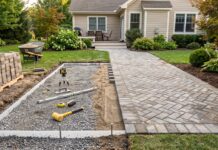
Loose pavers are not a reliable anchor for a tall screen. A freestanding planter screen or weighted base may be safer. For permanent screens, install proper footings beneath the paver area.
Soil or Lawn
For soil, use posts set in concrete or ground anchors designed for the load. Short garden screens can use stakes, but tall privacy panels need more serious support.
Balcony
Use balcony screens only if your building, HOA or landlord allows them. Do not attach anything that could fall onto people below. For windy balconies, choose breathable mesh or low-profile panels rather than tall solid screens.
If your screen will be installed on concrete, pavers, decking or a windy side yard, get the right hardware before you start drilling.
Best Privacy Screen for a Windy Balcony
For a windy balcony, avoid tall solid freestanding screens unless they are specifically allowed and securely attached. A balcony is exposed, elevated and risky because anything that fails can fall below.
The safest choices are usually breathable balcony mesh, shorter railing-mounted panels or planter-based screens that stay below railing height. Always check building rules first. In many apartments and condos, exterior balcony screens are regulated by HOA, landlord or fire-code rules.
Best Privacy Screen for a Windy Patio
For a patio, the best choice is usually an anchored metal screen or a heavy planter box screen. If you own the home and have a good concrete slab, bolted metal panels can be very effective. If you rent or cannot drill, planter-based screens are more flexible.
Keep the screen lower if your patio is exposed. A 4-foot or 5-foot screen often survives better than a 6-foot solid wall, especially when paired with shrubs or ornamental grasses.
Best Privacy Screen for a Windy Fence
If you already have a fence, mesh privacy screen is often the easiest upgrade. It gives instant privacy, reduces visibility and still allows some wind through. The fence must be strong enough, and the screen must be attached evenly across its full length.
A common mistake is attaching mesh only at the corners. Wind then pulls and flaps the middle sections until ties fail. Fasten along the top, sides and bottom with outdoor-rated ties or clips.
When to Hire a Pro
Hire a pro when the screen is tall, permanent, attached to a wall, installed near a property line, mounted on a deck, or placed in a high-wind exposure area. A contractor can check post depth, footing size, deck framing, setback rules and whether your surface can handle the screen.
A local fence, patio or deck contractor can help anchor metal screens, install posts, pour footings or build a permanent privacy solution that will not wobble every time the weather turns.
Common Buying Mistakes
- Buying a solid sail: Large solid panels catch more wind than slatted, mesh or perforated designs.
- Trusting tiny feet: Narrow freestanding feet are not enough for tall screens in gusty areas.
- Ignoring the surface: Concrete, deck boards, pavers and soil all need different anchoring methods.
- Using indoor zip ties: Sun can make cheap ties brittle fast.
- Going too tall: More height means more wind force.
- Skipping HOA or landlord rules: Balcony and fence screens are often regulated.
- Leaving retractable screens open: Retractable screens should be closed before wind.
- Forgetting storm prep: Decorative screens are not storm shutters.
Final Verdict
The best outdoor privacy screen for wind is usually a heavy-duty metal screen anchored to a strong surface or a planter box privacy screen with enough ballast to resist tipping. For existing fences, privacy mesh with UV-rated fasteners is often the most practical choice. For permanent landscaping, Corten steel panels on proper posts can look excellent and hold up well.
The screen style matters, but the installation matters more. A cheap panel with poor anchoring is a problem. A strong panel on a weak deck board is still a problem. Before buying, decide how the screen will be secured, what surface it will attach to and what you will do when severe wind is forecast.
Frequently Asked Questions About Outdoor Privacy Screens for Wind
What is the best outdoor privacy screen for wind?
The best outdoor privacy screen for wind is usually a heavy-duty metal panel anchored to concrete or posts, or a planter box privacy screen filled with enough weight to resist tipping. Mesh fence screens also work well when attached to a strong fence with UV-rated fasteners.
Can outdoor privacy screens withstand heavy winds?
Some privacy screens can handle normal windy conditions if they are properly anchored, but decorative screens should not be treated as storm-proof. Severe winds can damage or move screens that are too tall, too solid or poorly secured.
How do I keep an outdoor privacy screen from blowing over?
Use concrete anchors, posts set in concrete, wide base plates, weighted planters, ground stakes or structural brackets depending on the surface. The correct method depends on whether the screen sits on concrete, decking, pavers, soil or a balcony.
Are metal privacy screens good for wind?
Metal privacy screens can be good for wind when they are properly installed. Perforated or decorative cutout panels may allow some airflow, while solid panels need stronger anchoring because they catch more wind.
Are freestanding privacy screens safe in wind?
Freestanding privacy screens can be safe in light to moderate wind if they have wide bases, heavy ballast or planter boxes. Tall narrow screens with small feet are more likely to tip.
What is the best privacy screen for a windy balcony?
For a windy balcony, breathable mesh or lower railing-mounted screens are usually safer than tall solid panels. Always check building, landlord or HOA rules before installing anything on a balcony.
Can I attach a privacy screen to a deck?
Yes, but do not rely only on deck boards. Tall screens should be secured to structural framing, posts or blocking. For permanent or tall screens, professional installation is safer.
Can I install a privacy screen on pavers?
Loose pavers are not a reliable anchor for tall screens. Use a weighted planter screen for temporary privacy or install proper footings for a permanent screen.
Is privacy fence screen mesh wind resistant?
Privacy fence mesh can be wind resistant because it allows some air through, but it must be attached to a strong fence with UV-rated ties or clips across the full perimeter.
Should I remove privacy screens before storms?
Yes, remove or secure lightweight, foldable, fabric or retractable screens before severe wind. Heavy permanent screens should still be inspected and maintained before storm season.
Join our home and garden community for outdoor living guides, privacy ideas, patio upgrades and seasonal maintenance tips.
100% Free. No spam. Unsubscribe anytime.