









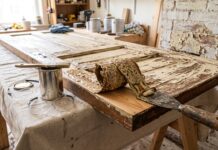

How to build a bookshelf sounds simple until you start deciding shelf depth, board thickness, shelf spacing, wood type, joinery, finishing, and whether the finished piece will sag under real books. A basic bookshelf is still one of the best beginner woodworking projects, but the plan needs to be practical, not just pretty.
The build below is for a clean, freestanding bookshelf that a beginner can make from plywood or 1×12 boards. It is not a built-in wall unit, not a secret door, and not a cabinetmaker showpiece. It is a strong, useful bookcase with realistic dimensions, a clear cut list, beginner-friendly assembly, and wall-anchor safety.

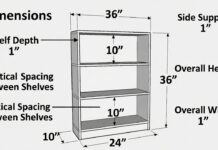
The finished bookshelf in this plan is about 72 inches tall, 32 inches wide, and 11 1/4 inches deep. That size works well for paperbacks, hardcovers, decor, baskets, kids’ books, office storage, and living room display shelves without becoming too wide for beginner joinery.
- Finished size: About 72 in. tall x 32 in. wide x 11 1/4 in. deep
- Difficulty: Beginner to confident beginner
- Build time: One weekend for cutting, assembly, sanding, and finishing
- Best material: 3/4-inch plywood with edge banding or 1×12 pine/poplar boards
- Joinery: Pocket holes, screws with plugs, or dados if you already have the tools
- Safety step: Anchor the finished bookshelf to wall studs
Kreg Pocket-Hole Jig 320
Best for: Beginners who want strong, clean bookshelf joints without learning dados or advanced joinery first. Pocket holes are especially useful for attaching shelves, top, bottom, and face-frame pieces.
DEWALT DWE6423K Random Orbit Sander
Best for: Smoothing plywood edges, easing sharp corners, sanding filled holes, and getting the bookshelf ready for paint or stain.
Clamps for Bookshelf Assembly
Best for: Holding shelf pieces square while glue sets or while you drive screws. A few clamps make the project cleaner and reduce the chance of crooked shelves.
Safety 1st Furniture Wall Straps
Best for: Anchoring the finished bookshelf to the wall. A tall bookcase should not be left freestanding without an anti-tip plan, especially in homes with children, pets, or heavy books.
Bookshelf Dimensions That Actually Make Sense
A beginner bookshelf should be narrow enough to avoid shelf sag, deep enough for real books, and tall enough to be useful without becoming unstable. The sweet spot for a simple freestanding bookcase is usually 30 to 36 inches wide, 10 to 12 inches deep, and 60 to 72 inches tall.
For this project, use these dimensions:
| Part | Recommended Size | Why It Works |
|---|---|---|
| Height | 72 inches | Tall enough for storage, still manageable for a beginner build. |
| Width | 32 inches | Keeps the shelf span short enough to reduce sag. |
| Depth | 11 1/4 inches | Matches common 1×12 board depth and fits most books. |
| Shelf span | 30 1/2 inches | A good width for 3/4-inch material, especially with a front nosing or face frame. |
Best Wood for a DIY Bookshelf
For a beginner bookshelf, the best material is usually 3/4-inch cabinet-grade plywood or straight 1×12 pine or poplar boards. Plywood is stable and strong, but the edges need banding or trim. Solid boards look cleaner on the edges but can cup, twist, or bow if you buy cheap boards that are not straight.
| Material | Best For | Pros | Watchouts |
|---|---|---|---|
| 3/4-inch plywood | Painted or trimmed bookshelves | Stable, strong, good for shelves and sides | Exposed edges need edge banding or trim |
| Pine 1×12 boards | Budget painted bookshelves | Easy to cut, common at home centers | Can dent, cup, or twist if the boards are poor quality |
| Poplar | Paint-grade furniture look | Smoother than cheap pine, paints well | Costs more than pine |
| MDF | Painted shelves with smooth surfaces | Very smooth and flat | Heavy, dustier to cut, weaker with screws near edges, hates moisture |
| Oak, maple, or birch plywood | Stained bookshelves | Better face veneer and nicer finish potential | Costs more and requires cleaner edge treatment |
For a painted beginner bookshelf, use 3/4-inch plywood for the case and shelves, then hide the front edges with iron-on edge banding or 1×2 trim. It stays straighter than cheap pine and keeps the project predictable.
Materials List
This list builds one freestanding bookshelf about 72 inches tall, 32 inches wide, and 11 1/4 inches deep. Adjust the cut list if you change the width, height, or shelf count.
- One sheet of 3/4-inch plywood, or enough 1×12 boards for sides, shelves, top, and bottom
- One sheet of 1/4-inch plywood or hardboard for the back panel
- 1 1/4-inch pocket-hole screws or wood screws
- Wood glue
- Edge banding or 1×2 trim for exposed front edges
- Wood filler or plugs
- 120-grit and 180-grit sandpaper
- Primer and paint, or stain and clear topcoat
- Anti-tip furniture anchors or wall straps
Tool List
- Circular saw with straightedge guide, track saw, or table saw
- Miter saw or circular saw for shorter crosscuts
- Drill/driver
- Pocket-hole jig, countersink bit, or brad nailer depending on joinery
- Clamps
- Random orbital sander
- Tape measure
- Speed square or framing square
- Level
- Stud finder
- Safety glasses, hearing protection, and dust mask
Wood Glue
Best for: Strengthening shelf joints, trim pieces, and face-frame connections. Screws hold the parts while glue adds long-term strength.
Iron-On Edge Banding
Best for: Covering raw plywood edges when you want a cleaner furniture look without building a full face frame.
Brad Nailer
Best for: Attaching thin trim, back panels, and face-frame details faster than hand nailing. Not required, but nice if you plan to build more DIY furniture.
Bookshelf Cut List
This cut list assumes 3/4-inch material for the sides, top, bottom, and shelves. The outside width is 32 inches. The shelf pieces fit between the two side panels, so they are 30 1/2 inches wide.
| Part | Quantity | Size | Material |
|---|---|---|---|
| Side panels | 2 | 72 in. x 11 1/4 in. | 3/4-in. plywood or 1×12 board |
| Top panel | 1 | 30 1/2 in. x 11 1/4 in. | 3/4-in. plywood or 1×12 board |
| Bottom panel | 1 | 30 1/2 in. x 11 1/4 in. | 3/4-in. plywood or 1×12 board |
| Fixed shelves | 4 | 30 1/2 in. x 11 1/4 in. | 3/4-in. plywood or 1×12 board |
| Back panel | 1 | 72 in. x 32 in. | 1/4-in. plywood or hardboard |
| Front edge trim or banding | As needed | Cut to match exposed edges | Edge banding or 1×2 trim |
Cut both side panels together if possible, then cut shelves with a stop block or repeatable setup. Tiny differences in shelf length can pull the bookcase out of square.
Step 1: Choose Your Shelf Layout
Before cutting everything, decide what will actually sit on the shelves. Paperbacks, hardcovers, storage baskets, photo frames, board games, and office binders do not need the same spacing.
A good starting layout for a 72-inch bookshelf is five open spaces, each roughly 12 to 13 inches tall after accounting for shelf thickness. Leave at least one taller space if you own large art books, binders, or baskets.
- Paperbacks: 8 to 10 inches of clear height
- Hardcovers: 10 to 12 inches of clear height
- Binders: 12 to 13 inches of clear height
- Decor or baskets: 13 to 16 inches of clear height
Step 2: Cut the Side Panels
Cut two side panels at 72 inches long and 11 1/4 inches deep. These two pieces control the height and straightness of the bookshelf, so do not rush them.
If you are using plywood, use a straightedge guide or track saw to keep the cuts clean. If you are using 1×12 boards, inspect the boards first. Reject boards that are badly cupped, twisted, or bowed. A bookshelf is basically a tall box, and crooked side boards make every later step harder.
Step 3: Cut the Top, Bottom, and Shelves
Cut the top, bottom, and four shelf pieces at 30 1/2 inches long by 11 1/4 inches deep. This gives you a 32-inch outside width when the shelves sit between two 3/4-inch side panels.
Label each piece after cutting. Mark the front edge, top face, and position. That small habit prevents confusion during assembly, especially if one side of the plywood looks better than the other.
Step 4: Mark Shelf Locations
Lay both side panels next to each other with the inside faces up. Use a square to mark shelf lines across both panels at the same time. This keeps the shelves level from side to side.
For a simple layout, mark the bottom panel flush with the bottom or raised 2 to 3 inches for a small toe space. Then divide the remaining height into even shelf openings. Keep the top shelf opening a little taller if you want room for decor.
Step 5: Drill Pocket Holes or Predrill Screws
Pocket holes are beginner-friendly because they pull the shelf tight to the side panel and hide most of the screw heads. Drill pocket holes on the underside of each shelf, top, and bottom panel where they meet the side panels.
If you do not use a pocket-hole jig, predrill through the outside of the side panels and drive screws into the shelf ends. Fill the holes later with plugs or wood filler. It is not as clean as hidden pocket holes, but it works for a painted utility bookshelf.
Pocket holes are not the only way to build a bookshelf, but they are one of the easiest ways for beginners to assemble a strong rectangular case without buying a router, dado blade, or biscuit joiner.
Step 6: Assemble One Side First
Lay one side panel flat on your workbench or floor with the inside face up. Apply a thin bead of wood glue to the end of the bottom panel, place it on the marked line, clamp it if possible, and drive the screws.
Repeat with the top panel and shelves. Work from one end to the other, checking that each shelf sits on its layout line. Do not overdrive screws into plywood edges. If the screw sinks too far, the joint can lose strength.
Step 7: Add the Second Side
Once the shelves are attached to the first side, apply glue to the exposed ends of the top, bottom, and shelf pieces. Place the second side panel on top, align each shelf with its layout marks, clamp where needed, and drive the screws.
This is the part where patience helps. If one shelf is slightly off the line, fix it before locking everything down. A crooked shelf is easier to correct now than after the back panel is attached.
Step 8: Check for Square
Measure diagonally from the top-left corner to the bottom-right corner. Then measure from the top-right corner to the bottom-left corner. If the numbers match, the bookcase is square. If they do not, gently push the longer diagonal inward until both measurements are the same.
Do this before installing the back panel. The back panel is not just a cover; it helps lock the bookshelf square and reduces side-to-side racking.
Step 9: Attach the Back Panel
Place the 1/4-inch plywood or hardboard back panel over the rear of the bookshelf. Align the corners carefully. Nail, staple, or screw the back panel around the perimeter and into the shelves.
If the case is slightly out of square, the back panel can help pull it back into shape. Start at one corner, check square again, then fasten the opposite corner. Add fasteners every 6 to 8 inches around the edges and along each shelf line.
Step 10: Add Edge Banding or Front Trim
Raw plywood edges look unfinished. The easiest fix is iron-on edge banding. Apply it to the front edges of the side panels, shelves, top, and bottom, then trim the excess with an edge-banding trimmer or sharp utility knife.
The stronger option is 1×2 front trim. A 1×2 glued and nailed to the front of each shelf hides the plywood edge and helps fight shelf sag. It also gives the bookshelf a more finished furniture look.
| Edge Treatment | Best For | Pros | Watchouts |
|---|---|---|---|
| Iron-on edge banding | Clean modern plywood look | Thin, simple, good for paint or stain | Does not add much strength |
| 1×2 front trim | Stronger shelves and traditional look | Adds stiffness and hides edges | Adds thickness to the front profile |
| Full face frame | Built-in or furniture-style bookcases | Looks polished and adds rigidity | More cuts, more measuring, more finish work |
Step 11: Sand the Bookshelf
Sand sharp edges, filled holes, trim joints, and rough plywood spots. Start with 120-grit, then move to 180-grit before paint or stain. Do not round over edges too aggressively if you want a crisp modern look.
Vacuum the dust and wipe the surface with a tack cloth or lightly damp cloth before finishing. Dust left in corners will show up under paint.
Step 12: Paint, Stain, or Seal
For a painted bookshelf, use primer first, especially on raw wood, plywood edges, and filled screw holes. Then apply two coats of paint. A satin or semi-gloss finish is usually easier to wipe clean than flat paint.
For a stained bookshelf, choose better plywood or solid boards from the start. Cheap construction plywood rarely stains evenly enough for furniture. Test stain on a scrap piece before committing to the whole bookshelf.
Step 13: Anchor the Bookshelf to the Wall
A tall bookshelf should be anchored to the wall. Heavy books, kids climbing, pets bumping the shelf, uneven floors, and open drawers or baskets can all shift weight forward. The U.S. Consumer Product Safety Commission’s Anchor It campaign specifically warns about furniture and TV tip-over risks, including bookcases.
Use a stud finder to locate wall studs, then attach anti-tip straps or brackets according to the hardware instructions. Do not rely only on thin back panel material. Anchor through solid parts of the bookshelf frame where possible.
Official safety reference: CPSC Anchor It.
Even a well-built bookshelf can tip if it is tall, loaded unevenly, or pulled from the front. Anchor it to studs and keep the heaviest books on lower shelves.
How to Stop Bookshelves From Sagging
Sag happens when a shelf is too long, too thin, too weak, or loaded too heavily. Books are heavier than decor, and a shelf that looks fine on day one can slowly bow over time.
For a beginner build, keep shelf spans close to 30 inches when using 3/4-inch plywood or solid boards. Add a 1×2 front nosing if you plan to store heavy hardcovers, textbooks, binders, or dense cookbooks.
- Keep the span shorter: Narrower shelves sag less.
- Use thicker material: 3/4-inch material is better than 1/2-inch for real books.
- Add front trim: A 1×2 nosing stiffens the shelf.
- Add a center divider: A vertical divider cuts the shelf span in half.
- Use a back panel: Fastening shelves to the back panel helps reduce movement.
- Put heavy books low: This also improves stability.
Fixed Shelves vs Adjustable Shelves
Fixed shelves are stronger and easier for beginners because they help square the whole bookshelf. Adjustable shelves give you more flexibility, but they require shelf-pin holes and careful spacing.
If this is your first bookshelf, build fixed shelves. If you already own a shelf-pin jig and want flexibility, make the middle shelves adjustable while keeping the top, bottom, and at least one center shelf fixed for strength.
| Shelf Type | Best For | Pros | Cons |
|---|---|---|---|
| Fixed shelves | Beginner builds and heavy books | Strong, simple, helps square the case | Shelf spacing cannot change later |
| Adjustable shelves | Mixed storage and changing needs | Flexible spacing | Requires shelf pins and careful drilling |
Bookshelf Cost Breakdown
The cost depends heavily on wood quality and which tools you already own. A painted pine or plywood bookshelf is much cheaper than a stained hardwood plywood bookcase with trim and premium hardware.
| Item | Typical Budget Range | Notes |
|---|---|---|
| Plywood or boards | $60 to $160+ | Depends on pine, poplar, birch plywood, oak plywood, or premium panels. |
| Back panel | $15 to $40+ | 1/4-inch plywood or hardboard is enough for most simple bookcases. |
| Screws, glue, filler | $15 to $40+ | Pocket-hole screws cost more than basic wood screws but are cleaner for this build. |
| Trim or edge banding | $10 to $50+ | 1×2 trim adds strength; edge banding keeps a slimmer profile. |
| Paint, stain, or finish | $20 to $70+ | Primer plus paint is usually easiest for beginners. |
| Anti-tip anchors | $8 to $25+ | Do not skip this on a tall bookshelf. |
Common Beginner Mistakes
- Building too wide: Wide shelves sag faster under books.
- Using thin material: 1/2-inch shelves are not ideal for heavy books.
- Skipping the back panel: The back helps square and stiffen the case.
- Not checking for square: A small mistake becomes obvious when the shelf stands up.
- Buying crooked boards: Twisted pine makes a simple project frustrating.
- Skipping sanding: Paint does not hide rough edges as well as people hope.
- Forgetting wall anchors: A tall bookshelf needs anti-tip hardware.
- Putting heavy items high: Keep heavy books on lower shelves.
Beginner Variations
Short Bookshelf
Make the side panels 36 to 48 inches tall instead of 72 inches. This is easier to build, easier to move, and less intimidating for a first project.
Wide Low Bookshelf
Build a wider case only if you add center dividers or thicker shelf supports. Long horizontal shelves without support will sag under books.
Bookshelf Wall
For a bookshelf wall, build separate cases and fasten them together instead of trying to build one massive unit. Separate boxes are easier to cut, move, square, and install.
Built-In Look
To make this freestanding bookshelf look more built-in, add baseboard-style trim at the bottom, a top cap, side filler strips, and caulked seams where it meets the wall.
Frequently Asked Questions
What is the easiest way to build a bookshelf?
The easiest way is to build a simple rectangular bookcase from 3/4-inch plywood or 1×12 boards, use pocket holes or predrilled screws, attach a back panel to keep it square, and finish it with paint or edge trim.
What wood should I use to build a bookshelf?
For most beginner bookshelves, 3/4-inch plywood is the best balance of strength, stability, and cost. Pine boards are budget-friendly, poplar paints well, and hardwood plywood is better if you want a stained finish.
How deep should a bookshelf be?
A depth of 10 to 12 inches works for most books. This project uses 11 1/4 inches because that matches the actual depth of common 1×12 boards and is deep enough for most household books.
How wide should bookshelf shelves be?
For 3/4-inch material, keep shelf spans around 30 to 32 inches for a beginner bookshelf. Wider shelves need thicker material, a center divider, or front trim to reduce sag.
How many shelves should a bookshelf have?
A 72-inch-tall bookshelf usually works well with four fixed shelves plus the bottom shelf, creating five usable openings. Adjust the spacing based on paperbacks, hardcovers, binders, baskets, or decor.
Should bookshelf shelves be fixed or adjustable?
Fixed shelves are stronger and easier for beginners. Adjustable shelves are more flexible but require shelf-pin holes and careful drilling. Keep at least some shelves fixed for strength.
Do I need a back panel on a bookshelf?
Yes, a back panel helps square the bookshelf, reduces side-to-side racking, and gives the piece more strength. Even a thin 1/4-inch plywood back makes a noticeable difference.
How do I stop bookshelves from sagging?
Use 3/4-inch material, keep shelf spans shorter, add 1×2 front trim, attach the back panel securely, and place heavy books on lower shelves. A center divider also helps on wider shelves.
Can I build a bookshelf without a table saw?
Yes. You can build this bookshelf with a circular saw and a straightedge guide. Many home centers can also break down plywood into rough sizes, but you still need accurate final cuts.
Can I build a bookshelf with screws only?
You can, but glue plus screws is stronger. Pocket holes hide the screws better, while visible screws through the side panels can be filled or plugged before painting.
How much does it cost to build a bookshelf?
A basic DIY bookshelf often costs around $120 to $300 for materials depending on wood quality, trim, paint, hardware, and what supplies you already have. Tool purchases are separate.
Should I paint or stain a DIY bookshelf?
Paint is easier for beginners because it hides filled holes, mixed materials, and plywood edges. Stain works best when you use better hardwood plywood or attractive solid boards.
Do I need to anchor a bookshelf to the wall?
Yes. A tall bookshelf should be anchored to wall studs with anti-tip hardware, especially in homes with children, pets, heavy books, or uneven floors.
Final Verdict
A bookshelf is a smart beginner woodworking project because the shape is simple, the result is useful, and the mistakes teach real skills: cutting square, choosing straight material, controlling shelf sag, sanding cleanly, and finishing without rushing.
The best version for most beginners is a 72-inch-tall, 32-inch-wide freestanding bookshelf made from 3/4-inch plywood with a thin back panel and either edge banding or 1×2 front trim. That size is big enough to matter but not so wide that the shelves start bowing under normal books.
Do not overcomplicate the first build. Keep the shelf span reasonable, use glue and screws, add the back panel, sand before finishing, and anchor the finished bookshelf to the wall. That is the difference between a weekend project and a bookcase you actually trust with heavy books.
For a beginner DIY bookshelf, start with 3/4-inch plywood, a pocket-hole jig, clamps, wood glue, a random orbit sander, and anti-tip furniture anchors. That setup gives you strong joints, cleaner assembly, and a safer finished bookcase.
Join Garden Frontier for practical home improvement, woodworking, garden projects, tool picks, and weekend DIY ideas.
100% free. No spam. Unsubscribe anytime.