


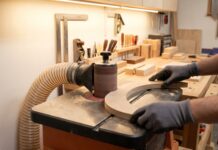














A spindle sander is one of those woodworking tools that feels unnecessary until you start sanding curves by hand. Then it suddenly makes perfect sense.
If you cut curved parts with a bandsaw, jigsaw, scroll saw, router template, CNC, or coping saw, a spindle sander can clean up the marks faster and more evenly than hand sanding. It is especially useful for inside curves, concave edges, toy parts, signs, chair parts, templates, routed shapes, and small decorative pieces.
But it is not a replacement for every sander in the shop. A spindle sander is not a planer, jointer, random orbit sander, belt sander, or wide drum sander. It is a curve-sanding tool. Buy it when curves are slowing you down, not because every woodworking shop photo has one in the background.
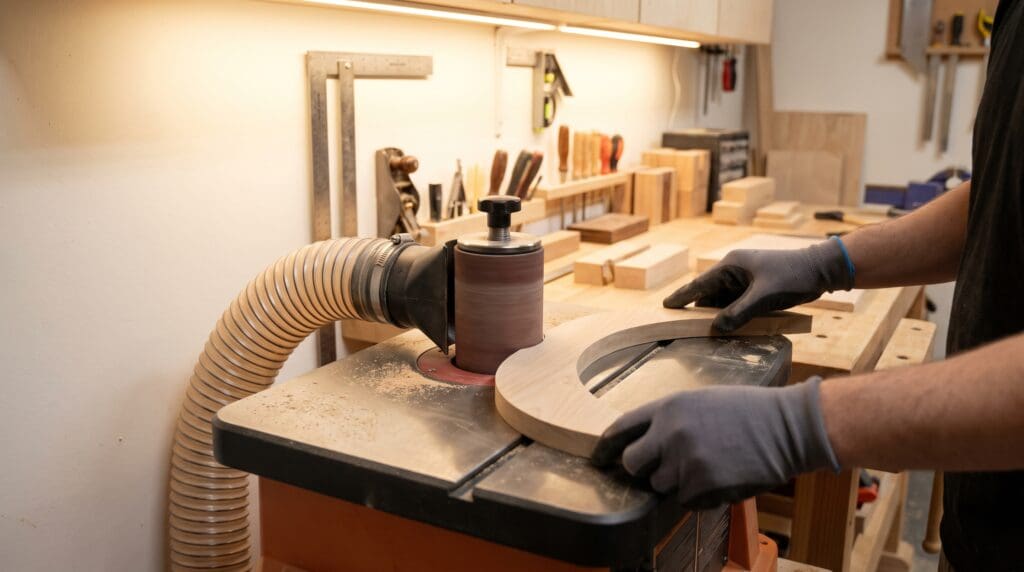
Buy a spindle sander if you regularly sand inside curves, bandsaw marks, scroll saw projects, templates, signs, toys, chair parts, routed shapes, or CNC-cut pieces.
Choose an oscillating spindle sander for smoother sanding, better sleeve life, and less burning than a fixed sanding drum.
Choose a belt-and-spindle combo if you also want a small edge belt sander for outside curves, straight edges, and quick shaping.
Skip it for now if you mostly sand flat boards, cabinet panels, tabletops, doors, or large surfaces. A random orbit sander, belt sander, or drum sander is usually more useful there.
For most hobby woodshops, start with a benchtop oscillating spindle sander or a belt-and-spindle combo. Make sure it includes multiple sleeve sizes, matching table inserts, onboard storage, and a dust port that can connect to your shop vac or dust collector.
What Is a Spindle Sander?
A spindle sander is a power sander that uses a vertical sanding drum or sleeve to sand curves and shaped edges. The workpiece rests on a table while you move the edge against the sanding sleeve.
The most useful type for woodworking is the oscillating spindle sander. The spindle spins while moving up and down. That oscillating motion spreads wear across more of the sanding sleeve, helps reduce heat buildup, and gives a cleaner sanding action on curved edges.
What a Spindle Sander Is Good At
- Inside curves
- Concave edges
- Bandsaw marks
- Scroll saw cuts
- Routed templates
- Wooden toys
- Signs and letters
- Chair parts
- Guitar and instrument body curves
- Small shaped parts
- Patterns and repeatable curves
What a Spindle Sander Is Bad At
- Large flat surfaces
- Wide boards
- Flattening panels
- Removing a lot of material quickly
- Jointing edges
- Sanding long straight edges perfectly square
- Replacing a planer, jointer, or drum sander
Best Spindle Sander Picks by Shop Type
This is not fake hands-on testing. These recommendations are based on current model specs, common woodworking use cases, shop size, accessory support, sleeve sizes, dust collection, and what buyers are usually trying to solve.
1. WEN 6510T Oscillating Spindle Sander — Best Budget Benchtop Pick
Best for: hobby woodworkers, small shops, toy makers, scroll saw users, bandsaw cleanup, and anyone buying a first spindle sander.
The WEN 6510T is the practical starting point for many small shops because it gives you an oscillating spindle setup, multiple sleeve sizes, onboard storage, and a compact benchtop footprint without jumping into heavy shop-machine pricing.
Why it makes sense: It covers the common curve sizes most beginners need, and it is easy to justify if hand-sanding inside curves is already wasting time.
Watch out for: It is still a light benchtop tool. Do not treat it like an industrial production sander.
2. WEN 6524 Oscillating Belt and Spindle Sander — Best Combo Pick
Best for: small shops that want both a spindle sander and a compact belt sander in one machine.
The WEN 6524 adds a 4 x 24-inch belt sanding attachment to the spindle setup. That makes it more versatile for outside curves, straighter edges, quick shaping, and general edge cleanup.
Why it makes sense: If you only have space for one benchtop sanding station, a belt-and-spindle combo can be more useful than a spindle-only machine.
Watch out for: It includes fewer maximum spindle options than some spindle-only machines. Buy it for versatility, not because it is the most specialized spindle sander.
3. Triton TSPS450 Oscillating Spindle Sander — Best Cast-Iron Table Value
Best for: woodworkers who want a solid table feel, clean accessory storage, and a dedicated oscillating spindle sander without a belt attachment.
The Triton TSPS450 is a dedicated oscillating spindle sander with a cast-iron table, multiple sanding sleeve sizes, matching drums, table inserts, and a dust port for extraction.
Why it makes sense: A stable table matters when you are trying to keep curved edges square and controlled.
Watch out for: Availability and plugs/voltage can vary by region, so verify the exact model sold in your market.
4. Grizzly G0739 Benchtop Oscillating Spindle Sander — Best Heavier Benchtop Pick
Best for: woodworkers who want a more substantial benchtop spindle sander with a heavier table and better shop-machine feel.
The Grizzly G0739 is a step up from the lightest budget models and makes sense if you sand curves often enough to want a sturdier dedicated machine.
Why it makes sense: Heavier benchtop sanders tend to feel more planted when sanding larger or harder workpieces.
Watch out for: It costs more than entry-level models, so it is best for users who already know they need a spindle sander regularly.
5. Shop Fox W1831 Oscillating Spindle Sander — Best Alternative to Grizzly-Style Benchtop Machines
Best for: buyers comparing heavier benchtop spindle sanders, especially when availability or pricing changes between brands.
The Shop Fox W1831 fits the same general buyer as the heavier Grizzly-style benchtop machines: someone who wants more shop-tool feel than the smallest entry-level sanders.
Why it makes sense: It is worth comparing when you want a dedicated spindle sander with multiple drum sizes and a more serious benchtop setup.
Watch out for: Compare included sleeves, warranty, dust port size, replacement parts, and shipping cost before buying.
6. JET JBOS-5 Oscillating Spindle Sander — Best Premium Benchtop / Small Pro-Shop Pick
Best for: serious hobbyists, small professional shops, furniture makers, and users who want a more premium spindle sander.
JET spindle sanders are usually in the conversation when buyers want a better-built shop machine rather than the cheapest possible benchtop tool.
Why it makes sense: If you sand shaped parts frequently, a better table, smoother action, and strong parts support can matter more than saving money upfront.
Watch out for: Check whether the current listing includes the spindle sizes and accessories you need.
7. Spindle Sanding Sleeves — Best Accessory to Buy Immediately
Best for: anyone buying a spindle sander. Sleeves wear out, clog, burn, tear, and get dull.
Do not buy the machine and forget the sleeves. Replacement sanding sleeves in the right diameter, length, and grit make the tool much more useful.
Why it makes sense: You will want coarse grits for shaping and finer grits for cleanup. A single included 80-grit sleeve set is not enough long-term.
Watch out for: Match sleeve length and diameter. The keyword “spindle sanding sleeves 3-inch-length” matters because some machines use 3-inch sleeves while others use longer sleeves.
Oscillating Spindle Sander vs Regular Sanding Drum
A regular sanding drum spins in one place. An oscillating spindle sander spins and moves up and down. That second motion is the main advantage.
Oscillation helps use more of the abrasive sleeve instead of wearing one narrow line. It can also reduce burning and clogging compared with a fixed drum, especially when sanding curves in hardwood or plywood.
Choose Oscillating When:
- You sand curves often.
- You want better sleeve life.
- You work with hardwoods.
- You need cleaner inside curves.
- You want a dedicated shop tool instead of a drill-press sanding drum.
A Drill-Press Sanding Drum May Be Enough When:
- You only sand curves occasionally.
- You already own a drill press.
- You are doing light touch-up work.
- You are not trying to remove much material.
- You do not have bench space for another machine.
Spindle Sander vs Belt Sander vs Random Orbit Sander
Most sanding mistakes come from asking the wrong tool to do the job.
Spindle sander: inside curves, concave edges, bandsaw marks, templates, and shaped parts.
Belt sander: faster stock removal, outside curves, straight edges, rough shaping, and flattening smaller areas.
Random orbit sander: flat surfaces, finish sanding, tabletops, panels, shelves, and general woodworking cleanup.
Drum sander: wider boards, panels, thickness-consistent sanding, and larger flat stock.
What Spindle Sizes Matter?
Spindle size controls the curve you can sand. Smaller sleeves fit tighter curves. Larger sleeves create smoother broad curves and reduce the chance of making a wavy edge.
A good benchtop spindle sander usually includes multiple spindle sizes. Common sizes include 1/2 inch, 3/4 inch, 1 inch, 1-1/2 inch, 2 inch, and sometimes 3 inch. Match the spindle to the curve instead of forcing one sleeve to do everything.
Simple Size Rule
- Small sleeves: tight inside corners and small toy or scroll saw parts.
- Medium sleeves: general curves, routed shapes, chair parts, and templates.
- Large sleeves: broad curves, smoother arcs, and less aggressive shaping.
Spindle Sanding Sleeves: Grit, Diameter, and Length
Sanding sleeves are consumables. The machine matters, but sleeve quality and grit choice matter too.
Use coarse sleeves when you are removing bandsaw marks or shaping close to a line. Move to finer sleeves for cleanup. Do not press too hard. Let the abrasive cut. Heavy pressure creates heat, burns wood, wears sleeves faster, and can make the curve uneven.
Common Grit Strategy
- 60 grit: aggressive shaping and rough bandsaw cleanup.
- 80 grit: general shaping and common first-pass sanding.
- 120 grit: smoothing after shaping.
- 150–220 grit: finer cleanup before hand sanding or finish sanding.
Buying tip: Check sleeve diameter and length. A 3-inch-long sleeve is not the same as a 4-1/2-inch-long sleeve. Match the replacement sleeves to your sander model.
Assorted Spindle Sanding Sleeves
A multi-grit sleeve kit gives you coarse shaping and finer cleanup options without stopping the project.
Spindle Sander Drums and Spindles
Replacement drums, washers, inserts, and spindles are worth checking before buying a used or older sander.
Dust Collection Matters
Spindle sanders create fine wood dust. A dust port is not just a convenience feature. It helps keep the table cleaner, improves visibility, and reduces the amount of airborne dust in the shop.
Connect the sander to a shop vac or dust collector when possible. Also wear eye protection and respiratory protection when needed, especially when sanding hardwoods, plywood, MDF, exotic woods, or anything with glue lines.
Dust Collection Features to Check
- Dust port size
- Whether your shop vac hose fits
- Whether an adapter is required
- How well dust clears around the sleeve
- Whether the port works with belt mode on combo machines
- How easy the table area is to clean
Shop Vac Hose Adapters
Many sanders have dust ports that do not perfectly match every shop vac hose. An adapter can save frustration.
Woodworking Safety Gear
Use safety glasses, hearing protection, and a suitable dust mask or respirator when your sanding operation requires it.
Table Size, Tilt, and Inserts
The table supports the workpiece while you sand. A larger, flatter, more stable table makes it easier to keep the edge square and controlled.
Some spindle sanders have a tilting table for sanding bevels and angled edges. That can be useful, but only if the table locks securely and the scale is easy to read. For many hobby projects, a stable flat table matters more than a fancy tilt mechanism.
Look for These Details
- Stable work table
- Table inserts for each sleeve size
- Small gap around the sleeve
- Onboard accessory storage
- Secure table tilt lock if included
- Easy sleeve changes
- Enough table area for your workpieces
How to Use a Spindle Sander Better
A spindle sander is simple, but technique still matters. The goal is to sand smoothly to the line without burning the edge, rounding the face, or creating a wavy curve.
Basic Technique
- Cut close to the line, but do not expect the sander to remove huge waste quickly.
- Choose the largest sleeve that fits the curve.
- Use a coarse sleeve for shaping and a finer sleeve for cleanup.
- Keep the workpiece flat on the table.
- Move steadily instead of stopping in one spot.
- Do not force the work into the sleeve.
- Use dust collection whenever possible.
- Finish critical edges by hand if the project requires a finer surface.
Safety note: Keep fingers away from the sanding sleeve, use the correct table insert, keep the workpiece controlled, and follow the owner’s manual for your specific machine.
7 Spindle Sander Buying Mistakes to Avoid
Mistake 1: Buying One When You Mostly Sand Flat Boards
A spindle sander is for curves and shaped edges. Flat panels still need a random orbit sander, belt sander, planer, jointer, or drum sander depending on the job.
Mistake 2: Ignoring Sleeve Sizes
The machine is only as useful as the sleeves and drums it supports. Check the included sizes before buying.
Mistake 3: Forgetting Replacement Sleeves
Included sleeves are only a start. Buy replacement sleeves in useful grits and correct lengths.
Mistake 4: Buying Too Small for Large Workpieces
A tiny table can feel cramped if you sand furniture parts, instrument bodies, large signs, or bigger curved pieces.
Mistake 5: Ignoring Dust Collection
Spindle sanders create fine dust. A dust port that works with your shop vac or dust collector is worth checking before checkout.
Mistake 6: Expecting It to Fix Bad Layout or Bad Cutting
A spindle sander cleans up curves, but it should not be your only shaping strategy. Cut close to the line and leave a controlled amount for sanding.
Mistake 7: Buying Used Without Checking Accessories
A used spindle sander may be missing drums, inserts, washers, wrenches, or sleeves. Replacing missing accessories can eat up the savings.
Final Verdict: Which Spindle Sander Should You Buy?
For most hobby woodworkers, the best first spindle sander is a compact oscillating benchtop model with multiple sleeve sizes, onboard storage, and a usable dust port. The WEN 6510T style of machine makes sense when you mainly need curve sanding at a fair price.
If you want one small sanding station that also handles outside curves and edge shaping, a belt-and-spindle combo like the WEN 6524 style is the more versatile choice. If you sand curves constantly, compare heavier benchtop machines from brands such as Triton, Grizzly, Shop Fox, and JET.
Do not overbuy just because bigger machines look more serious. Buy for your projects. Curves, inside radiuses, templates, bandsaw marks, and shaped parts are where a spindle sander earns its space.
Spindle Sander FAQ
What is a spindle sander?
A spindle sander is a power sander that uses a vertical sanding sleeve or drum to sand curved edges, inside curves, bandsaw marks, scroll saw cuts, templates, and shaped woodworking parts.
What is an oscillating spindle sander?
An oscillating spindle sander spins the sanding sleeve while also moving it up and down. This uses more of the sleeve, helps reduce heat buildup, and improves sanding on curves.
What is a spindle sander used for?
It is used for sanding curves, concave edges, chair parts, toys, signs, templates, scroll saw projects, bandsaw cuts, routed shapes, and other irregular edges.
Do I need a spindle sander?
You need one if you regularly sand inside curves or shaped parts. You may not need one if most of your projects are flat boards, panels, shelves, or cabinets.
Is a spindle sander better than a belt sander?
For inside curves, yes. A spindle sander can follow concave shapes better. A belt sander is better for faster stock removal, outside curves, and straight edge shaping.
Can I use a drill press as a spindle sander?
You can use sanding drums in a drill press for light work, but it does not replace a dedicated oscillating spindle sander. A real spindle sander is designed for side sanding pressure and better dust control.
What sleeve sizes should a spindle sander include?
Common useful sizes include 1/2 inch, 3/4 inch, 1 inch, 1-1/2 inch, 2 inch, and sometimes 3 inch. More sizes make it easier to match different curves.
What grit sanding sleeves should I buy?
Start with 80 grit for general shaping, add 60 grit for rough cleanup, and use 120 to 220 grit for smoother finishing before hand sanding.
What does “spindle sanding sleeves 3-inch-length” mean?
It refers to the sleeve length. Some sanders use 3-inch-long sleeves, while others use longer sleeves. Always match the replacement sleeve length and diameter to your sander.
Is a WEN oscillating spindle sander good for beginners?
WEN benchtop spindle sanders are popular entry-level choices because they are affordable, compact, and include multiple sleeve sizes. They are best for hobby and light shop use.
Should I buy a spindle-only sander or belt-and-spindle combo?
Buy a spindle-only sander if inside curves are your main need. Buy a belt-and-spindle combo if you also want a small belt sander for outside curves, straight edges, and general shaping.
Does a spindle sander need dust collection?
Yes, dust collection is strongly recommended. Spindle sanding creates fine wood dust, and a dust port connected to a shop vac or collector keeps the work area cleaner.
Can a spindle sander sand straight edges?
It can clean up short straight edges, but it is not the best tool for long straight edges. A belt sander, edge sander, jointer, or hand plane may be better depending on the job.
Can a spindle sander remove a lot of material?
It can shape edges, but it should not be used like a grinder. Cut close to the line first, then sand to the final shape.
Why does my spindle sander burn wood?
Burning usually comes from too much pressure, dull or clogged sleeves, stopping in one spot, using too fine a grit too early, or sanding resinous hardwoods without moving steadily.
How do you sand spindles?
For round furniture spindles, use hand sanding, flexible abrasive strips, lathe sanding, or contour sanding tools depending on the shape. A spindle sander is better for curved edges and inside radiuses, not necessarily for long turned chair spindles.
Can a spindle sander sand metal?
Most woodworking spindle sanders are designed for wood and wood-like materials. Do not sand metal unless the manufacturer specifically allows it and you understand the fire, dust, and abrasive risks.
What safety gear should I use with a spindle sander?
Use eye protection, dust control, and respiratory protection when needed. Keep fingers away from the sleeve, use the correct table insert, and follow the owner’s manual.
What should I check before buying a used spindle sander?
Check whether it includes all drums, sleeves, inserts, washers, wrenches, dust parts, and the manual. Also check spindle runout, table condition, switch, noise, and replacement parts availability.
What is the best spindle sander for a small shop?
A compact benchtop oscillating spindle sander or a belt-and-spindle combo is usually the best fit for a small shop because it saves space while still handling common curve-sanding tasks.
Join Garden Frontier for practical woodworking tools, shop setup, home improvement, DIY projects, gardening, and seasonal homeowner advice.
100% free. No spam. Unsubscribe anytime.