
















Double-pane window glass replacement can cost hundreds of dollars less than replacing an entire window — if the glass is actually the only part that failed.
That distinction matters because a modern double-pane window is made from several separate systems.
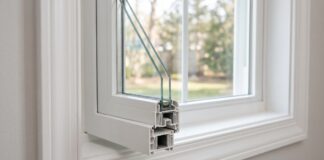
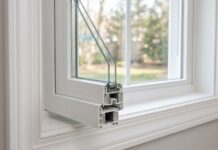
There is the frame attached to the house. There is the sash that holds the glass. And inside that sash is usually a sealed insulated glass unit, or IGU, containing two panes, a spacer and an insulating cavity.
When the IGU becomes foggy between the panes or one piece of glass cracks, the frame may still be perfectly usable.
In that situation, replacing the whole window can be unnecessary.
But the opposite mistake is expensive too.
Installing new glass into a rotten, badly warped or leaking frame does not turn the old window into a new one.
The right repair starts by identifying whether the failure is in the glass, sash, frame or installation around the window.

Typical window-glass replacement overall: Angi’s 2026 verified-project data averages about $285 per window, with many standard jobs around $181–$414.
Double-pane glass specifically: Angi’s detailed 2026 glass-by-style data places many double-pane replacements around $300–$900 per window, excluding replacement of the complete frame.
Low-E replacement glass: roughly $300–$1,000 in current national planning data.
Argon-filled glass: roughly $400–$900.
Whole window: usually costs substantially more because the frame, sash, hardware and installation are being replaced along with the glass.
Ask a local window professional whether the existing sash and frame can accept a replacement insulated glass unit before paying for a complete new window.
What Exactly Gets Replaced in a Double-Pane Window?
A conventional double-pane glass assembly is not two unrelated pieces of glass sitting inside one frame.
The two panes are manufactured as one sealed insulated glass unit.
A typical replacement IGU includes:
- Exterior pane
- Interior pane
- Spacer between the panes
- Desiccant within or associated with the spacer system
- Perimeter seals
- Air or insulating gas such as argon where specified
- Low-E coating where specified
- Tempered, laminated, tinted or other specialty glass where required
That entire sealed assembly can often be removed from a compatible sash and replaced without removing the window frame from the house.
Glass Doctor describes this as the normal solution for many fogged IGUs: replace the glass unit rather than automatically replacing the entire window.
For the broader explanation of how IGUs, Low-E coatings, argon, U-factor and SHGC work together, see our complete double-pane windows guide.
Double-Pane Window Glass Replacement Cost in 2026
Window-glass cost data becomes confusing because different sources use “glass replacement,” “double-pane replacement” and “window replacement” for different scopes.
Here is the cleaner way to read current Angi data:
| Scope | 2026 Planning Cost |
|---|---|
| Standard window glass replacement overall | $181–$414; average about $285 |
| Double-pane glass | $300–$900 |
| Triple-pane glass | $400–$1,000 |
| Low-E glass | $300–$1,000 |
| Argon-filled glass | $400–$900 |
| Tempered glass | $200–$600 |
| Laminated glass | $300–$600 |
See the current Angi 2026 window glass replacement cost data.
Why Can One Double-Pane Replacement Cost $300 and Another $900?
The words “double pane” tell you almost nothing about the actual dimensions or glass specification.
Price changes with:
- Width and height
- Total IGU thickness
- Individual glass thickness
- Low-E coating
- Argon or other gas fill
- Tempered glass
- Laminated glass
- Obscure or privacy glass
- Tint
- Decorative grids
- Custom shapes
- Second-story access
- Sash design
- Difficulty removing glazing stops
- Local labor costs
Angi currently places professional window-glass labor at about $50–$75 per hour, with many standard replacements requiring roughly one to two hours of installation labor.
Fog Between the Panes: The Classic IGU Failure
A window that looks dirty no matter how often you clean it may have moisture or mineral deposits on the surfaces inside the IGU.
That happens when the perimeter seal no longer keeps humid outside or indoor air out of the cavity.
Glass Doctor explains that condensation between the panes means the IGU seal has failed.
Three Different Condensation Problems
| Moisture Location | Likely Meaning |
|---|---|
| Inside room surface | Often high indoor humidity meeting cold glass. |
| Outside surface | Can be normal exterior dew, particularly on efficient glazing. |
| Between the panes | Likely failed IGU seal. |
Useful Amazon Tool: Check Indoor Humidity Before Blaming the Window
Best for: checking whether room-side condensation may be related to elevated indoor humidity rather than a failed IGU.
The TP50 monitors indoor temperature and relative humidity and displays current plus high/low readings. That makes it a simple inexpensive diagnostic tool during condensation season.
Important: a humidity meter does not diagnose a failed window seal. If moisture is physically trapped between the panes, the problem is inside the sealed glass unit.
Can a Fogged Double-Pane Window Be Repaired Without Replacing the Glass?
Some companies offer a process commonly called defogging.
This generally involves creating access openings, removing or drying moisture and improving the visible clarity of the glass.
That can make a cloudy window look better.
But it should not be confused with rebuilding the IGU.
Defogging does not recreate the original factory IGU, refill lost argon or restore the original tested thermal performance. When the goal is to restore the sealed insulating glass assembly, replacing the failed IGU is the more complete repair.
Can You Replace Only One Broken Pane?
Technically, glass fabrication companies can build insulated units in many ways.
But for a homeowner with an existing factory-sealed double-pane IGU, replacing one broken sheet in place is generally not the recommended repair.
Glass Doctor specifically advises replacing the complete IGU rather than replacing only one pane because the long-term insulating performance depends on the integrity of the complete sealed unit.
The replacement normally arrives as a new assembly containing:
- Both panes
- New spacer system
- New perimeter seal
- Specified Low-E coating
- Specified gas fill where applicable
Broken Glass vs Failed Seal: Same Replacement, Different Reason
Broken Pane
The IGU has suffered physical glass damage.
Even if only one pane is visibly cracked, the sealed assembly should be evaluated as a complete unit.
Fogged Glass
The panes may be physically intact, but the perimeter seal has failed and allowed moisture into the cavity.
Low-E or Coating Damage
Certain visual defects can involve coatings or surfaces within the IGU. A glass professional can determine whether the appearance is contamination, seal failure, coating deterioration or something on an accessible surface.
When Glass-Only Replacement Is the Smart Choice
IGU replacement is particularly attractive when:
- Frame is structurally sound.
- Sash remains square.
- Window opens and closes correctly.
- Locks and balances operate normally.
- Weatherstripping is still serviceable.
- No rot or severe frame deterioration is present.
- No water is entering around the wall opening.
- The failed IGU can be removed from the existing glazing system.
In that situation, replacing the complete window can mean discarding a large amount of perfectly usable material.
When You Should Consider the Whole Window Instead
New glass cannot repair problems outside the glass assembly.
Compare full replacement when:
- Wood frame is rotten.
- Vinyl frame is severely warped.
- Sash is structurally damaged.
- Window will not stay open or operate correctly.
- Water leaks around the frame or wall opening.
- Multiple seals and hardware components are failing.
- Replacement parts are obsolete.
- You need a different window style or opening configuration.
For broader replacement and energy-performance decisions, our double-pane window guide covers whole-window costs, NFRC ratings, Low-E, argon and double-vs-triple-pane comparisons.
Glass Replacement vs Sash Replacement vs Full Window
These three quotes can look similar on paper while describing completely different jobs.
| Option | What You Keep | What Changes |
|---|---|---|
| IGU / glass-only replacement | Frame + sash | Sealed glass assembly |
| Replacement sash | Main frame | Sash + glass + some hardware |
| Complete replacement window | Wall opening | Window assembly |
A replacement sash can be an excellent middle ground when the manufacturer still supplies one for your exact model.
Do Not Order Replacement Glass From the Visible Opening Size
This is one of the easiest expensive mistakes to make.
The dimensions of the glass that you can see are not necessarily the dimensions of the actual manufactured IGU hidden behind glazing stops and frame components.
Panes specifically warns buyers that glass size and frame-opening size are different and recommends confirming the manufactured IGU width, height and thickness before ordering.
An IGU order may require:
- Manufactured width
- Manufactured height
- Total unit thickness
- Individual glass thickness
- Spacer width
- Low-E surface location
- Tempered or laminated requirement
- Grid pattern
- Tint
- Gas fill
If you are paying for custom glass, have the final ordering dimensions confirmed by the person responsible for installing it. A custom IGU that is 1/4 inch wrong can become an expensive piece of glass that does not fit your sash.
Useful Amazon Tool: Digital Caliper for Small Thickness Measurements
Best for: general household and workshop measurements where a tape measure is too coarse, including accessible small hardware and thickness checks.
The 6-inch stainless-steel caliper switches between inches, fractions and millimeters and is useful well beyond window projects.
Important: do not use a consumer caliper reading as the sole basis for ordering a custom sealed IGU. The installer or glass fabricator should confirm the actual manufactured glass-unit dimensions and specification.
Should Replacement Glass Match the Original Low-E Coating?
Ideally, yes — particularly when only one window or one sash is being repaired.
The replacement should be specified so it is compatible with the original window and reasonably matches surrounding glazing.
A different Low-E coating can change:
- Visible reflectance
- Color viewed from outside
- Solar heat gain
- U-factor of the glazing
- Visible light transmission
If several identical windows sit side by side, an obvious color or reflectance mismatch can be noticeable from the street.
What If the Original Window Was Argon-Filled?
A replacement IGU can be manufactured with argon when the specification calls for it.
Do not assume a contractor is somehow pumping argon back into your failed original unit during ordinary glass replacement.
The new sealed unit should arrive or be fabricated with its specified spacer, seals, coatings and gas configuration.
When Is Tempered Glass Required?
Safety-glazing requirements depend on where the window is located and applicable building code.
Locations that can trigger special requirements include glazing:
- Near doors
- Near walking surfaces
- Near tubs and showers
- In certain large low windows
- In hazardous impact locations
If the original window uses tempered safety glass, do not downgrade it to ordinary annealed glass simply because ordinary glass is cheaper.
How Professionals Replace a Double-Pane IGU
Exact procedures vary by manufacturer and frame design, but the professional workflow typically looks like this:
- Identify the glass specification. The installer confirms dimensions, thickness, Low-E, safety-glass and other requirements.
- Order or fabricate the replacement IGU.
- Remove the sash or glazing stops where the design allows.
- Remove the failed sealed unit without damaging the reusable frame or sash.
- Prepare the glazing surfaces and drainage path.
- Set the new IGU using the glazing system appropriate to that window.
- Reinstall stops, seals and hardware.
- Inspect operation, drainage and weather sealing.
This Old House recommends professional help for double- and triple-pane glass because incorrect removal or installation can create leaks, additional damage and warranty problems.
Can You DIY Double-Pane Glass Replacement?
Some experienced homeowners successfully replace removable IGUs.
But this is not equivalent to replacing a small piece of single-pane glass in an old wood sash.
Potential problems include:
- Large sharp glass
- Heavy IGUs
- Incorrect ordering dimensions
- Wrong Low-E orientation
- Damaged glazing stops
- Blocked drainage channels
- Broken setting blocks
- Incorrect sealant
- Safety-glazing requirements
- Water leaks
- Void manufacturer warranties
For large, elevated, tempered, laminated or difficult-to-remove units, professional installation is usually the sensible choice.
Cold Window or Failed Seal? Check the Frame Too
Not every uncomfortable window has failed insulated glass.
Cold air may be entering around:
- Weatherstripping
- Sash meeting rails
- Frame joints
- Trim
- Poorly insulated rough openings
- Failed exterior sealant
Replacing the IGU will not repair air leakage several inches away from the glass.
Useful Amazon Tool: Find Cold Spots Around the Window
Best for: comparing surface temperatures around window frames, trim and adjacent walls to identify unusually cold areas before calling a contractor.
The IR1 measures surface temperature from a distance and is useful for broader home troubleshooting.
Important: infrared thermometers do not measure U-factor and reflective glass can produce misleading readings. Use it to compare surrounding surfaces and locate suspicious cold zones — not to certify window performance.
What If You Cannot Replace the Window Yet?
If the problem is drafts from an older window and full repair is temporarily outside the budget, seasonal interior insulation film can reduce air movement and improve comfort.
It is not a substitute for replacing a failed IGU.
Best for: older drafty windows where you want a removable seasonal barrier before permanent repair or replacement.
This five-window version uses heat-shrink film and mounting tape and is intended for indoor use on appropriately sized windows.
Not a failed-seal repair: interior film does not remove moisture trapped between panes, refill argon or recreate an IGU seal.
Check the Warranty Before Paying for a New IGU
Before paying hundreds of dollars for fogged glass, identify the window manufacturer.
Look for:
- Etching in a glass corner
- Labels on the sash edge
- Labels inside the frame
- Original invoices
- Home-builder paperwork
- Transferable warranty documentation
Then ask:
- Is insulating-glass seal failure covered?
- Is a replacement IGU supplied?
- Is a complete replacement sash supplied?
- Is labor covered?
- Is freight covered?
- Is the warranty transferable to a later homeowner?
A “20-year glass warranty” and “20 years of free glass plus labor” are not necessarily the same promise.
What Should a Double-Pane Glass Replacement Quote Include?
- Number of IGUs
- Window identification or room location
- Manufactured glass dimensions
- Total IGU thickness
- Pane thickness where relevant
- Low-E specification
- Gas fill
- Tempered or laminated glass requirement
- Tint or privacy glass
- Decorative grids
- Removal of old IGU
- Installation materials
- Labor
- Disposal
- Replacement glazing stops if needed
- Seal warranty
- Workmanship warranty
- Estimated manufacturing lead time
Questions to Ask the Glass or Window Company
- Is only the IGU bad or is the sash/frame damaged?
- Can this window accept glass-only replacement?
- Are you replacing both panes as a new sealed IGU?
- What is the total IGU thickness?
- What Low-E coating will the new glass use?
- Will it visually match adjacent windows?
- Is argon included?
- Is tempered safety glass required?
- Will the sash be removed from the house?
- Are glazing stops reusable?
- How is frame drainage protected?
- Is disposal included?
- What warranty covers future fogging?
- Does the warranty include labor?
If the frame is still sound, ask contractors to explain why they recommend a full window instead of a replacement IGU. Compare the scope, warranty and glass specification — not only the final number.
Double-Pane Glass Replacement Red Flags
“Fog Means the Whole Window Is Bad”
Fog between panes demonstrates a glass-unit problem. It does not, by itself, prove that the frame attached to the house has failed.
No Exact Glass Specification
A quote saying only “double-pane glass” leaves major questions unanswered.
No Warranty Against Future Seal Failure
Ask what happens if the new IGU develops moisture between the panes.
The Company Orders From Your Visible-Glass Measurement Alone
The visible opening is not necessarily the manufactured IGU dimension.
Replacing Low-E With Whatever Is Cheapest
A mismatched replacement can change appearance and thermal performance.
Drilling the Glass Is Presented as “Restoring the Seal”
Defogging and replacing a factory-sealed IGU are not equivalent repairs.
10 Double-Pane Glass Replacement Mistakes
- Replacing the whole window before checking whether the frame is still good.
- Replacing only the glass when the frame itself is rotten or leaking.
- Ordering from the visible opening dimensions.
- Ignoring total IGU thickness.
- Ignoring Low-E orientation and specification.
- Using ordinary glass where safety glazing is required.
- Assuming defogging restores the original insulating performance.
- Forgetting to check the manufacturer’s warranty.
- Comparing a glass-only quote with a full-window quote as though they are identical.
- Handling large insulated glass without appropriate experience, equipment and protection.
Final Verdict: Replace the IGU When the IGU Is the Problem
Double-pane window glass replacement is often one of the most sensible repairs available to a homeowner.
It lets you keep a usable sash and frame while replacing the part that actually failed.
Current 2026 pricing illustrates why the distinction matters: ordinary window-glass work often falls in the hundreds of dollars, while complete-window replacement can quickly move into four figures per opening.
But glass-only replacement is not always the bargain.
If the frame is rotten, the sash is warped, water enters around the wall opening or multiple parts have reached the end of their useful life, a new IGU can become new glass inside an old problem.
Start with diagnosis.
Then compare:
- IGU replacement
- Replacement sash
- Complete window replacement
And make sure every quote specifies the actual glass you are buying.
The right repair is not automatically the cheapest quote or the biggest replacement. It is the smallest scope that correctly fixes the failed system without preserving other components that already need replacement.
Compare local window professionals for fogged insulated glass, failed seals, broken double-pane units, replacement sashes or full window replacement.

On a computer? Scan the QR code with your phone.
Double-Pane Window Glass Replacement FAQ
How much does double-pane window glass replacement cost?
Angi’s 2026 glass-by-window-style data places double-pane glass replacement around $300–$900 per window. Its broader standard window-glass data averages about $285, with many simpler projects between approximately $181 and $414.
Can you replace glass in a double-pane window without replacing the frame?
Often, yes. If the sash, frame and glazing system remain suitable, the failed insulated glass unit can frequently be removed and replaced while leaving the existing frame in place.
Can you replace only one pane of a double-pane window?
A double-pane IGU is manufactured as one sealed assembly. When one pane breaks, replacing the complete sealed IGU is generally preferred to attempting to replace one pane while preserving the original cavity and seals.
What is an IGU replacement?
IGU replacement means removing the failed insulated glass unit from an otherwise reusable sash or frame and installing a newly manufactured sealed glass assembly.
Does IGU replacement include a new frame?
No. Glass-only IGU replacement normally retains the existing window sash and frame unless additional repairs are required.
Why does double-pane glass get foggy?
Fog or moisture between the panes usually occurs when the IGU perimeter seal fails and humid air enters the sealed cavity.
Can you clean fog from inside double-pane glass?
Not with ordinary glass cleaning because the affected surfaces face the sealed cavity. Replacing the failed IGU is the standard method of restoring a properly sealed glass assembly.
Does defogging fix a double-pane window?
Defogging may improve visible clarity, but it does not recreate the original factory seal, restore lost insulating gas or return the IGU to its original tested energy performance.
Is it cheaper to replace glass or the whole window?
Glass-only replacement is generally cheaper when the frame and sash remain usable. Whole-window replacement costs more because the glass, sash, frame, hardware and installation are being replaced together.
When should I replace the whole window instead of the glass?
Consider whole-window replacement when the frame is rotten or badly warped, the sash is structurally damaged, water leaks around the assembly, hardware is obsolete or several components are failing at the same time.
Can Low-E double-pane glass be replaced?
Yes. A replacement IGU can be manufactured with an appropriate Low-E coating. Ask the installer to match the original specification and surrounding windows as closely as practical.
Can argon-filled double-pane glass be replaced?
Yes. A new replacement IGU can be ordered with argon fill when the specification calls for it.
How do I measure replacement double-pane glass?
Do not assume the visible glass dimensions are the manufacturing dimensions. The actual IGU extends behind glazing components, and total unit thickness also matters. Have the final ordering measurements confirmed by the installer or glass fabricator.
How thick is double-pane window glass?
There is no single thickness. Total IGU thickness depends on pane thickness and spacer width and must match the glazing system in the existing sash.
How long does double-pane glass replacement take?
The physical replacement of a straightforward unit can often be completed relatively quickly once the custom IGU has been manufactured. The larger delay is frequently measuring, ordering and fabricating the replacement unit.
Can I replace double-pane glass myself?
Some experienced homeowners can replace certain removable IGUs, but double-pane units require accurate dimensions and glazing details and can be large, heavy and sharp. This Old House recommends professional help for double- and triple-pane window glass replacement.
What happens if the replacement IGU is too small?
An incorrectly sized unit may not seat correctly in the glazing system and can create support, sealing or installation problems. Custom glass should be ordered from confirmed manufactured dimensions.
Does replacement glass come with a warranty?
Many fabricators and installers provide warranties against premature seal failure, but coverage varies. Ask separately about the glass warranty and the installation/workmanship warranty.
Should I check my old window warranty first?
Yes. Insulating-glass seal failure may still be covered by the original window manufacturer, particularly on newer windows. Verify whether replacement material, sash and labor are included.
Does replacing a failed IGU restore energy efficiency?
A properly specified replacement IGU restores a sealed glass assembly and can replace failed Low-E or gas-filled glazing. However, it does not correct poor frame insulation, air leakage around the window or installation defects.
Can a new IGU make the old window ENERGY STAR certified?
Do not assume so. ENERGY STAR and NFRC ratings apply to tested complete window products. Installing replacement glass does not automatically create a new whole-window certification for the existing frame and sash.
Do I need tempered glass for replacement?
Safety-glazing requirements depend on the location and local building code. Certain windows near doors, floors, tubs, showers and other hazardous locations may require tempered or another approved safety glass.
Can I temporarily cover a broken window with film?
Temporary film can sometimes reduce drafts or provide a short-term interior barrier, but it does not restore structural glass or a failed IGU. Broken glass should be made safe and properly replaced.
What should I compare between window-glass quotes?
Compare the exact IGU dimensions and thickness, Low-E specification, gas fill, safety-glass requirement, grids, removal and disposal, labor, glazing materials and warranty rather than comparing only the total price.
Join Garden Frontier for practical home improvement, restoration, landscaping, gardening and homeowner advice.
100% free. No spam. Unsubscribe anytime.