




















Facts about Creeping Thyme
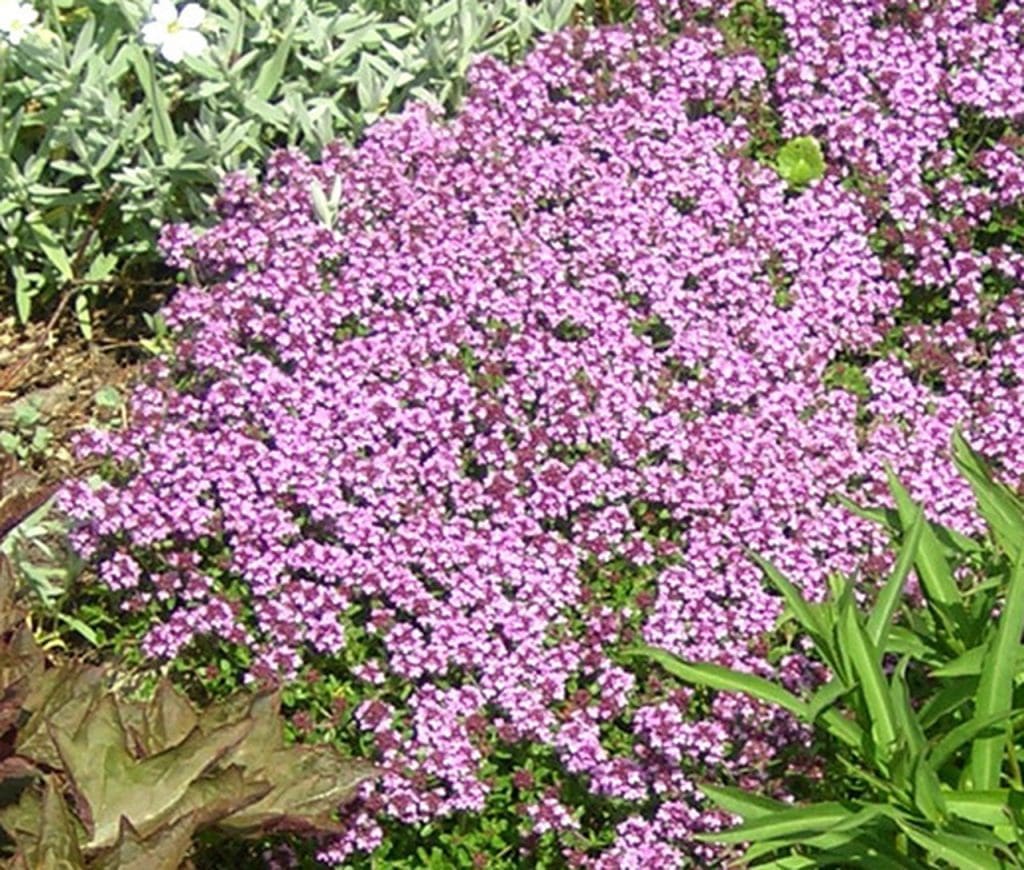
Creeping Thyme, also called Mother of Thyme, is the ideal plant for growing small crevices, borders, lawn substitutes, and between nooks and crannies.
Thymus praecox is a low-growing perennial thrives in USDA hardiness zones 4–9. This evergreen creeping thyme varietal — rarely exceeding 3 inches or 7.5 cm. in height — forms low, dense mats that spread randomly and quickly fill areas as a ground cover.
T. serpyllum is another type of creeping thyme. As with other thyme species, creeping thyme is edible and has a mint-like flavor and aroma when smashed or steeped for teas or tinctures.
Harvest creeping thyme ground cover by separating the leaves from the stems or drying them by cutting from the plant and hanging them inverted in a dark, well-aerated area. Harvest creeping thyme in the morning to preserve the plant’s essential oils.
Another creeping thyme fact is that, despite its alluring aroma, creeping thyme ground cover is deer immune, making it an ideal landscape candidate in deer-infested areas.
Furthermore, creeping thyme can endure stomping by rambunctious children (making it kid resistant! ), making it an excellent choice for planting in areas with high foot traffic.
Flowering creeping thyme is beautiful to bees and makes an excellent addition to a honeybee-focused garden.
Indeed, the pollen from the blooming thyme will impart flavor to the honey produced.
Types of Creeping Thyme
Creeping thyme offers a variety of types suited for different uses, from ornamental to culinary. Popular varieties include:
- Thymus serpyllum (wild thyme)
- Thymus praecox is excellent as a low-growing grass alternative.
- Thymus vulgaris, or common thyme, is a versatile culinary herb often called English or garden thyme.
- Wooly thyme, known for its soft texture, adds a unique visual appeal to rock gardens. As members of the mint family, these herbs are easy to cultivate and thrive in diverse conditions, making them a favorite among gardeners for aesthetics and functionality.
Planting Creeping Thyme
Planting creeping thyme involves careful preparation to ensure its success as a versatile ground cover or border plant. Choose a sunny location with well-draining soil, incorporating gritty material if needed to improve drainage.
Thymus serpyllum thrives in rock gardens and areas suited to its hardiness zones. Early spring is the best time to plant divisions or nursery-grown thyme, as it allows the plants to establish before warmer weather. Whether used as a border or in a garden design, creeping thyme’s adaptability and charm make it a standout addition to any landscape.
Best Location
Plant creeping thymes along your garden’s main routes for a fragrant lawn. Creeping thymes throw down aerial roots to form a magical scented carpet that releases its delicious fragrance when crushed underfoot.
Mass-plant them so they can parade their white, pink flowers, red, or mauve flowers in patchwork symphonies but watch out for bees when they’re in bloom.
History and Origins
Native to the Mediterranean region has the exact growing requirements: lots of sunshine and well-drained, almost gravelly soil.
Plant thyme in the front of garden beds for a border that complements more showy ornamental plants, or pair thyme with decorative bulbs, such as daffodils; their stalks will pierce through the thyme at the beginning of spring, flower, and die back before the thyme starts to take off in late spring.
Then through the year, there will be ground cover above the dormant bulbs, which will help prevent accidentally digging up bulbs.
Thyme is very well-behaved and spreads slowly. It needs consistent watering during the first year but can withstand drought conditions once well established.
Regular pruning in spring and fall keeps the plants healthy by removing less-productive old wood, making the plants less likely to survive winter because new growth is more vigorous and harder.
Thyme grows from thyme seeds, but there’s hardly any reason to start it that way, as it propagates easily by other methods. Thyme’s horizontal growing habits mean that lateral branches easily root. Softwood established plantings cuttings can also be rooted in potting mediums.
A sprig of thyme can be clipped whenever you need to add fresh flavor to your food. Always harvest culinary thymes before they go into bloom a few days ahead of summer and a second time post-Labor Day.
Half of the growth may be safely clipped. Thyme gives hearty flavor to soups, gravies, and meat sauces.
It is a crucial ingredient in bouquets garni and herbes de Provence, two traditional herb mixes in French cuisine.
Lemon thyme is particularly good with poultry or when added to herbal vinegar.
Growing Creeping Thyme
Plant during rainy seasons: Plant during the rainy season (such as now, early spring after frost has passed, or early to midfall) for less watering while the plants establish. However, if you plant now and we get a dry spring, you will have to water more.
Expect some work: I won’t say it’s completely maintenance-free, but it’s easier than that big old lawn; it was labor-intensive the first season. I had to weed it and keep an eye on it, but it crowded out most of the weeds after the first year.
Be patient: The thyme takes a growing season or two to establish, so expect it won’t look perfect right away. It reseeds itself, So if you have open spots where the thyme is not growing, it will expand in a few seasons.
Maintenance: Give the thyme a “haircut” to keep it looking fresh. It is susceptible to root if overwatered.
The ground should be kept humid but not soggy, as the growing creeping thyme plant is inclined to root drowning, leading to root rot and edema.
The soil pH for growing creeping thyme plants should be neutral to slightly alkaline.
Careful what you select: A ground cover planted in the wrong conditions can be more labor-intensive than grass. While creeping thyme is a plant that can tolerate drought, it may not be the best choice for every yard.
When considering what to replace your lawn with, consider the growing area and how much sun it gets. Do some research before you pick a plant.
Ask a nursery worker or garden designer for advice on what ground cover to pick. Ask how big it gets and what kind of soil and sun it needs.
Encouraging Bloom
To encourage creeping thyme to bloom beautifully, it’s essential to provide the right care and conditions. Creeping thyme typically blooms during the growing season, with flower production peaking in the warmer months.
Plant in full sun for vibrant blooms and use enriched soil to support vigorous growth. Pruning woody stems and promoting young growth are key techniques to enhance flower production. Transplanting can also reinvigorate the plant if it’s struggling.
Besides adding charm to your garden, the flowers attract bees and offer a unique pollen flavoring, making creeping thyme both beautiful and beneficial.
Propagation Methods
Propagating creeping thyme can be done effectively through division or stem cuttings, each offering a simple way to expand your garden. Division involves separating established plants using a spade, ensuring that each section has healthy roots.
For stem cuttings, choose a non-flowering stem with new leaf growth and use sterilized scissors or a sharp knife to make a clean cut. Dip the cutting in rooting hormone and plant it in a well-draining potting mix to encourage root development.
Growing creeping thyme from seed is another option, requiring more patience. Regardless of the method, providing the right conditions ensures successful propagation.
Potting and Repotting
Potting and repotting creeping thyme involves thoughtful techniques to keep the plant healthy and thriving. When repotting, check for black rotting roots and trim them away using sterilized scissors or pruners to prevent disease.
Use fresh potting mix in a small container to provide an ideal growing environment. For smaller divisions or stem cuttings, apply rooting hormone to encourage new growth. Removing excessive woody growth during repotting helps rejuvenate the plant and ensures it stays compact. Proper care during potting and repotting promotes healthier and more vigorous creeping thyme.
Overwintering Creeping Thyme
Overwintering creeping thyme requires careful attention to its needs during the colder months to ensure it thrives come spring. As a semi-evergreen plant, creeping thyme can withstand mild winters, but cold winters with fluctuating temperatures can pose a challenge. Placing the plant in a sheltered location helps protect it from harsh winds and sudden temperature changes.
Container-bound plants are particularly vulnerable, so it’s wise to move them to a spot with consistent temperatures before the first frost hits. Early spring is the ideal time to assess and refresh your thyme, as warming and cooling temperatures during late winter can stress the plant if not properly cared for.
Pests and Diseases
Creeping thyme is a hardy plant, but it’s not immune to pests and diseases. Common culprits include aphids and spider mites, which can weaken the plant if left unchecked. Regularly inspecting your thyme and treating infestations with insecticidal soap is an effective way to manage these pests.
Environmental factors like lack of light and poorly drained soil can make the plant more susceptible to issues. Ensuring your creeping thyme has ample sunlight and well-drained soil is key to preventing disease and promoting robust growth.
Creeping Thyme Care
Creeping thyme is a low-maintenance plant, but proper care ensures it thrives in your garden. It grows best in United States Department of Agriculture zones 4-8, requiring direct sun and well-draining soil with a neutral to slightly alkaline pH. Adequate drainage is essential, especially when using porous containers.
While creeping thyme is drought-resistant, supplemental irrigation may be necessary when establishing the plant. A delayed-release fertilizer can support growth without overfeeding. It tolerates a range of temperatures and humidity, making it versatile and easy to maintain in most climates.
Common Problems
Growing creeping thyme can sometimes present challenges, but understanding common issues makes them easier to manage. Woody stems and leggy growth often occur with insufficient pruning or poor air circulation. Drooping or yellowing leaves may indicate dense soils or excess nitrogen, while browning leaves and root rot are often caused by poor drainage or fungal disease.
To prevent drying out, ensure the soil retains some moisture without becoming waterlogged. Addressing these issues promptly with proper pruning, improved air circulation, and balanced humidity helps keep creeping thyme healthy and vibrant.
FAQ
Q: I have a rabbit problem, and while I appreciate you addressing this subject earlier in the year, my primary issue occurs during the winter. Rabbits prefer to chew on young plants and bushes. I’d like to know how to prepare them to keep the rabbits away for the winter.
A: Using a tree wrap is a good idea for plants such as shrubs and trees. These wraps, available at local garden centers, are simply a coiled plastic sheet wrapped around the trunks of trees and shrubs.
Consider erecting a barrier to keep rabbits away from smaller plants. Chicken wire can be used to create an easy-to-build barrier. Create a dome-shaped barrier to prevent rabbits from accessing the plant from any angle.
Q: We recently completed the construction of a cabin with a walkout basement. The walls surrounding the walkout have been sloped so that we’re hoping my wife can embed stones in them. ]
Can you recommend a low-maintenance ground cover that will work in between the stones? Any suggestions will be gratefully received.
A: Creeping thyme is one of my favorites. This delightful little plant requires little maintenance and is one of the few plants that can be walked on.
Additionally, these plants bloom profusely between spring and early summer. Lavender, red, rose, and white flowers are available.
If allowed to grow, these plants will reach a height of one to 1.5 centimeters and a width of 60 centimeters or more.
They thrive in full sun, partial shade, and even full shade, though they do not bloom and become a little more spindly in full shade. These plants will look fantastic cascading down the stones in your application.
Q: My tomato plants developed blight, and we discarded them. Our potatoes were also affected by blight. We removed all the tops two weeks ago and discarded them.
Is there anything we can do to eradicate the virus from the soil, and is it safe to plant other vegetables in the same garden area next spring?
A: The fungus can only survive seasonally on lightly infected potatoes left underground (free from frost) or stored indoors.
Avoid putting rotten tomatoes on your compost pile between May and October, as they may infect your backyard crops.
Late blight is a pathogen that rarely survives in the winter, as it can only survive for a few days in the absence of living tissues.
As a result, late blight overwintering in this region is primarily limited to infested stored seed potatoes.
If I were you, I’d clean up any potatoes or tomatoes that had fallen to the ground.
Q: We planted six Wichita blue juniper trees in our yard. They were growing normally until this year, when the middles of the tree needles became brown, dried, and fell to the ground.
From a distance, the trees appear healthy, but up close, they seem to be dying. Are you able to suggest a problem and a solution?
A: Without seeing the plants, it’s difficult to say, but it could be needle cast, a fungal disease. I am aware of no cure for this problem, but you can try preventing the spread of the disease by using a Bordeaux mixture (available at local garden centers).
I suggest you call an arborist who can inspect the plants and make an accurate diagnosis.







Comments are closed.