












Clematis care gets much easier once you stop treating every clematis vine the same. Some bloom early on old wood. Some bloom later on fresh new growth. Some want a light tidy-up, while others should be cut almost to the ground every winter. That pruning difference is why one gardener gets a wall of flowers and another gets a beautiful leafy rope with exactly three sad blooms.
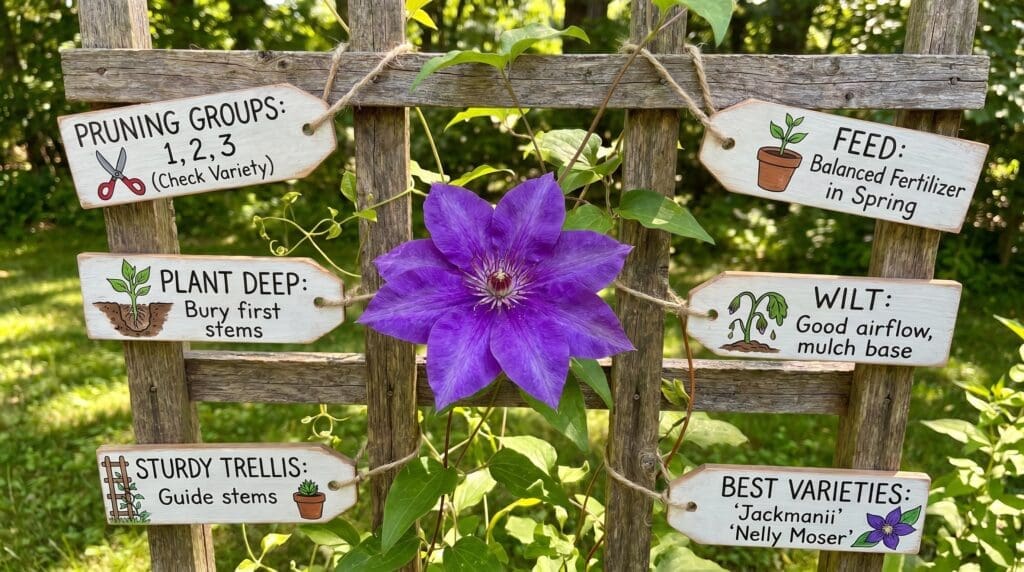
I did not grow up with cultivated clematis in the family garden, which feels like a missed opportunity now. Wild Clematis vitalba, often called old man’s beard, climbed through hedgerows along country lanes, but the big garden hybrids were absent. Later, in my own narrow London garden, clematis became one of those plants I could remember by exact location: ‘Nelly Moser’ in the cooler spot, Clematis armandii for evergreen structure, ‘Niobe’ for drama, and the classic Clematis jackmanii for dependable late color.
The good news is that clematis does not require a grand brick wall or expensive custom pergola. It can climb a fence, scramble through shrubs, run over an arch, grow up a garden obelisk, or live happily in a large patio pot. The secret is choosing the right variety, planting it deeply, providing support its leaf stems can actually grip, and pruning according to its group.
- Light: Most clematis flower best with 6 or more hours of sun on the vine, though some pale varieties prefer light afternoon shade.
- Roots: Keep the root zone cool, shaded and evenly moist with mulch, companion plants or a shaded base.
- Planting depth: Plant large-flowered clematis about 2 to 4 inches deeper than the nursery soil level to protect lower buds.
- Support: Use thin wire, twine, netting, obelisks or trellis pieces that leaf stems can wrap around.
- Pruning: Identify the pruning group before cutting. Group 1 blooms on old wood, Group 2 needs light pruning, and Group 3 is cut back hard.
- Best first buy: Start with a healthy container-grown plant, a narrow-gauge trellis or obelisk, compost, mulch and sharp bypass pruners.
Clematis is not hard, but it is unforgiving when the support is wrong or the roots dry out. These are the supplies that solve the most common beginner problems.
| Supply | Best For | Why It Helps | Check Price |
|---|---|---|---|
| Live Clematis Plants | Fastest start | Container-grown plants establish faster than weak bare-root vines and often bloom sooner. | Amazon |
| Garden Obelisk or Trellis | Training vines upward | Clematis leaf stems need thin supports, not thick posts they cannot grip. | Amazon |
| Clematis or Rose Fertilizer | Spring feeding | A balanced flowering-vine feed supports roots, stems and buds without overdoing nitrogen. | Amazon |
| Compost and Mulch | Cool moist roots | Organic matter improves soil moisture while mulch protects the root zone from heat. | Amazon |
| Bypass Pruning Shears | Clean pruning cuts | Sharp pruners help with pruning groups, dead stems and clematis wilt cleanup. | Amazon |
How Clematis Climbs
Clematis does not climb like ivy. It does not glue itself to brick with aerial roots, and it does not twine heavy stems around thick posts like wisteria. Clematis climbs by wrapping slender leaf stems, called petioles, around nearby supports.
That is why a beautiful chunky pergola post is not enough by itself. The vine needs thin wire, twine, netting, narrow lattice, canes, obelisk rods or a trellis grid. A support diameter under about half an inch is usually much easier for clematis to grip.
If you want clematis on a fence, add horizontal wires or a trellis panel in front of it. If you want it on a pergola, run thin wire or garden twine between the posts. If you want it in a flower border, use an obelisk, wigwam, tripod or narrow metal frame.
Bare-Root vs Container-Grown Clematis
Early spring garden centers and online shops often sell clematis in two formats: bare-root plants packed in peat or shavings, and container-grown nursery plants. Bare-root plants are cheaper, but they are also slower and riskier for beginners.
A bare-root clematis may need two or three growing seasons before it produces a strong root system and a serious flower display. A container-grown clematis costs more, but the root ball is already active and protected. If you want faster growth and fewer headaches, buy the healthiest potted plant you can afford.
How to Plant Clematis the Right Way
Planting depth is the clematis detail worth getting right. Large-flowered hybrids are often planted slightly deeper than they sat in the nursery pot so dormant buds below the soil can send up new shoots if the top growth is damaged.
- Prepare a deep wide hole: Dig wider and deeper than the pot so roots can move into loosened soil.
- Improve the soil: Mix native soil with compost. Avoid creating a soggy pocket in heavy clay.
- Set the crown deeper: For large-flowered types, plant about 2 to 4 inches deeper than the nursery soil level.
- Angle toward the support: Lean the stems gently toward the trellis, obelisk, shrub or fence wires.
- Backfill and water: Firm gently and water deeply to settle the soil.
- Shade the root zone: Add mulch, a flat stone, low companion plants or nearby perennials to keep roots cool.
- Tie young shoots loosely: Use soft ties until the leaf stems find the support.
The old “head in the sun, feet in the shade” rule is still useful. Clematis flowers best when the vine gets light, but the root zone stays cool, moist and protected.
Best Soil and Fertilizer for Clematis
Clematis likes rich, deep soil that holds moisture without staying waterlogged. A neutral to slightly alkaline soil is often recommended, but the bigger practical issue for most gardeners is drainage and organic matter. Soggy winter soil can rot roots, while dry summer soil can stop growth and reduce blooms.
Work compost into the planting area and mulch annually. Feed in early spring when new shoots appear, then again lightly after the first flush of flowers for repeat-blooming types. Avoid dumping high-nitrogen lawn fertilizer around the vine; it can encourage leafy growth at the expense of flowers.
Clematis Pruning Groups Explained
The number one clematis mistake is pruning at the wrong time. Clematis varieties are grouped by when and where they bloom. Once you know the group, the pruning becomes simple.
| Pruning Group | When It Blooms | How to Prune | Examples |
|---|---|---|---|
| Group 1 | Early spring on old wood. | Do not prune in winter. Trim lightly only after flowering if needed. | C. montana, C. armandii, C. alpina |
| Group 2 | Late spring or early summer on old wood, often with some repeat bloom. | Prune lightly in late winter or early spring to remove dead stems and cut to healthy buds. | ‘Nelly Moser’, ‘Niobe’, many large-flowered hybrids |
| Group 3 | Summer to fall on new wood. | Cut hard in late winter or early spring to about 12 to 18 inches above ground. | C. viticella, ‘Jackmanii’, ‘Romantika’, ‘Princess Diana’ |
What If You Do Not Know Your Clematis Pruning Group?
Wait and watch for one season. If it flowers early on last year’s stems, treat it like Group 1 or Group 2. If it waits until summer and flowers on brand-new shoots, treat it like Group 3. When in doubt, prune lightly rather than cutting everything down.
For a neglected tangled clematis, you can sometimes reset the plant with hard pruning, but you may sacrifice one season of flowers if it belongs to Group 1 or Group 2.
8 Best Clematis Varieties for Different Garden Spots
The best clematis variety depends on where you want it to grow. A compact patio vine, a vigorous tree climber and a large-flowered shady-wall clematis are not interchangeable.
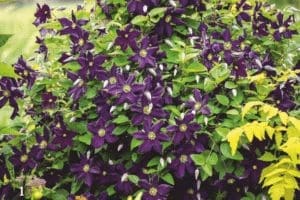
1. ‘Romantika’ — Best for a Fence Panel
‘Romantika’ produces dark purple flowers that look especially rich against pale fences, cedar panels and light-painted garden structures. As a Group 3 clematis, it is easy to manage: cut it back in late winter and let fresh stems carry the new season’s flowers.
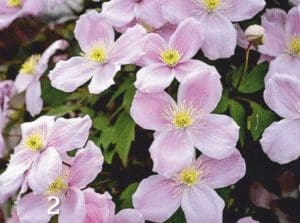
2. Clematis montana ‘Rubens’ — Best for Trees and Large Structures
Clematis montana ‘Rubens’ is vigorous, beautiful and absolutely not for tiny spaces. It can climb into mature trees, cover big fences and soften large garden structures with masses of pink spring flowers. It is a Group 1 clematis, so prune only after flowering if it outgrows its space.
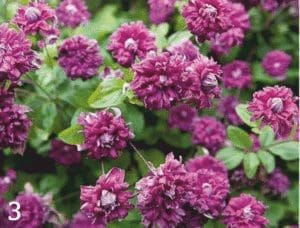
3. ‘Purpurea Plena Elegans’ — Best for Scrambling Through Shrubs
This Clematis viticella cultivar has double purplish-crimson flowers and a lighter, more graceful habit than many large-flowered hybrids. It works beautifully through shrubs that bloom earlier, extending the season after lilacs, forsythia or spring shrubs have finished.
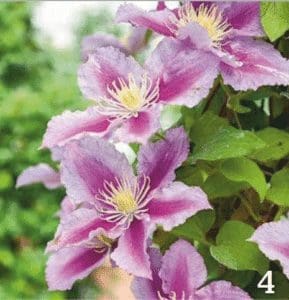
4. ‘Nelly Moser’ — Best for Light Shade
‘Nelly Moser’ is famous for pale lavender-pink flowers with a deeper central stripe. Harsh afternoon sun can fade the flowers, so this is a good choice for bright shade, morning sun or a cooler north- or east-facing wall.
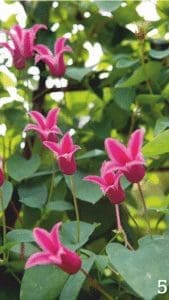
5. ‘Princess Diana’ — Best for a Garden Obelisk
‘Princess Diana’ is a tidy texensis-type clematis with bright pink tulip-shaped flowers. Its upright habit makes it excellent for a metal obelisk, narrow trellis or formal vertical accent in a perennial border.
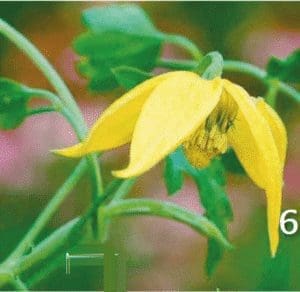
6. Clematis tangutica — Best for Yellow Bells and Seedheads
Clematis tangutica brings a wilder look with yellow nodding bell-shaped flowers followed by fluffy silver seedheads. It is useful over arches, rustic pergolas and informal structures where you want late-season texture as much as flowers.
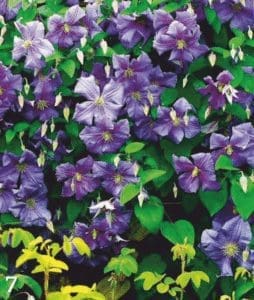
7. ‘Perle d’Azur’ — Best for a Large Wall
‘Perle d’Azur’ is a classic blue clematis for covering a bigger vertical space. It brings soft sky-blue flowers in summer and pairs beautifully with roses, pale brick, white fences and cottage-style borders.
8. ‘Fujimusume’ — Best for a Patio Container
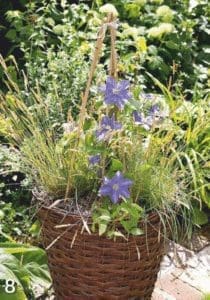
‘Fujimusume’ is a compact large-flowered clematis with clear blue blooms, making it a good option for a large pot, balcony or patio. Use a deep container, a compact obelisk and consistent watering.
Growing Clematis in Pots
Clematis can grow well in containers if you choose a compact variety and use a large enough pot. Small decorative containers dry out too fast and leave the roots vulnerable to heat stress.
- Use a deep pot: Aim for a container at least 18 inches wide and deep for many compact varieties.
- Use drainage holes: Clematis hates stagnant soggy soil.
- Add a support at planting: Install an obelisk, tripod or trellis before the vine becomes tangled.
- Keep roots cool: Use mulch and place lower companion plants around the pot if needed.
- Water consistently: Containers dry faster than garden beds.
- Feed lightly: Use a flowering-vine fertilizer in spring and after the first bloom flush if appropriate.
Why Is My Clematis Not Blooming?
A non-blooming clematis is usually not being difficult for sport. The cause is normally pruning, light, age, feeding or root stress.
| Problem | Likely Cause | Fix |
|---|---|---|
| Lots of leaves, no flowers | Too much nitrogen, low light or immature plant. | Use flowering fertilizer, increase light and give young plants time. |
| No spring flowers | Group 1 or Group 2 plant pruned too hard in winter. | Identify the group and prune after flowering or only lightly. |
| Weak growth | Dry roots, poor soil, small pot or transplant stress. | Water deeply, mulch, improve soil and avoid tiny pots. |
| Buds form then fail | Drought stress, heat stress or inconsistent watering. | Keep soil evenly moist, especially in containers. |
Clematis Wilt and Pest Problems
Clematis wilt is the problem that scares gardeners most. A healthy-looking vine can suddenly collapse, with leaves and stems turning black or limp. It is most often associated with large-flowered hybrids, especially during humid or stressful weather.
If wilt appears, cut the affected stems back to healthy tissue or down near the ground, clean your pruners, and dispose of infected material in the trash rather than compost. If the clematis was planted deeply, new shoots may return from protected buds below the soil line.
Other clematis problems include aphids, slugs on young growth, powdery mildew in crowded spots and drought stress in containers. Most issues are reduced by good airflow, consistent moisture, mulch, clean pruning and avoiding overfeeding.
Best Companion Plants for Clematis
Companion plants help shade the root zone and make the vine look more natural. Choose low or medium plants that will not smother the clematis crown.
- Hardy geraniums: Excellent low mounds for shading roots.
- Catmint: Soft foliage and flowers around sunny clematis bases.
- Hostas: Useful for shade-tolerant clematis in cooler positions.
- Heuchera: Colorful foliage without aggressive root competition.
- Small ornamental grasses: Provide movement and root shade.
- Roses: Classic pairing, especially with Group 3 clematis trained through climbing roses.
- Lavender: Works in sunnier, well-drained spots if the clematis roots stay moist enough.
For a great root-shading companion, see our guide to hardy geranium ground cover.
Common Clematis Care Mistakes
- Pruning before identifying the group: This is the fastest way to remove flower buds.
- Using thick supports: Clematis needs thin supports its leaf stems can wrap around.
- Planting too shallow: Deep planting protects lower buds in many large-flowered types.
- Letting roots bake: Hot dry roots lead to weak growth and poor flowering.
- Overfeeding nitrogen: Too much leaf growth can reduce flowers.
- Buying weak bare-root plants: Cheap starts can take years to become impressive.
- Growing large varieties in tiny pots: Containers must be deep, stable and consistently watered.
- Composting wilted stems: Diseased material is better removed from the garden.
Final Takeaway
Clematis earns its reputation as one of the best flowering vines because it gives vertical color without needing a massive garden. It can dress a fence, soften a wall, climb an obelisk, bloom through a shrub or make a patio container feel special.
The care formula is simple: buy a healthy plant, plant it deeply, keep the roots cool and moist, give the leaf stems something thin to grip, and prune according to the correct group. Once you understand those rules, clematis stops being mysterious and starts behaving like the garden show-off it was meant to be.
Frequently Asked Questions About Clematis Care
Do clematis vines come back every year?
Yes. Most garden clematis are perennial vines that return each year. Some are deciduous and lose leaves in winter, while evergreen types keep foliage in milder climates.
How long does it take for a new clematis to bloom?
A healthy container-grown clematis may produce flowers in its first season, but many plants take two to three years to build the root system needed for a heavy display.
Can clematis grow in full shade?
Most clematis need bright light to flower well. Some varieties, such as ‘Nelly Moser’ and certain alpina types, tolerate partial shade, but deep shade usually means few or no flowers.
Why are my clematis leaves turning black and wilting?
Sudden blackening and collapse can be clematis wilt. Cut affected stems back, remove diseased material from the garden and keep the plant watered. Deep planting helps the vine reshoot from lower buds.
Should you fertilize clematis while it is blooming?
It is better to feed clematis in early spring and again after the first bloom flush if needed. Heavy feeding during bloom can push soft growth instead of improving flowers.
What is the best trellis for clematis?
The best trellis has thin rods, wire, twine or lattice that clematis leaf stems can wrap around. Thick posts alone are not enough for good climbing.
How deep should I plant clematis?
Large-flowered clematis are often planted about 2 to 4 inches deeper than the nursery soil level. This protects lower buds and helps the plant recover if top growth is damaged.
Which clematis pruning group is easiest?
Group 3 is usually easiest because it blooms on new growth and can be cut back hard in late winter or early spring.
Can clematis grow in pots?
Yes. Compact clematis varieties grow well in large containers with drainage, a sturdy support, consistent watering and a cool root zone.
Why is my clematis not blooming?
Common reasons include pruning at the wrong time, too much shade, too much nitrogen, immature roots, drought stress or a pot that is too small.
Can clematis climb a fence?
Yes, but a smooth fence needs added support. Install wire, netting, narrow lattice or a trellis panel so the leaf stems can grip.
What should I plant at the base of clematis?
Low perennials such as hardy geraniums, catmint, heuchera, hostas or small grasses can shade the root zone without overwhelming the vine.
Join our gardening community for practical plant care guides, pruning reminders, flower garden ideas and seasonal growing tips.
100% Free. No spam. Unsubscribe anytime.