

















A loose, scratched, sticky, or outdated doorknob can make a perfectly good room feel unfinished. The good news: learning how to change a doorknob is one of the easiest DIY upgrades in the house. Most interior knobs can be replaced with a Phillips screwdriver, a tape measure, and about 15 minutes if the existing door holes are standard.
The job gets frustrating only when three small details are ignored: hidden screws, backset size, and latch direction. Get those right, and a bedroom, bathroom, hallway, pantry, closet, or basement door can look cleaner and work better without calling a handyman.
For exterior entry doors, smart locks, deadbolts, damaged frames, or doors that have never been drilled for a knob, the project can get more involved. For a normal replacement where the old knob already fits the door, this is squarely beginner DIY territory.

Quick Answer: How to Change a Doorknob
- Prop the door open so it does not swing while you work.
- Remove the old knob by unscrewing visible screws or releasing hidden screws through the small slot or pinhole.
- Remove the latch and strike plate from the edge of the door and the jamb.
- Measure the backset so the new latch matches the door hole.
- Install the new latch with the slanted side facing the direction the door closes.
- Install both knob halves through the latch spindle opening and tighten screws evenly by hand.
- Install the strike plate and test the door before calling the job done.
Before You Buy: Make Sure the New Doorknob Fits
Most replacement doorknobs are designed for standard door prep, but “standard” still deserves a quick check. A two-minute measurement can save you from opening the package, scratching the finish, and realizing the latch does not reach the center of the hole.
If the bottom of your entry door has leaks, rot, drafts, or a loose threshold, see our full door sill plate replacement guide.
| Fit Check | What to Measure or Confirm | Why It Matters |
|---|---|---|
| Backset | Distance from door edge to center of knob hole; usually 2-3/8″ or 2-3/4″. | The latch must line up with the knob hole. |
| Door thickness | Most interior doors are thinner than many exterior doors. | The knob spindle and screws must fit the door thickness. |
| Latch faceplate | Rounded corner, square corner, or drive-in latch. | A mismatch may require light chiseling or a different latch setup. |
| Function | Passage, privacy, keyed entry, dummy knob. | A closet knob, bathroom knob, and exterior lockset do different jobs. |
| Door swing | Which direction the door closes into the jamb. | The latch bevel must face the right way. |
Passage vs Privacy vs Keyed vs Dummy Doorknobs
Buy the right knob function before worrying about finish. Satin nickel, matte black, bronze, brass, and chrome are style choices. Function decides whether the door actually works for the room.
- Passage doorknob: No lock. Best for hallways, closets, pantries, and rooms that do not need privacy.
- Privacy doorknob: Simple push-button or turn-button lock, usually with emergency release. Best for bedrooms and bathrooms.
- Keyed entry knob: Uses a key from one side. Best for exterior doors, garages, or rooms that need more security.
- Dummy knob: Non-turning decorative knob. Best for closet doors, pantry pairs, or doors with ball catches.
Tools and Materials Needed
You probably already own the tools for a simple doorknob replacement. A manual screwdriver is better than a power drill for most beginners because it reduces the chance of stripping screws, scratching the finish, or overtightening the knob until the latch binds.
- Phillips-head screwdriver: The main tool for most knob screws and strike plates.
- New doorknob set: Should include both knobs, latch, strike plate, and screws.
- Tape measure: Used to check backset and door thickness.
- Small flathead screwdriver or paperclip: Helpful for knobs with hidden release slots or pinholes.
- Utility knife: Useful for scoring old paint around a stuck rose or latch plate.
- Wood chisel and hammer: Only needed if the new latch plate or strike plate does not sit flush.
- Safety glasses: Wear them if chiseling or working with old brittle paint.
- Doorstop: Keeps the door still while you work.
Step 1: Remove the Old Doorknob
Prop the door open so you can work on both sides without the door moving. Start on the interior side of the door. Most standard interior knobs have two visible screws on the rose, which is the round plate behind the knob.
- Find the screws: Look on the interior side of the knob for two Phillips screws.
- Loosen both screws evenly: Back them out by hand with a screwdriver.
- Pull the knob halves apart: Hold both sides of the knob and pull straight away from the door.
- Set hardware aside: Keep old screws, latch, and strike plate nearby until the new knob is installed and tested.
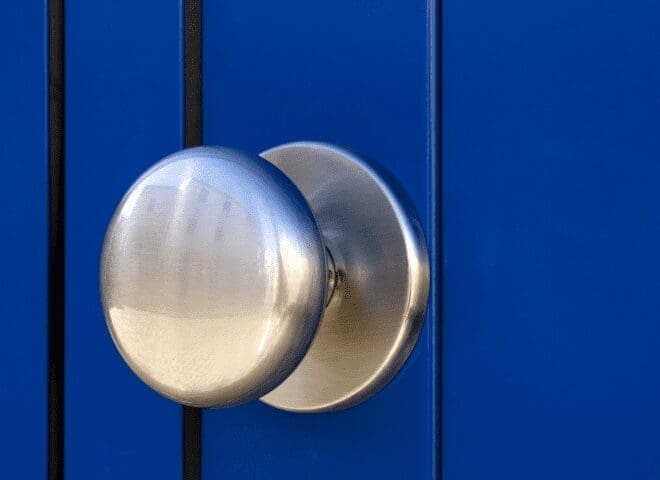
How to Remove a Doorknob With Hidden Screws
If you cannot see screws, do not pry wildly at the door. Many older or decorative knobs hide the mounting screws under the rose cover.
- Look for a tiny slot, round pinhole, or release tab on the neck of the knob.
- Press a paperclip, small flathead screwdriver, or release tool into the slot.
- Pull the knob away from the door while pressing the release.
- Once the knob comes off, gently pry or twist off the decorative rose cover.
- Remove the now-visible mounting screws.
Score painted edges with a utility knife before prying off a rose cover. Old paint can glue the cover to the door, and forcing it can peel paint or chip veneer.
Step 2: Remove the Old Latch and Strike Plate
The latch is the sliding bolt inside the door edge. The strike plate is the metal plate on the door jamb where the latch catches.
- Remove the two screws from the latch plate on the edge of the door.
- Pull the latch assembly straight out of the door.
- Remove the strike plate screws from the jamb.
- Check the old latch and new latch side by side before tossing anything.
If paint is holding the latch plate in place, score around the plate with a utility knife before removing it. This helps avoid tearing a chunk of paint from the door edge.
Step 3: Measure the Backset
The backset is the distance from the edge of the door to the center of the large knob hole. In many U.S. homes, the backset is either 2-3/8 inches or 2-3/4 inches. Many modern replacement latches are adjustable, but you still need to set them correctly.

Measure from the door edge to the center of the large round hole. Then adjust the new latch to match that measurement before installation. If the latch is too short or too long, the knob spindle will not line up correctly.
Step 4: Install the New Latch
Slide the new latch into the edge bore hole. The slanted side of the latch bolt should face the direction the door closes. In plain English: the beveled side should hit the strike plate first so the latch can push inward and click shut.
- Adjust the latch to the correct backset.
- Slide the latch into the edge of the door.
- Make sure the latch bevel faces the jamb.
- Install the latch screws by hand.
- Confirm the latch sits flush with the door edge.
If the latch plate does not sit flush because the new plate is larger or shaped differently, mark the edge carefully and use a sharp chisel to remove only the wood needed. Take shallow passes. It is much easier to remove a little more wood than to fix a gouge.
Step 5: Install the New Doorknob
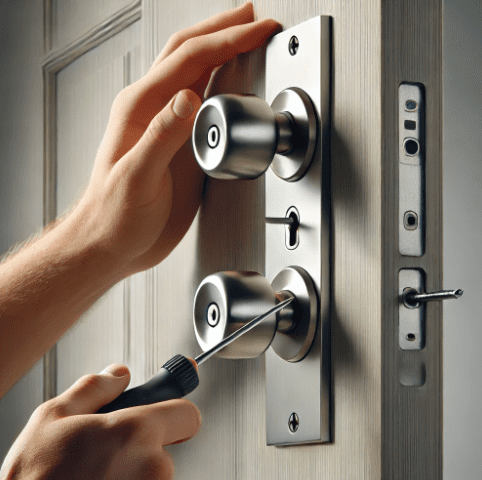
- Insert the exterior knob: Slide the spindle through the latch opening from the outside or non-screw side.
- Attach the interior knob: Align the inside knob with the spindle and screw posts.
- Start screws by hand: Hand-thread the screws first so they do not cross-thread.
- Tighten evenly: Alternate between screws so the knob seats flat.
- Do not overtighten: Stop when the rose is snug against the door and the knob turns freely.
Binding warning: If the new doorknob feels stiff right after installation, the mounting screws are probably too tight or uneven. Back each screw off a quarter-turn and test again.
Step 6: Install the Strike Plate
Attach the new strike plate to the door jamb. If the new plate matches the old mortise, this takes less than a minute. If it does not sit flush, you may need to carefully chisel the jamb or reuse the old strike plate if it fits the new latch well.
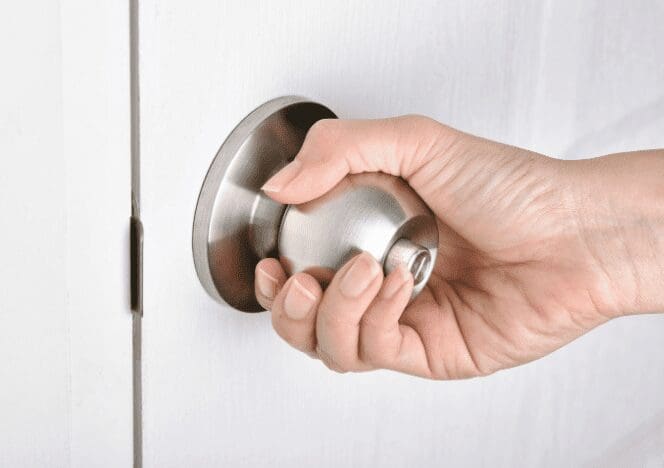
Close the door slowly and watch how the latch meets the strike plate. The latch should slide in smoothly and click without lifting, pushing, or slamming the door.
Step 7: Test the Doorknob
Do not clean up until the knob passes these checks:
- The knob turns smoothly from both sides.
- The latch retracts fully when the knob turns.
- The door closes without forcing it.
- The latch clicks into the strike plate.
- The lock works, if it is a privacy or keyed knob.
- The emergency release works on a privacy knob.
- The knob does not rattle loosely on the door.
Troubleshooting Common Doorknob Problems
| Problem | Likely Cause | Fix |
|---|---|---|
| Doorknob is stiff or will not turn smoothly | Mounting screws are overtightened or uneven. | Loosen each screw slightly and retest. |
| Door will not latch shut | Latch and strike plate are misaligned. | Adjust the strike plate or slightly enlarge the strike opening with a file. |
| Door only closes if you turn the knob | Latch is installed backward. | Remove the latch, rotate it 180 degrees, and reinstall. |
| Knob feels loose | Screws are loose, door hole is worn, or hardware is not seated. | Tighten evenly, check alignment, and inspect door damage. |
| Latch will not retract fully | Spindle not aligned, wrong backset, overtightened screws, or defective latch. | Remove and reinstall, confirm backset, and test latch before tightening fully. |
| New latch plate does not fit the old recess | Different faceplate shape or size. | Use the correct included latch option or carefully chisel the mortise. |
When to Call a Locksmith or Handyman
A basic interior doorknob replacement is usually DIY-friendly. Call help if the door or frame is damaged, the latch hole is misdrilled, the door will not align with the jamb, an exterior lockset needs security work, or you are changing deadbolts and keying.
Need Help With Door Hardware or a Sticking Door?
A local handyman can replace stubborn door hardware, adjust misaligned strike plates, repair jamb issues, and help when a simple knob swap turns into a door-fit problem.
Common Mistakes to Avoid
- Using a drill too aggressively: It can strip screws, scratch hardware, or overtighten the knob.
- Skipping the backset measurement: Wrong latch length makes the knob impossible to align.
- Installing the latch backward: The slanted latch face must meet the strike plate as the door closes.
- Overtightening mounting screws: This can bind the mechanism and make the knob stiff.
- Forgetting the strike plate: A new knob may work poorly with an old misaligned strike.
- Chiseling too much: Remove wood slowly when fitting plates.
- Buying the wrong function: Privacy, passage, dummy, and keyed knobs are not interchangeable.
- Throwing out old parts too early: Keep them until the new hardware has been fully tested.
Final Takeaway
Changing a doorknob is a small project with a big payoff. Remove the old knob, measure the backset, install the latch in the right direction, tighten the new knob evenly, align the strike plate, and test the door before finishing.
Most problems come from overtightened screws, a backward latch, or a strike plate that does not line up. Fix those details and the new knob should feel smooth, solid, and clean without turning into a Saturday-long door surgery.
Frequently Asked Questions About Changing a Doorknob
Is it difficult to replace a doorknob?
No. Replacing a standard interior doorknob is a beginner-level DIY project when the door already has standard holes. Most homeowners can do it with a Phillips screwdriver in about 10 to 20 minutes.
Can I change a doorknob with only a screwdriver?
Yes, many standard replacements need only a Phillips screwdriver. A tape measure, paperclip, utility knife, and small flathead screwdriver are helpful for hidden screws, backset checks, and painted hardware.
How do I remove a doorknob with no visible screws?
Look for a small slot or pinhole on the knob neck. Press it with a paperclip or small screwdriver while pulling the knob off. Then remove the decorative rose cover to expose the mounting screws.
What is the backset on a door knob?
The backset is the distance from the door edge to the center of the knob hole. Common U.S. backsets are 2-3/8 inches and 2-3/4 inches. Many replacement latches adjust to both.
Which way should the door latch face?
The slanted or beveled side of the latch should face the door jamb so it can slide into the strike plate as the door closes.
Why is my new doorknob stiff?
A stiff new doorknob is often caused by overtightened mounting screws or uneven screw pressure. Loosen both screws slightly and test the knob again.
Why won’t my door latch after changing the knob?
The latch may not line up with the strike plate, the strike plate may be too high or low, or the latch may be installed backward. Check alignment and latch direction.
Should I use a drill to install a doorknob?
A manual screwdriver is safer for most doorknob replacements. A drill can strip screws, scratch the new finish, or overtighten the mechanism.
Do I need to replace the strike plate?
It is best to use the strike plate included with the new doorknob if it fits the jamb. If the old strike plate aligns better and works smoothly, it may be reused on some interior doors.
Can I replace an exterior doorknob myself?
You can replace many exterior knobs yourself, but entry doors, deadbolts, smart locks, damaged jambs, and security issues require more care. Call a locksmith or handyman if the door does not align or the lock does not work smoothly.
🔧 Make Home Repairs Easier
Join our growing community and get practical DIY repair tips, home maintenance checklists, tool guides, and beginner-friendly home improvement ideas sent straight to your inbox.
100% Free. No spam. Unsubscribe anytime.