











Indeterminate tomatoes are the tomato plants that do not know when to quit. Give them warm weather, sun, water, food, and support, and they keep stretching upward while setting new flowers and fruit through the season.
That is why gardeners love them. Instead of one short harvest window, indeterminate tomato plants can give you a steady stream of slicers, cherry tomatoes, beefsteaks, paste tomatoes, and heirlooms until frost, disease, or severe stress shuts the plant down.
The tradeoff is simple: indeterminate tomatoes need more management. They usually need taller support, more pruning decisions, more tying, and more space than compact determinate varieties. If you plant one with a flimsy cage and ignore it for six weeks, it can turn into a tangled green monster fast.
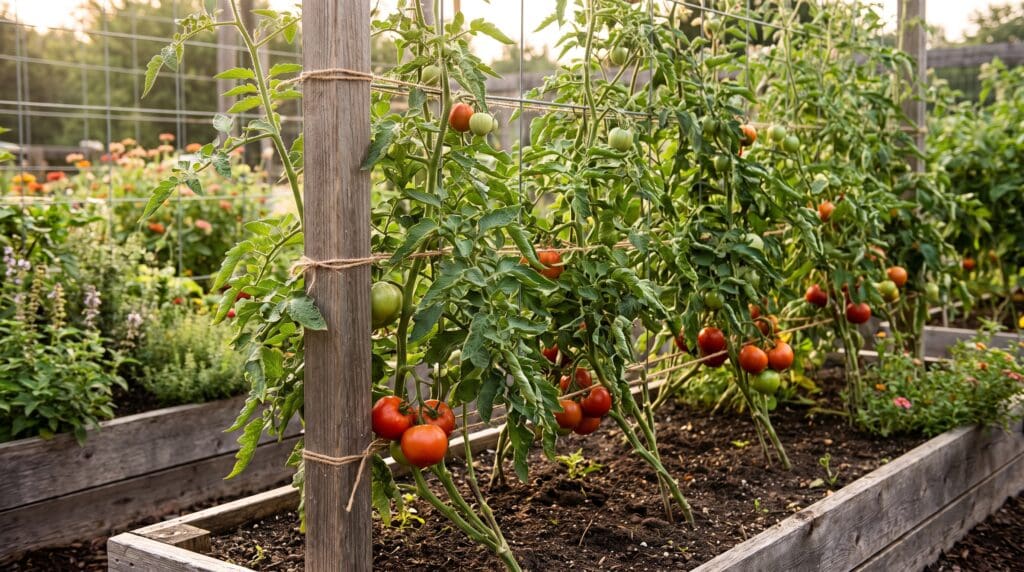
Indeterminate tomatoes are vining tomato plants that keep growing, flowering, and producing fruit over a long season.
Determinate tomatoes are bushier plants that grow to a more limited size and usually produce a heavier crop in a shorter window.
Fast rule: Choose indeterminate tomatoes for long harvests and vertical growing. Choose determinate tomatoes for compact plants, containers, and canning-style harvests.
Tall, vining, continuous growth. Many plants can reach 6 feet or more with the right conditions and support.
Steady harvest over a long season instead of one short, concentrated crop.
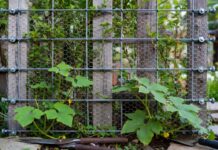
Best grown with tall stakes, heavy-duty cages, string trellis, cattle panel trellis, or Florida weave systems.
Fresh eating, long-season harvests, vertical gardening, cherry tomatoes, heirlooms, slicers, and many sauce tomatoes.
Do not buy indeterminate tomatoes without buying support. A tall tomato variety with a cheap short cage is one of the fastest ways to create a collapsed, tangled plant by midsummer.
Indeterminate vs Determinate Tomatoes
The biggest difference is how the plant grows and how the harvest arrives.
Indeterminate tomatoes keep growing from the main stem and side shoots while producing flowers and fruit along the vine. Determinate tomatoes grow to a more limited size, set fruit more heavily over a shorter period, and then slow down.
Watch: Indeterminate Tomatoes Explained
This video explains what indeterminate tomatoes are, how they differ from determinate tomatoes, and why tall tomato plants need serious support before they get out of control.
Growth: Tall, vining, continuous growth.
Harvest: Fruit ripens over a longer season.
Support: Needs tall, strong support.
Best for: Fresh eating, long harvests, vertical growing, cherry tomatoes, slicers, beefsteaks, and many heirlooms.
Growth: Bushier, more limited size.
Harvest: Fruit often ripens in a shorter window.
Support: Usually works with a sturdy cage or shorter support.
Best for: Containers, small gardens, sauce batches, canning, and gardeners who want a more compact plant.
How Tall Do Indeterminate Tomatoes Grow?
Many indeterminate tomato plants grow 6 feet tall or more, and some vigorous varieties can climb higher in warm climates, long seasons, greenhouses, or high tunnels. The exact height depends on variety, weather, pruning, support, soil fertility, water, and growing season length.
The plant does not stop at a tidy predetermined size. It keeps making new growth at the top while producing flowers and fruit along the vine. That is why support needs to be in place early.
Height Planning Rules
- Use support before the plant starts leaning.
- Plan for at least 6 feet of useful support for vigorous varieties.
- Do not rely on small decorative tomato cages for full-size indeterminate plants.
- Train the plant weekly while growth is soft and flexible.
- Keep fruit off the soil to reduce rot, pest damage, and harvest frustration.
Do Indeterminate Tomatoes Need Support?
Yes. Indeterminate tomatoes need support because the vines keep growing and the fruit gets heavy. Without cages, stakes, trellises, or twine, the plant sprawls on the ground, breaks branches, hides fruit, and becomes harder to water, prune, harvest, and inspect.
Support also improves airflow and keeps leaves and fruit farther from wet soil. That matters because tomato foliage pressed against the ground is more likely to stay damp and dirty.
Best for gardeners who want less pruning and an easier setup. Choose tall, strong cages instead of short flimsy ones.
Best for tighter spacing and trained plants. Usually needs regular tying and pruning.
Best for raised beds, greenhouses, high tunnels, and gardeners who like a clean vertical system.
Best for strong vertical support in raised beds. Good for heavy plants if anchored well.
Best for rows of tomatoes. Stakes and twine support plants from both sides as they grow.
Best Upgrade: Heavy-Duty Tomato Support
Best for: Indeterminate tomatoes, cherry tomatoes, beefsteaks, heirlooms, and raised bed tomato rows.
A strong tomato support system is usually more important than another bag of fertilizer. Tall plants need structure before the fruit load gets heavy.
Do You Prune Indeterminate Tomatoes?
You can prune indeterminate tomatoes, but you do not have to prune every plant the same way. The right amount depends on your support system, spacing, climate, disease pressure, and how much time you want to spend training the plant.
Pruning is mainly about managing growth. It can improve airflow, make tying easier, keep plants inside a trellis system, and help you find fruit. But over-pruning can expose fruit to sunscald, reduce leaf area, and stress the plant.
What Are Tomato Suckers?
Tomato suckers are shoots that grow from the joint between the main stem and a leaf branch. On indeterminate tomatoes, suckers can become full fruiting stems if you leave them alone.
That is why pruning is a choice, not magic. Removing suckers gives a more controlled plant. Leaving more suckers gives more foliage and more potential fruiting branches, but also a larger, messier plant.
Simple Pruning Options
Use a large strong cage and let the plant branch naturally. Remove only damaged, diseased, or soil-touching foliage.
Remove lower leaves near the soil and some crowded suckers. Good for most home gardeners.
Train one main stem up a stake or string. Best for tight spacing and controlled vertical growing, but it requires regular attention.
Keep the main stem plus one or two strong suckers. A good balance for many staked or trellised indeterminate tomatoes.
How to Prune Indeterminate Tomatoes
- Start when plants are young and easy to train.
- Use clean hands or clean pruning shears.
- Remove leaves touching the soil.
- Identify suckers growing between the main stem and leaf branches.
- Decide whether you want one main stem, two to three stems, or a looser cage-grown plant.
- Pinch small suckers early if you want a more controlled plant.
- Tie stems gently to stakes, strings, or trellis supports.
- Keep enough foliage to shade fruit and feed the plant.
- Do not remove large amounts of foliage during heat stress.
- Remove diseased foliage and dispose of it away from the garden.
Best for Pruning: Clean Snips, Ties, and Trellis Clips
Best for: Training indeterminate tomatoes on stakes, string trellis, cages, or cattle panels.
Small suckers can often be pinched by hand, but clean snips and soft ties make regular tomato training easier.
Best Indeterminate Tomato Varieties
The best indeterminate tomato depends on what you want to harvest. A gardener growing salads all summer needs different tomatoes than someone chasing huge sandwich slices or sauce tomatoes.
Best Indeterminate Cherry Tomatoes
- Sungold: Famous for sweet orange cherry tomatoes and huge productivity.
- Sweet Million: Heavy clusters of small red cherry tomatoes.
- Black Cherry: Dark, rich-flavored cherry tomato with strong garden appeal.
- Yellow Pear: Classic pear-shaped yellow cherry tomato with old-fashioned charm.
Best Indeterminate Slicing Tomatoes
- Better Boy: Popular red slicer with broad garden use.
- Big Beef: Productive beefsteak-style hybrid with good flavor and disease resistance.
- Brandywine: Famous heirloom flavor, usually slower and less uniform than hybrids.
- Cherokee Purple: Rich, dark heirloom slicer with excellent flavor.
Best Indeterminate Paste or Sauce Tomatoes
- San Marzano: Classic paste tomato often grown for sauce.
- Amish Paste: Large paste-type heirloom with dual sauce and slicing use.
- Opalka: Long paste tomato valued by many sauce gardeners.
Are Roma Tomatoes Determinate or Indeterminate?
Many Roma tomatoes are determinate, especially classic Roma types grown for paste, sauce, and canning. That is why Roma often shows up in determinate tomato discussions.
But do not rely only on the word “Roma.” Seed companies and nurseries may sell Roma-type, paste-type, or plum tomatoes with different growth habits. Always check the exact variety label.
Are San Marzano Tomatoes Determinate or Indeterminate?
San Marzano tomatoes are commonly grown as indeterminate paste tomatoes. They are popular for sauces because of their elongated shape, meaty texture, and lower seediness compared with many slicers.
If you are buying San Marzano seeds or plants, still check the label. Look for the growth habit, days to maturity, disease resistance, and whether the plant needs tall support.
Are Beefsteak Tomatoes Determinate or Indeterminate?
Many beefsteak tomatoes are indeterminate, especially classic large slicers and heirloom beefsteaks. These plants often need strong support because the fruit can be heavy.
Some compact or hybrid beefsteak-style varieties may be determinate or semi-determinate, so the variety name matters.
Are Cherry Tomatoes Determinate or Indeterminate?
Many cherry tomatoes are indeterminate and can become extremely vigorous. A productive cherry tomato can easily outgrow a small cage and keep making clusters until the season ends.
There are also compact determinate cherry tomatoes bred for containers, patios, and small spaces. Check the label before assuming all cherry tomatoes grow the same way.
Can You Grow Indeterminate Tomatoes in Containers?
Yes, but containers make support, watering, and variety choice more important. A full-size indeterminate tomato in a small pot will dry out fast and become difficult to support.
Use a large container, rich well-drained potting mix, consistent watering, and a strong support system. Grow bags can work well, but they also dry faster in hot weather.
Container Tips
- Use a large container or grow bag, not a tiny patio pot.
- Choose compact indeterminate, dwarf indeterminate, or cherry types if space is tight.
- Install support at planting time.
- Water consistently because containers dry faster than raised beds.
- Mulch the top of the pot to reduce moisture swings.
- Feed regularly but do not overdo nitrogen.
- Place containers where the plant gets strong sun.
Best for Containers: Grow Bags, Potting Mix, and Drip Watering
Best for: Balcony tomatoes, patio tomatoes, grow bag gardens, and small-space indeterminate tomatoes.
Containers can grow excellent tomatoes, but they need steady water and serious support. Bigger containers make the job easier.
Common Indeterminate Tomato Mistakes
Using weak cages: A short flimsy cage may work for small determinate tomatoes, but it often fails with tall indeterminate plants.
Waiting too long to install support: Support should go in at planting time, not after the plant sprawls.
Pruning too hard: Removing too much foliage can expose fruit and stress the plant.
Planting too close: Crowded indeterminate tomatoes become hard to prune, spray, harvest, and inspect.
Overfeeding nitrogen: Too much nitrogen can produce huge leafy plants with disappointing fruiting.
Ignoring the label: Roma, cherry, beefsteak, and paste tomato names do not always tell you the growth habit. Check the exact variety.
Final Verdict: Should You Grow Indeterminate Tomatoes?
Grow indeterminate tomatoes if you want tall plants, long harvests, vertical growing, and steady fruit through the season. They are excellent for gardeners who enjoy training plants, checking vines, harvesting often, and growing multiple tomato types for fresh eating.
Choose determinate tomatoes if you want compact plants, container convenience, or a heavier crop in a shorter window for sauce and canning. Many gardens can use both: indeterminate tomatoes for steady eating and determinate tomatoes for batch harvests.
The key is matching the plant to your setup. Indeterminate tomatoes are not hard, but they are not low-management plants. Give them sun, space, strong support, consistent water, and a pruning plan, and they can become the most productive plants in the garden.
Indeterminate Tomatoes FAQ
What is an indeterminate tomato?
An indeterminate tomato is a vining tomato plant that keeps growing, flowering, and producing fruit through the season until frost, disease, or severe stress stops it.
What is the difference between determinate and indeterminate tomatoes?
Determinate tomatoes grow to a more limited size and often produce a heavier crop in a shorter window. Indeterminate tomatoes keep growing and produce fruit over a longer season.
Are indeterminate tomatoes better?
Indeterminate tomatoes are better for long harvests, vertical growing, cherry tomatoes, slicers, beefsteaks, and many heirlooms. Determinate tomatoes may be better for small spaces, containers, and canning harvests.
How tall do indeterminate tomatoes grow?
Many indeterminate tomatoes grow 6 feet tall or more. Some vigorous varieties can grow even taller in warm climates, greenhouses, high tunnels, or long seasons.
Do indeterminate tomatoes need cages?
They need support, but not always a cage. Heavy-duty cages, tall stakes, string trellis, cattle panels, and Florida weave systems can all work.
Do indeterminate tomatoes need pruning?
They do not always need heavy pruning, but light pruning and regular training help manage airflow, support, spacing, and harvest access.
Can you grow indeterminate tomatoes in pots?
Yes, but use a large container, strong support, rich potting mix, consistent watering, and a variety suited to your space.
Are Roma tomatoes determinate or indeterminate?
Many Roma tomatoes are determinate, especially classic paste types, but always check the exact variety label because Roma-type tomatoes can vary.
Are San Marzano tomatoes determinate or indeterminate?
San Marzano tomatoes are commonly grown as indeterminate paste tomatoes, but check the seed packet or plant label for the exact growth habit.
Are beefsteak tomatoes determinate or indeterminate?
Many beefsteak tomatoes are indeterminate, especially large slicers and heirloom beefsteaks. Some compact hybrids may be determinate or semi-determinate.
Are cherry tomatoes determinate or indeterminate?
Many cherry tomatoes are indeterminate and very vigorous, but compact determinate cherry tomatoes also exist for patios and containers.
Should I remove suckers from indeterminate tomatoes?
You can remove some suckers to control growth, especially on staked or trellised plants. In large cages, many gardeners prune less and allow more branching.
How many stems should an indeterminate tomato have?
Many gardeners train indeterminate tomatoes to one, two, or three main stems. Cage-grown plants may have more stems with less pruning.
What is the best support for indeterminate tomatoes?
The best support depends on your setup. Tall stakes, string trellis, cattle panels, heavy-duty cages, and Florida weave systems all work if they are strong enough.
Do indeterminate tomatoes produce all season?
Yes, under good conditions they can continue producing until frost, disease, heat stress, or plant decline slows them down.
Join Garden Frontier for practical vegetable gardening, tomato growing, raised bed tips, tools, and seasonal garden advice.
100% free. No spam. Unsubscribe anytime.