














Organic lawn care is not about forcing a perfect golf-course lawn without chemicals. That is the trap. A lawn made only of flawless grass, cut like a billiard table and stripped of every weed, moss patch, worm cast, and seasonal imperfection, is not how nature works.
A better organic lawn is thick, green, usable, and healthy enough to recover from wear. It may include a few fine-leaved weeds. It may look a little softer than a chemically treated lawn. But it can still frame flower beds, handle family use, support soil life, and look good without reaching for weed and feed every spring.
The practical goal is simple: improve the soil, reduce moss conditions, mow correctly, feed gently, overseed bare patches, pull the worst weeds before they spread, and accept that a living lawn is not plastic carpet.
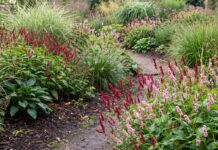
Moisture-loving perennials are useful around pond edges and rain gardens, but vigor matters. Our Persicaria care guide explains which ornamental types work well and how to control spreaders.

Organic lawn care means maintaining grass without routine synthetic weed killers, moss killers, or weed-and-feed products. Instead, you improve soil health, reduce compaction, mow correctly, overseed thin areas, and use organic or natural lawn fertilizers where appropriate.
The best results come from thickness. A dense lawn naturally crowds out many weeds and moss problems better than a weak lawn that depends on chemical rescue every season.
Expect a different standard. An organic lawn can look beautiful, but it may not be completely weed-free. The aim is a healthy lawn ecosystem, not a sterile green carpet.
Start by removing moss and dead grass, aerating compacted areas, and overseeding thin patches. A thicker lawn is the best organic weed control you can build.
Organic Lawn Care Starts With a Different Mindset
The biggest change is not the fertilizer. It is the expectation.
A chemical lawn-care program often tries to remove every weed and moss patch quickly. Organic lawn care asks a different question: why is the lawn thin, damp, compacted, shaded, hungry, scalped, or stressed in the first place?
Moss is usually a sign of shade, dampness, compaction, poor drainage, low fertility, or weak grass. Weeds often move into open soil where grass is thin. Brown summer grass may not be dead; it may simply be dormant. Organic lawn care works better when you fix the conditions that invite problems instead of chasing every symptom.
Organic Lawn Care Is Best For Gardeners Who Want:
- A greener lawn without routine weed and feed
- Fewer harsh chemical treatments
- Better soil and root health
- A more wildlife-friendly garden
- Less dependence on quick-fix products
- A lawn that blends with flower beds, borders, and edible gardens
- A practical, imperfect, good-looking lawn
Organic Lawn Care Is Not:
- A promise of a weed-free golf green
- An overnight fix for moss
- A substitute for drainage repair
- A cure for heavy shade
- A reason to ignore mowing height
- A way to avoid overseeding thin areas
Step 1: Rake Out Moss and Dead Grass
If moss has taken over part of the lawn, killing it first does not solve the deeper problem. You still have to remove the dead material afterward, and the moss often returns if the lawn remains damp, shady, compacted, or thin.
For organic moss control, start with raking or scarifying. This pulls out moss, dead grass, and thatch so light, air, and seed can reach the surface again. The lawn may look rough afterward, but that open space gives new grass a chance to grow.
Best Time to Rake Moss
- Spring: good for light cleanup after winter moss growth.
- Early fall: often ideal because soil is warm, moisture is more reliable, and overseeding can follow.
- Avoid hot drought: heavy scarifying during dry summer stress can weaken the lawn further.
Lawn Rake or Scarifying Rake
A sturdy lawn rake helps remove moss, dead grass, and debris before overseeding thin areas.
Powered Lawn Dethatcher
For larger lawns or heavy moss, a powered dethatcher can remove much more material than hand raking.
Step 2: Aerate Compacted Soil
Compacted soil makes organic lawn care much harder. Grass roots struggle, water sits near the surface, moss gains an advantage, and seed has trouble establishing.
Aeration opens channels in the soil so air, water, and roots can move more freely. On heavy soil, a hollow-tine aerator can remove plugs of soil and create better drainage channels. On lighter soil or smaller lawns, a garden fork or manual aerator may be enough.
Signs Your Lawn Needs Aeration
- Water puddles after rain
- Moss keeps returning
- Soil feels hard underfoot
- Grass thins in high-traffic areas
- Roots seem shallow
- Bare patches appear where people walk often
- The lawn struggles even after feeding and overseeding
Manual Lawn Aerator
A manual aerator or garden fork can help with smaller lawns and compacted patches.
Top-Dressing Soil or Compost
After aeration, a light top-dressing can help improve weak soil and support new seed. Keep it thin so you do not smother grass.
Step 3: Feed the Lawn Gently
Organic lawn fertilizer usually works more slowly than quick synthetic greening products, but that is not a bad thing. The goal is steady growth, stronger roots, and soil improvement, not a sudden soft flush that needs constant mowing and water.
Use an organic lawn fertilizer, compost-based feed, or slow-release natural fertilizer according to the product label. Apply when the lawn is actively growing and moisture is available. Avoid overfeeding stressed grass during heat or drought.
Good Feeding Moments
- Spring, after growth begins
- Early fall, before overseeding or recovery growth
- After aeration and light top-dressing
- Before gentle rain, when the product label allows it
Step 4: Overseed Thin Areas
Overseeding is one of the most important organic lawn care jobs because thick grass is natural weed prevention. Bare soil invites weeds. Thin grass lets moss and unwanted plants move in. New seed helps rebuild density.
The best time to overseed is usually when temperatures are moderate, soil moisture is easier to manage, and the seed can germinate before harsh weather. For many cool-season lawns, early fall is ideal. Spring can also work, especially for patch repair, but summer heat can make seed establishment difficult.
How to Overseed an Organic Lawn
- Rake out moss, dead grass, and loose debris.
- Scratch the soil surface in bare patches so seed can make contact.
- Spread grass seed suited to your region, light level, and use.
- Rake lightly so some seed touches soil.
- Top-dress lightly with compost or lawn soil if needed.
- Keep the seedbed evenly moist until germination.
- Wait until new grass is established before mowing too short or feeding heavily.
Seed tip: choose grass seed for your actual lawn conditions. Sunny lawn seed, shade mix, drought-tolerant mix, and high-traffic mix are not the same product.
Organic Lawn Fertilizer
A natural or organic lawn fertilizer can support steady growth after moss removal, aeration, and overseeding.
Grass Seed for Overseeding
Choose a seed mix that matches sun, shade, drought, traffic, and regional grass type.
Organic Weed Control for Lawns
Organic weed control works best when you stop treating weeds as the main problem. Weeds are often a symptom of thin grass, compacted soil, poor mowing habits, bare patches, or weak competition.
You do not have to remove every small plant from an organic lawn. Fine-leaved green plants can blend into the lawn and support a more diverse garden. The weeds to focus on are the large, spreading, aggressive, or seed-heavy ones that take over bare soil.
Organic Weed Control That Actually Helps
- Hand-pull deep weeds such as dandelions before they seed.
- Use a weed puller for taproots instead of tearing leaves off at the surface.
- Mow regularly to reduce flowering and seed heads.
- Overseed bare patches quickly so weeds do not occupy them.
- Aerate compacted areas where weeds keep returning.
- Improve shade or drainage problems where grass is losing the fight.
- Avoid scalping because very short grass exposes soil and weakens roots.
Be Careful With Vinegar and Boiling Water
Vinegar and boiling water are sometimes promoted as organic weed controls, but they are not selective lawn treatments. They can damage grass and nearby plants if used carelessly. They make more sense for cracks in paving, gravel edges, or isolated spots away from desirable grass.
Important: “natural” does not automatically mean safe for your lawn. Any product or homemade treatment that kills weeds can also injure grass if applied in the wrong place.
Manual Weed Puller
A manual weed puller helps remove taproot weeds without spraying the whole lawn.
Mowing an Organic Lawn
Mowing is not just cosmetic. It is one of the strongest organic lawn care tools you have.
Regular mowing encourages grass to thicken, reduces many weed seed heads, keeps the lawn usable, and gives a neater look even when the lawn includes more than one plant species. The mistake is mowing too short. Scalping weakens grass, exposes soil, and makes weeds more competitive.
Organic Lawn Mowing Tips
- Mow regularly during active growth.
- Keep mower blades sharp.
- Avoid cutting off too much at once.
- Raise the mowing height during heat or drought.
- Do not mow wet grass if it leaves clumps.
- Remove heavy clumps that smother grass.
- Use a mower with a rear roller if you want stripes.
Should You Remove Lawn Clippings?
Small, finely chopped clippings can return nutrients to the soil if they fall evenly into the lawn. Heavy wet clumps are different. They can smother grass, create ugly patches, and encourage problems.
For organic lawn care, the practical rule is simple: leave light clippings when they disappear quickly, but remove clumps. Compost excess clippings if they are not loaded with weed seeds or disease problems.
Should You Water an Organic Lawn?
An established organic lawn does not always need constant watering. Many lawns can go partly dormant in dry summer weather and recover when rain returns. That is normal.
But “do not water” is too rigid. During prolonged dry spells, newly seeded areas, young grass, and lawns you want to keep green may need deep, occasional watering. The key is deep and less frequent, not shallow daily sprinkling.
Signs a Lawn Needs Water
- Grass turns dull or bluish-green.
- Footprints remain visible after walking.
- Blades fold, wilt, or feel dry.
- New seed is drying before germination.
- Recently repaired patches are not establishing.
Spring: rake light moss, repair bare patches, aerate compacted areas, feed gently once growth begins, and start regular mowing.
Summer: mow higher, spot-pull major weeds, avoid overfeeding during heat, and water deeply only when needed.
Fall: scarify if moss or thatch is heavy, aerate, overseed, top-dress lightly, and repair thin areas before winter.
Winter: stay off frozen or waterlogged grass where possible and plan spring repairs based on moss, drainage, and bare patches.
How to Thicken an Organic Lawn
A thin lawn invites weeds and moss. A thick lawn is your best long-term defense.
To thicken an organic lawn, combine scarifying, aeration, overseeding, correct mowing, and steady feeding. Do not expect one product to do the job. The lawn needs space for new seedlings, soil contact, moisture, light, and time.
Best Thickening Strategy
- Rake out moss and thatch.
- Aerate compacted soil.
- Scratch bare patches lightly.
- Spread the right grass seed mix.
- Top-dress thinly with compost or lawn soil.
- Keep new seed moist.
- Mow gently once the new grass is ready.
- Feed after establishment, not immediately after sowing unless the product label supports it.
Common Organic Lawn Problems and Fixes
Moss Keeps Coming Back
Likely causes: shade, damp soil, compaction, poor drainage, weak grass, or low fertility.
Organic fix: rake moss out, aerate, reduce shade where possible, improve drainage, overseed, and feed the grass gently.
Dandelions and Plantains Spread
Likely causes: open soil, thin grass, compacted areas, and plants allowed to seed.
Organic fix: remove roots with a weeding tool, mow before seed heads mature, and overseed open spots.
Bare Patches Appear
Likely causes: foot traffic, pet damage, shade, drought, moss removal, or poor seed establishment.
Organic fix: loosen the surface, add seed, keep it moist, protect from birds if needed, and avoid mowing too soon.
Grass Turns Brown in Summer
Likely causes: heat, drought, shallow roots, low mowing height, or compacted soil.
Organic fix: mow higher, avoid heavy feeding in heat, water deeply only when needed, and plan fall aeration and overseeding.
Worm Casts Make the Lawn Messy
Likely causes: healthy worm activity near the surface.
Organic fix: let casts dry, then brush or rake them lightly so they act like a natural top-dressing.
7 Organic Lawn Care Mistakes to Avoid
Mistake 1: Expecting a Chemical Lawn Without Chemicals
Organic lawn care means accepting some natural variation. A few small weeds are not failure if the lawn is healthy, green, and usable.
Mistake 2: Killing Moss Without Fixing Why It Grew
If shade, compaction, drainage, or thin grass remain unchanged, moss is likely to return.
Mistake 3: Mowing Too Short
Scalping weakens grass, exposes soil, and gives weeds more room to germinate.
Mistake 4: Overseeding Without Soil Contact
Grass seed scattered over hard, matted thatch rarely performs well. Rake first and make sure seed reaches soil.
Mistake 5: Using Homemade Weed Killers on the Lawn
Vinegar, salt, and boiling water can damage desirable grass. Use them only where you can avoid lawn injury.
Mistake 6: Watering Lightly Every Day
Shallow watering encourages shallow roots. When watering is needed, deeper and less frequent watering is usually more useful.
Mistake 7: Forgetting That Soil Is the Real Lawn
Grass is only the visible part. Soil structure, drainage, roots, worms, microbes, and organic matter decide how resilient the lawn becomes.
Final Verdict: Is Organic Lawn Care Worth It?
Organic lawn care is worth it if you want a lawn that looks good, supports the rest of the garden, and does not depend on weed and feed every spring.
It is not effortless. You will rake moss, pull some weeds, overseed bare spots, adjust mowing height, improve drainage, and accept that the lawn may include more than grass. But once the lawn thickens and the soil improves, the work becomes more logical and less chemical-driven.
The best organic lawn is not perfect. It is alive, resilient, useful, and good-looking enough to make the garden feel cared for.
Organic Lawn Care FAQ
What is organic lawn care?
Organic lawn care is a way to maintain grass without routine synthetic weed killers, moss killers, or weed-and-feed products. It focuses on soil health, mowing, aeration, overseeding, natural feeding, and problem prevention.
Can you have a good lawn without weed and feed?
Yes. A lawn can look good without weed and feed if the grass is thick, the soil drains well, moss is managed, weeds are controlled early, and bare patches are overseeded.
How do I control moss organically in a lawn?
Rake or scarify moss out, then fix the conditions that caused it. Improve drainage, aerate compacted soil, reduce shade where possible, feed weak grass, and overseed thin areas.
What is the best organic fertilizer for lawns?
The best organic fertilizer depends on your soil, grass type, season, and product label. Look for slow, steady feeding rather than a quick green-up that pushes soft growth.
When should I overseed an organic lawn?
For many cool-season lawns, early fall is often the best time. Spring can work for repairs, but hot summer weather can make seed establishment harder.
Should I water an organic lawn?
Established lawns do not always need constant watering and may go dormant during dry weather. Water deeply during prolonged drought, new seeding, or when you want to maintain active growth.
How do I know if my lawn needs water?
Signs include bluish-green grass, wilting blades, dry brittle texture, footprints that remain visible, and new seed drying before it germinates.
Is vinegar a good organic weed killer for lawns?
Vinegar can injure grass as well as weeds. It is better used carefully on paving cracks or gravel edges, not as a broad lawn weed treatment.
How do I get rid of dandelions organically?
Use a manual weed puller to remove as much of the taproot as possible, mow before seed heads mature, and overseed open spots so new weeds have less room to grow.
Should I leave clippings on an organic lawn?
Fine clippings can return nutrients if they disappear quickly into the lawn. Heavy wet clumps should be removed because they can smother grass.
How often should I mow an organic lawn?
Mow as often as needed during active growth so you avoid cutting off too much at once. Regular mowing helps thicken grass and reduce weed seed heads.
Why does moss keep coming back?
Moss often returns because the lawn is shady, damp, compacted, thin, poorly drained, or low in vigor. Removing moss helps, but fixing the growing conditions matters more.
Can an organic lawn have weeds?
Yes. Many organic lawns include some fine-leaved weeds. The goal is to prevent aggressive weeds from taking over while keeping the lawn thick and attractive.
How do I thicken an organic lawn?
Rake out moss and dead material, aerate compacted soil, overseed thin patches, top-dress lightly if needed, keep seed moist, and mow at a height that supports healthy grass.
Is corn gluten meal useful for organic lawn care?
Corn gluten meal is often sold as a natural pre-emergent option, but timing and expectations matter. It is not a quick fix for established lawn weeds.
Do organic lawns need aeration?
Many do, especially if soil is compacted, moss is common, water sits on the surface, or grass thins in high-traffic areas.
Can I use compost on a lawn?
Yes, a thin compost top-dressing can help improve soil and support grass. Apply lightly so you do not bury or smother the lawn.
Why is my organic lawn thin?
Thin grass can come from shade, drought, poor soil, compaction, low fertility, mowing too short, pests, disease, or not overseeding after moss removal.
Is an organic lawn better for wildlife?
An organic lawn can be more wildlife-friendly because it reduces routine chemical use and allows a more diverse lawn ecosystem, especially when paired with borders, flowers, and healthy soil.
What is the biggest mistake in organic lawn care?
The biggest mistake is expecting one product to replace a full lawn-care system. Organic success comes from soil, mowing, aeration, overseeding, feeding, drainage, and patience working together.
Join Garden Frontier for practical lawn care, soil improvement, gardening, tools, home improvement, and seasonal outdoor advice.
100% free. No spam. Unsubscribe anytime.







Comments are closed.