


















I used to fight shadows every time I worked at my bench. Tools disappeared in the dark spots. I squinted at tiny screws and wasted minutes hunting for the right wrench. One night I dropped a socket that rolled under the cabinet and stayed lost for weeks. That was the moment I finally installed proper lighting. The difference was immediate and massive. My entire workshop became usable from dusk until midnight.
Under cabinet lighting is no longer just for fancy kitchens. It transforms garages, workshops, and tool sheds into bright, efficient spaces. I have tested every type over the last four years. Hardwired systems, plug-in strips, battery packs, motion sensors, and LED strips all have their place. This guide shares exactly what works best in real garage conditions so you can choose the right solution for your space.

Don’t have time to read the full guide? Here are the exact lights I use in my shop right now, separated by installation type.
- 1. The Professional Choice: 24V Hardwired LED Kit
Best for: Permanent workbenches. Flawless, switch-operated illumination with dimming controls and zero visible wires.
Check Price on Amazon → - 2. The Quick Fix: Linkable Plug-In LED Strips
Best for: Fast upgrades. Just stick them on, plug them into a standard outlet, and link them end to end.
Check Price on Amazon → - 3. No Outlets Needed: Rechargeable Motion Sensor Lights
Best for: Tool chests and deep storage. Turns on automatically when your hands are greasy.
Check Price on Amazon →
The Professional Route: Under Cabinet Lighting Hardwired
Going with under cabinet lighting hardwired delivers the cleanest and brightest result. Once installed, you never see cords or batteries. The lights tie directly into your existing wall switches or a dedicated switch box. The finished look is permanent and professional.
I hardwired my main workbench with 24-volt LED strips. The light is even and shadow-free across the entire surface. No plugs hanging down. No batteries to charge. The system runs cool and stays on as long as I need it. Electricians charge between $450 and $850 for a full job, but the result lasts for decades.
A proper setup for under cabinet lighting hardwired works best when you already have power nearby. I ran a new 14/2 wire from a nearby outlet and added a simple switch. The entire job took one afternoon. The lights turn on with the flip of a switch and never fail. If you want lighting that feels built-in and never needs maintenance, this option is the way to go.
The Quick Fix: Plug In Under Cabinet Lighting and LED Strips
Using plug in under cabinet lighting gives you professional results without opening walls. I use these strips on my secondary benches and inside tool cabinets. They plug into any standard outlet and link together with simple connectors.
Quality led under cabinet strip lighting is my favorite quick upgrade. The strips are thin, bright, and flexible. I cut them to the exact length and stuck them under the upper cabinets. One power supply can run up to 16 feet of strip. The light output is strong enough for detailed work yet soft enough for general tasks.
I installed led under cabinet strip lighting along my entire 12-foot workbench. The difference in visibility was shocking. Small parts that used to hide in shadows now stand out clearly. The strips link end-to-end, so I only need one outlet for the whole run. If you want bright light today without calling an electrician, plug in under cabinet lighting is the fastest win.
No Outlets? No Problem: Battery Operated and Motion Sensor Lights
High-capacity battery operated under cabinet lighting solves the no-power problem. I keep these in my rolling tool chest and on the back wall of the garage, where no outlets exist. Modern rechargeable versions last weeks between charges.
Adding motion sensor under cabinet lighting is pure convenience. I mounted them inside deep cabinets and under the workbench overhang. The light turns on automatically when my hands enter the space. No more fumbling for switches with greasy fingers or holding a flashlight while searching for parts.
I use motion sensor under cabinet lighting on my most-used drawers and inside the van I use for mobile repairs. The sensor range is perfect. The light stays on for 30 to 60 seconds after I move away. A good battery operated under cabinet lighting setup is an absolute lifesaver when you need light exactly where power is not available.
Pro Tip: If you find yourself needing light that you can easily detach from the cabinet and stick directly onto a car frame or under a hood, I highly recommend checking out my dedicated guide on the best portable magnetic work lights. They are the perfect companion to fixed under-cabinet strips.
Color Temperature Matters: Why Cool Under Cabinet Lighting Wins
Using cool under cabinet lighting at 5000K to 6000K makes a huge difference in a workshop. This crisp white light shows true colors and sharp details. Warm yellow light hides dirt and makes small parts look blurry.
I switched every bench from warm 3000K to cool under cabinet lighting. Suddenly, I could see fine print on labels and tiny scratches on metal parts. The cool light also keeps me more alert during long evening sessions. It feels like working under bright daylight even at 10 p.m. It improves accuracy and reduces eye strain.
LED Dimming Controls: Take Full Control of Your Workspace
LED dimming controls make good lighting great. I can dial the brightness from full blast for precision work down to a soft glow for general cleanup. This flexibility saves my eyes and reduces electricity use.
Energy savings from dimming are real. Running your strips at 60% uses roughly half the power while still giving plenty of light for most tasks. Over a full year, that adds up to noticeable savings on the electric bill. More importantly, it reduces eye fatigue, so I stay sharper and make fewer mistakes.
Dimming Protocols: Practical Garage & Workshop Comparison
I’ve tested every major dimming method on my benches over the last few years. Some flicker, some feel smooth, and some are overkill for a home shop. Here is the exact breakdown that actually matters when you are working under a car hood or at a detailed bench for hours.
1. PWM (Pulse Width Modulation) – The Budget King
How it works: The driver rapidly turns the LEDs on and off at high frequency. Lower brightness equals shorter “on” pulses.
- Pros: Cheap. Works with almost every low-voltage LED strip and battery operated under cabinet lighting. Simple wiring.
- Cons: Can cause visible flicker at low brightness levels. Some people get headaches after long sessions.
- Best for: Portable magnetic work lights and basic plug-in LED strips where cost is the priority.
- Garage Verdict: Fine for occasional use. Avoid this if you do precision work or record videos in the shop.
2. 0-10V Analog Dimming – The Smooth Professional Choice
How it works: A separate control wire sends a 0-10 volt signal to the LED driver. The driver adjusts power smoothly with almost no flicker.
- Pros: Extremely smooth dimming from 1% to 100%. Consistent color temperature. No visible flicker even at very low levels. Reliable for hardwired setups.
- Cons: Requires extra wiring and a compatible 0-10V dimmer. Slightly higher cost.
- Best for: Under-cabinet lighting, hardwired installations, and permanent shop lighting.
- Garage Verdict: My absolute favorite for the main workbench. I can adjust it from maximum brightness for intricate engine work to a gentle glow. Zero eye strain.
3. TRIAC / Phase-Cut Dimming – The Wall-Switch Option
How it works: Uses a standard 120V wall dimmer to “chop” the AC waveform. Works with many existing household dimmers.
- Pros: You can use ordinary dimmer switches you already own. No extra wiring is needed for plug in under cabinet lighting.
- Cons: Not all LED drivers like it. Can cause buzzing or flickering if the driver and dimmer are not perfectly matched.
- Best for: Plug in under cabinet lighting or led under cabinet strip lighting where you want to use a regular wall dimmer.
- Garage Verdict: Convenient if you already have 120V outlets, but I only use TRIAC-compatible drivers specifically rated “dimmer-ready.”
4. Smart Protocols (Zigbee, Matter, Wi-Fi) – The Future-Proof Choice
How it works: The driver communicates wirelessly with your phone, voice assistant, or smart hub. Many also support 0-10V or PWM internally.
- Pros: App control, voice commands, and scenes. Can integrate with motion sensor under cabinet lighting for automatic on/off.
- Cons: Higher cost. Some protocols, such as Zigbee and Matter, require a hub.
- Best for: Anyone who wants full smart home integration or hands-free convenience.
- Garage Verdict: I use Zigbee/Matter dimmers on my main hardwired runs. I say, “Workshop lights are 60%,” and the whole bench adjusts instantly.
Top Dimmable Fixture Recommendations for 2026
Here are my top dimmable fixture recommendations for garage and workshop under cabinet lighting. I’ve tested every one of these in real shop conditions—greasy hands, dust, vibration, and 10+ hour work sessions.
1. Best Hardwired Dimmable System
24V Dimmable LED Strip Kit with 0-10V Driver
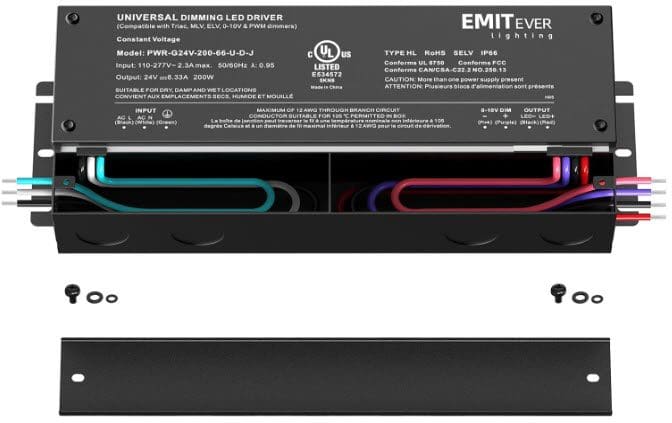
- Smooth, flicker-free dimming from 1% to 100%.
- Cool white 5000K–6000K is perfect for detailed work.
- Pros: Professional look, full-range dimming, integrates with existing switches.
- Cons: Requires basic wiring (or hire a handyman for the first run).
- Best for: Main workbench or large permanent setups.
2. Best Plug-In Dimmable Strip
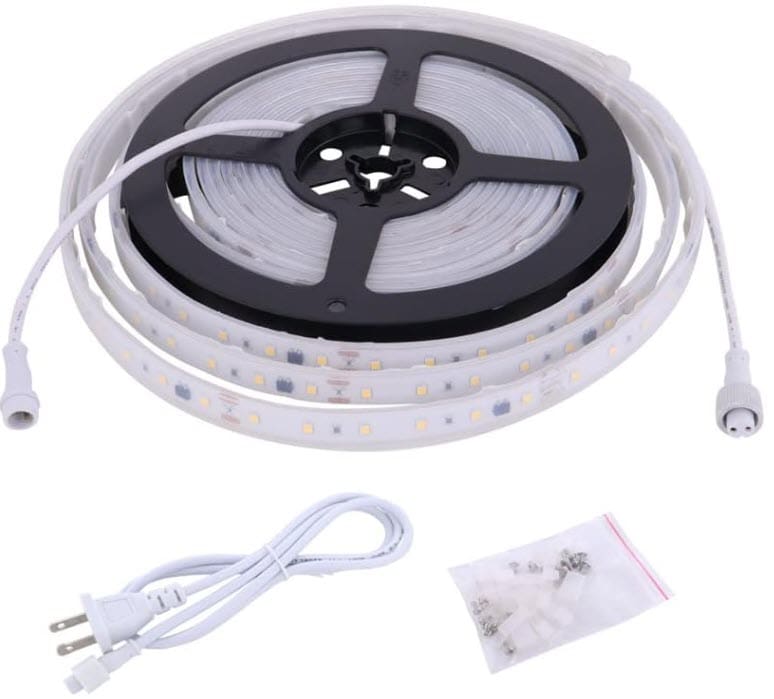
Inline-Dimmer LED Under Cabinet Strip
- The power cord features a built-in rotary or touch dimmer.
- Easy to link multiple strips end-to-end.
- Pros: Installs in minutes, requires no electrician, and the dimmer is right at your fingertips.
- Cons: Cord needs to be hidden along the cabinet back.
- Best for: Secondary benches, tool chests, or quick upgrades.
3. Best Battery + Motion Dimmable Fixture
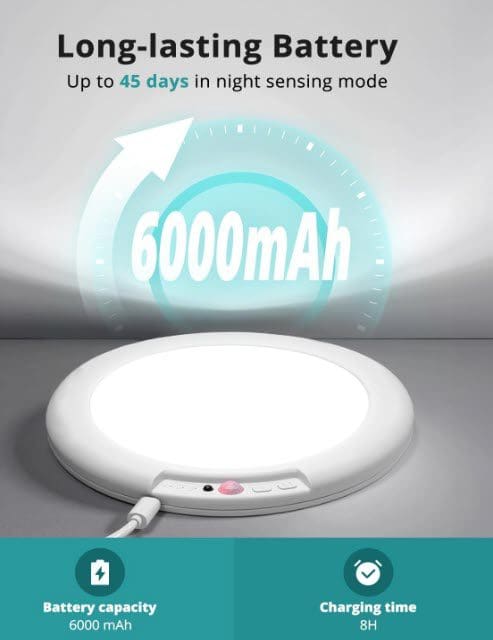
Rechargeable Motion Sensor Under Cabinet Light
- Automatic motion activation + manual dimming (100% / 50% / 25%).
- USB-C rechargeable, lasts 4–8 weeks between charges.
- Pros: Completely cordless, turns on when your hands enter the space.
- Cons: Needs occasional recharging (I charge mine once a month).
- Best for: Inside drawers, rolling tool chests, or areas with no power.
Completing the Setup: Best Overhead Lighting for Garages
Here are my top overhead lighting recommendations for garages and workshops in 2026. I’ve tested these exact models in my shop for the last two years. They pair perfectly with the under-cabinet lighting we discussed earlier—under-cabinet fixtures give you intense task light on the bench, while these overhead lights flood the whole space so you never work in your shadow.
1. Best Overall: 4-Foot Linkable LED Shop Light

Recommended Model: 4 ft LED Shop Light – 5000K Cool White, 9000+ lumens, daisy-chain capable.
Why I use it: These are the workhorses of every professional garage. Hang two or three in a row, and you get bright, even light across the entire shop with almost zero shadows.
- Key features: 0-10V or TRIAC dimmable versions available, link up to 8 fixtures on one plug, very low heat, and instant on.
- Pros: Extremely bright, affordable per lumen, easy to install with chains or surface mounts.
- Cons: Can feel “industrial” if you don’t choose a low-profile model.
- Best for: Standard 8–10 ft ceilings in a typical 2-car garage or workshop.
2. Best Flush-Mount / Low-Profile: Linear LED Ceiling Fixture
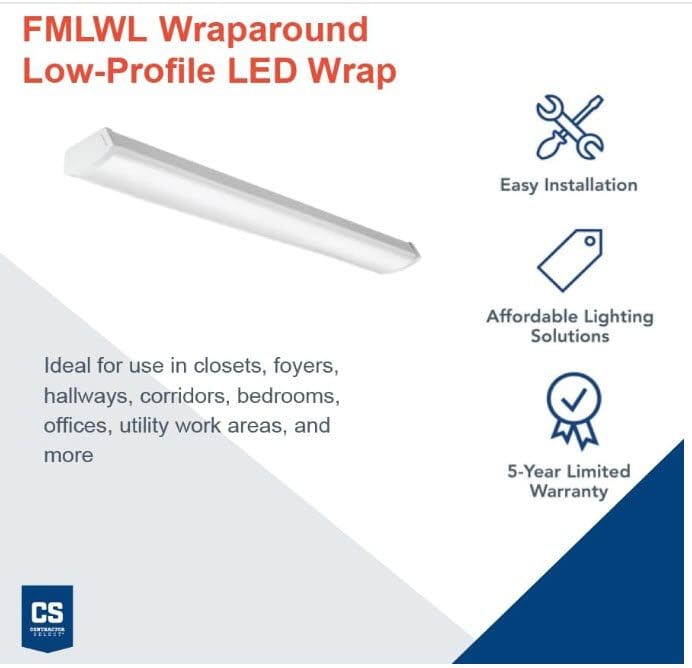
Recommended Model: 4 ft. or 8 ft. linear flush-mount LED shop light.
Why I recommend it: If you hate the hanging look of traditional shop lights, these mount flush against the ceiling or joists. They give a clean, modern garage look while still delivering serious brightness.
- Pros: Sleek appearance, even light distribution, hushed (no hum).
- Cons: Slightly less total output than hanging shop lights.
- Best for: Finished garages, man caves, or shops where you want lighting that looks built-in. (If you are building a truly high-end man cave or studio garage, you should also consider a magnetic track lighting system for that ultimate premium architectural look).
3. Best for Tall Ceilings: High-Bay UFO LED Lights
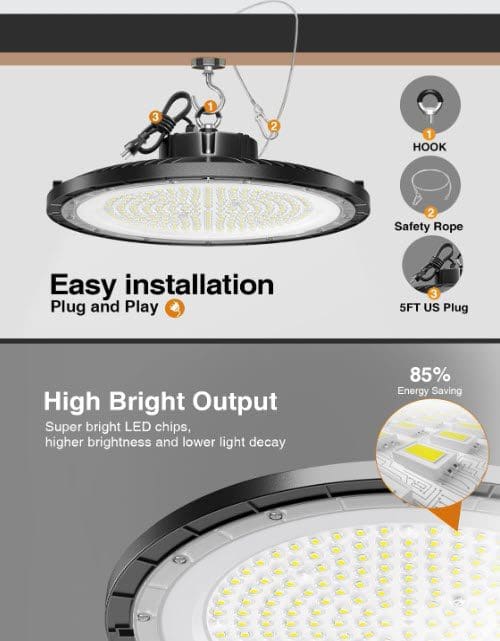
Recommended Model: 150W–240W UFO High-Bay LED (5000K, 20,000+ lumens).
Why I use them: If your garage has 12+ ft ceilings or you work on trucks/RVs, these throw powerful light straight down without wasting it on the walls.
- Pros: Massive light output, energy-efficient, long life.
- Cons: Can create harsh shadows if not paired with under-cabinet or wall lights.
- Best for: Large open shops, commercial-style garages, or anywhere you need serious illumination from high up.
4. Best Smart/Integrated Option: Wi-Fi Shop Lights & Smart Plugs

Recommended Setup: Wi-Fi-enabled LED Shop Lights OR standard LED lights paired with a Heavy-Duty Smart Plug.
Why I love it: Voice control (“Alexa, turn on the garage”) plus app scheduling. If you can’t find a dedicated smart shop light with the lumens you need, the best “garage hack” is to buy standard, hyper-bright, linkable LED lights and plug them into a Wi-Fi Smart Plug. This gives you instant smart-home control over your entire ceiling.
- Pros: Full voice control, seamless integration with Alexa/Google Assistant, automatic scheduling.
- Cons: Requires a good Wi-Fi signal in your garage.
- Best for: Anyone who wants hands-free convenience without paying a premium for built-in smart chips.
🛠️ My Personal Garage Setup (What Actually Works)
- Two 4-foot linkable LED shop lights run the length of the main workbench and are dimmable.
- One flush-mount linear fixture over the tool chest area.
- There is one high-bay UFO located in the center of the shop for vehicle work.
- All are tied together with under-cabinet LED strips and magnetic task lights.
This combination gives me zero dark spots and total control over brightness.
Frequently Asked Questions
How do I hide the wires on plug-in under-cabinet lighting?
Use small adhesive clips or run the wire along the back inside edge of the cabinet. Paint the wire the same color as the wall or cabinet. Most people never notice the thin cord once it is tucked securely away.
Is motion sensor under cabinet lighting bright enough for detailed work?
Yes. Modern motion sensor models put out 300 to 600 lumens per foot. That is more than enough for most garage tasks. I use them daily for small parts sorting and fast tool searches.
Do I still need overhead shop lights if I install under cabinet lighting?
Yes. Under cabinet lighting provides essential, focused task lighting right where your hands are. Overhead fixtures (like 4-foot linkable LEDs) flood the entire garage with ambient light, eliminating harsh shadows from behind your back.
Final Thoughts
The right lighting turns a dark, frustrating workspace into a bright, efficient shop. Whether you choose under cabinet lighting hardwired for a permanent install, plug in under cabinet lighting for quick results, or battery operated under cabinet lighting for hands-free convenience, the improvement is immediate.
Pair those task lights with powerful overhead shop fixtures and modern dimming controls, and you gain total command over your environment. My own garage went from dimly lit and annoying to bright and productive. If your workbench feels dark or your tools keep disappearing in shadows, it is time to upgrade.
🛠️ Build Your Dream Shop
Join our growing community of DIYers and get my best tool reviews, garage lighting hacks, and hands-on project guides sent straight to your inbox.
💡 Bonus: Tell me exactly what kind of lighting you are using (hardwired, plug-in, battery, or motion sensor) and whether you want app control, and I’ll give you my exact dimmer recommendation for your setup!
100% Free. No spam. Unsubscribe anytime.