



















When I first started adding large, structural houseplants to my living room, the Yucca plant quickly became one of my absolute favorites. The yucca is a genus of many perennial plants, trees, and shrubs, but only a select few are cultivated specifically to thrive as architectural houseplants.
They are remarkably low-maintenance, but they do have a few specific requirements to keep their striking, sword-like foliage looking its best. Whether you are wondering how much to water it or how to fix crispy brown leaf tips, here is my complete guide to indoor Yucca plant care.

- ☀️ Light: Thrives in bright, indirect light. A South or East-facing window is ideal.
- 💧 Water: Use the “soak and dry” method. Only water when the top 2-3 inches of soil are completely bone dry.
- 🪵 Soil: Requires fast-draining soil. A standard cactus-and-succulent mix is perfect.
- ⚠️ Toxicity Warning: Yucca plants contain steroidal saponins that are toxic to dogs and cats. Keep them out of reach!
How Much Light Does an Indoor Yucca Need?
Indoor Yucca plants thrive in bright, indirect light. This means a location with plenty of natural daylight, but without harsh, direct sunlight hitting the leaves all day (which can cause severe scorching).
- South or East-facing windows: These receive plenty of gentle light early in the day, which becomes perfectly indirect as the sun moves.
- West-facing windows: Be careful, as the afternoon sun can get too intense. If using a west-facing window, position the yucca a few feet back into the room.
If your Yucca is not getting enough light, you will notice slow growth, pale leaves, and “legginess” (the plant stretching tall and spindly toward the window). Conversely, if it is getting baked by too much direct sun, you will start to see dry, brown patches and crispy leaf tips.
Watering Your Yucca Plant The Right Way
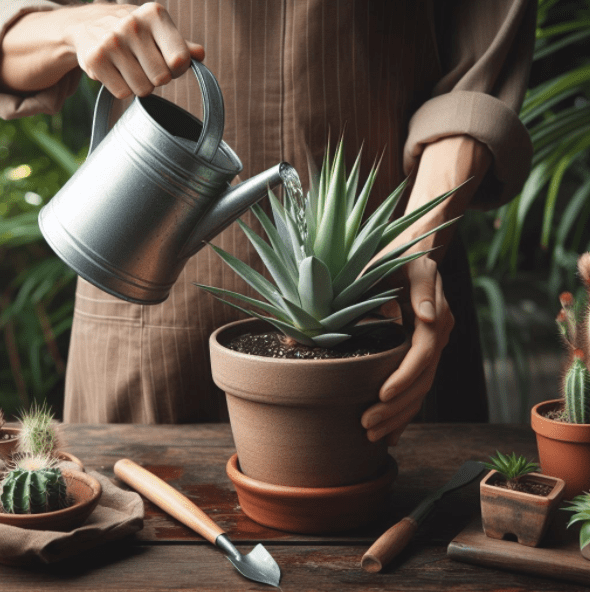
Yuccas are desert natives adapted to arid environments, making them highly sensitive to overwatering. The absolute best practice is the “soak and dry” method:
- Check the Soil: Before watering, stick your finger 2-3 inches into the soil. If it feels completely dry, it’s time to water. If you feel any moisture, wait a few more days.
- Water Thoroughly: Water deeply. Slowly pour water over the soil until the excess starts draining out of the pot’s bottom holes.
- Empty the Saucer: Always empty any standing water in the drainage saucer beneath the pot. Letting your yucca sit in a puddle will cause root rot to develop rapidly.
Signs of overwatering include yellowing leaves, a foul odor from the soil, and a mushy stem at the base. Signs of underwatering include dehydrated, shrunken leaves that curl inwards. Remember: it is always better to underwater a Yucca than to overwater it!
Best Soil and Fertilizing Practices
Drainage is key! Yuccas need loose, well-draining soil to survive. I highly recommend using a potting mix specifically designed for cacti and succulents. If you want to make a DIY mix, combine equal parts regular potting soil, coarse sand, and perlite.
The Perfect Yucca Soil
Don’t use dense indoor potting soil! A fast-draining cactus and succulent mix is the best way to prevent fatal root rot in your Yucca.
Yuccas are moderate feeders. You only need to fertilize them lightly during the active growing season (spring and summer) using a balanced liquid houseplant fertilizer diluted to half-strength. Fertilize about once a month and completely stop during the fall and winter, when their growth naturally slows.
Repotting Your Yucca: When and How
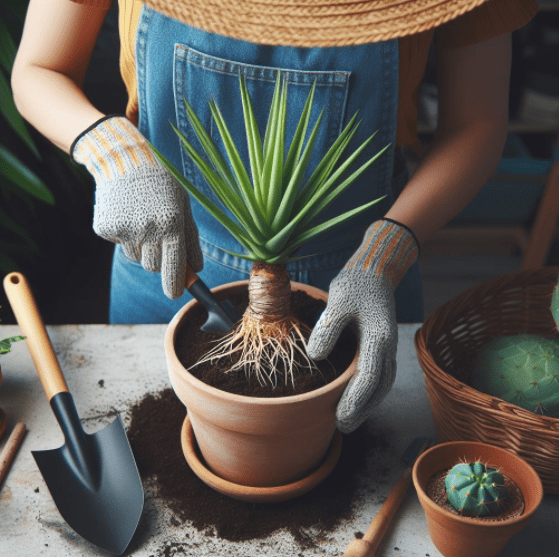
Yuccas actually prefer being slightly rootbound. You only need to repot them in early spring when you see roots heavily poking through the drainage holes, or if the soil dries out suspiciously fast within a couple of days of watering.
To repot, select a new container that is only 2-3 inches wider in diameter than the current one. Gently slide the plant out, trim away any mushy or severely circling roots with clean pruners, and position it in the center of the new pot. Fill the gaps with fresh succulent soil, tamp it down gently, and water thoroughly. Do not fertilize for at least a month after repotting!
Troubleshooting Common Yucca Problems
Problem: Brown Leaf Tips
Crispy brown tips are usually caused by extremely dry air, inconsistent watering, or fluoride build-up from tap water. Try switching to filtered water, ensure you are thoroughly soaking the root ball when you water, and keep the plant away from dry heating vents.
Problem: Yellowing Leaves
If the yellowing is focused entirely on the oldest, lowest leaves, it is simply natural aging—just peel them off! However, if widespread yellowing occurs, it is almost always due to overwatering or insufficient light. Check the soil immediately; if it is soggy, repot the plant in dry soil to save it.
Problem: Pests
Yuccas can occasionally attract scale insects (small, flat, shell-like bumps on the stems), spider mites, or mealybugs (which look like small cottony tufts). For minor infestations, wipe the leaves down with a cotton ball dipped in rubbing alcohol. For severe issues, treat the plant with organic Neem oil.
The Red Yucca (Hesperaloe parviflora)
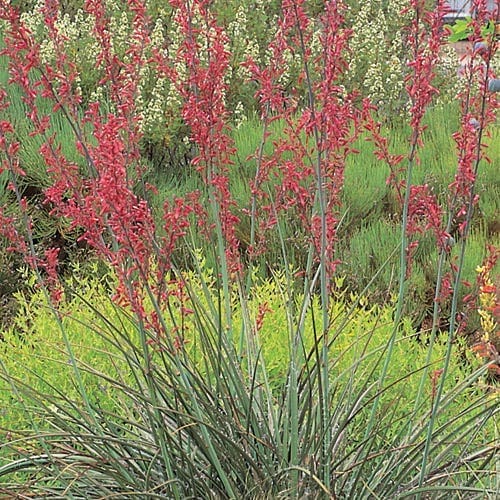
If you want to bring architectural beauty outdoors, consider the Texas Red Yucca. While not a true Yucca (it belongs to the genus Hesperaloe), it is one of the absolute best drought-tolerant flowering succulents you can plant in a warm-climate landscape. It produces tall spikes of reddish-pink flowers all summer long and is an absolute magnet for hummingbirds!
Are Yucca Plants Poisonous?
Yes. Yucca plants contain steroidal saponins. If ingested by domestic animals (such as dogs and cats), it can cause symptoms such as vomiting, drooling, incoordination, and weakness. While it is rarely fatal to small pets, it causes severe gastrointestinal distress, so always keep your Yucca pots well out of reach of curious chewers.
🌿 Master Your Houseplants
Join our growing community and get my best indoor plant care guides, troubleshooting tips, and pest-control methods sent straight to your inbox.
100% Free. No spam. Unsubscribe anytime.







Comments are closed.