
















Polycrylic vs water-based polyurethane is a confusing choice because both products are clear, water-based finishes used on indoor wood projects. They can look similar on the shelf, they both clean up easier than oil-based polyurethane, and they are both popular with DIY furniture painters.
But they are not the same finish. Polycrylic is usually the safer choice for painted furniture, white paint, light colors, crafts, shelves, and lower-wear indoor projects. Water-based polyurethane is usually the better choice when you want a clear finish with more durability for cabinets, tabletops, doors, trim, and floor-rated projects.
The easiest way to choose is by surface, not by product name. A white painted nightstand, stained desk, kitchen cabinet door, hardwood floor, and decorative shelf do not need the same clear coat.
For the broader comparison, including oil-based polyurethane and outdoor finishes, read our full Polycrylic vs polyurethane guide. If you are specifically topcoating paint, see our focused guide to Polycrylic over paint.
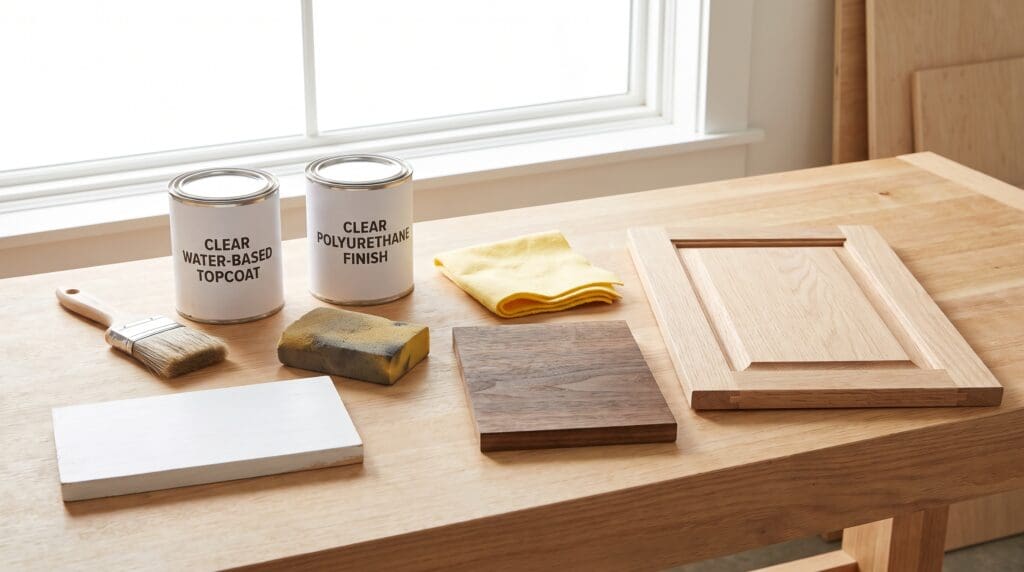
- Use Polycrylic for: painted furniture, white paint, light colors, crafts, shelves, trim, and light-use indoor projects.
- Use water-based polyurethane for: cabinets, doors, tabletops, stained wood, trim, and projects that need more durability.
- Use floor-rated water-based polyurethane for: hardwood floors and stair treads.
- Do not use standard Polycrylic for: floors or heavy-traffic surfaces.
- Best for white paint: Polycrylic or a clear water-based polyurethane, tested first.
- Best for durability: Water-based polyurethane usually has the advantage.
- Best rule: Polycrylic is the clarity-and-convenience choice. Water-based polyurethane is the clear-but-tougher choice.
If the project is painted, white, decorative, or lower-wear, start with Polycrylic. If the project gets touched, cleaned, bumped, or used every day, compare water-based polyurethane first.
Are Polycrylic and Water-Based Polyurethane the Same?
No. Polycrylic is water-based, but that does not make it the same thing as water-based polyurethane. Polycrylic is a specific type of clear protective finish known for clarity, low odor, and easy cleanup. Water-based polyurethane is a polyurethane finish carried in water, usually chosen when you want a clear finish with more durability than a light furniture topcoat.
That is the reason the choice gets confusing. Both can look clear. Both can be used indoors. Both can be easier to live with than oil-based polyurethane. But they are usually aimed at slightly different project needs.
What Is Polycrylic Best For?
Polycrylic is best for clear coating indoor projects where color clarity matters and the surface will not take extreme wear. It is especially popular over painted furniture because it is less likely to amber than oil-based polyurethane.
Use Polycrylic For
- Painted furniture.
- White or light-colored paint.
- Craft projects.
- Bookcases and shelves.
- Light-use tables.
- Trim and decorative woodwork.
- Light-colored wood.
- Indoor projects where low odor matters.
Do Not Use Standard Polycrylic For
- Hardwood floors.
- Stair treads.
- Heavy-use kitchen tables.
- Outdoor furniture.
- Exterior doors exposed to weather.
- Countertops.
- Wet areas or submerged surfaces.
Best for Painted Furniture: Minwax Polycrylic Protective Finish
Best for: Painted furniture, white paint, light-colored projects, crafts, shelves, and low-odor indoor use.
Polycrylic is the first finish many DIY furniture painters compare because it dries clearer than oil-based polyurethane and is easier to clean up. Use thin coats, stir gently, and avoid overbrushing.
What Is Water-Based Polyurethane Best For?
Water-based polyurethane is best when you want a clear finish but need more durability than a lighter-use clear coat. It is a stronger direction for cabinets, tabletops, doors, trim, stained wood furniture, and floor-rated projects.
The key phrase is floor-rated. Do not assume every water-based polyurethane belongs on floors. Floors need a product specifically labeled for hardwood floors or floor traffic.
Use Water-Based Polyurethane For
- Cabinets.
- Tabletops.
- Doors.
- Trim.
- Furniture that gets daily use.
- Stained wood projects where you want a clearer finish than oil-based polyurethane.
- Hardwood floors, only when the product is floor-rated.
Do Not Use Water-Based Polyurethane Casually For
- White paint without testing first.
- Outdoor wood unless the label allows exterior use.
- Countertops unless the product is designed for that use.
- Soft, tacky, or uncured paint.
- Waxed or contaminated surfaces.
Best for More Durability: Water-Based Polyurethane
Best for: Cabinets, tabletops, doors, trim, furniture, and floor-rated projects where clear protection and durability both matter.
Water-based polyurethane is the better direction when a project will see more handling, cleaning, abrasion, or daily use but you still want to avoid the stronger amber tone of oil-based polyurethane.
Polycrylic vs Water-Based Polyurethane for Painted Furniture
For painted furniture, Polycrylic is usually the safer starting point. It is clear, low odor, and commonly used over painted dressers, nightstands, shelves, bookcases, and decorative pieces.
Water-based polyurethane can be the better choice when the painted furniture gets more wear. Think cabinet doors, kitchen furniture, bathroom storage, desks, and tabletops. The tradeoff is that you should test carefully over white and light paint before coating the whole piece.
Choose Polycrylic When:
- The furniture is painted white, cream, pale gray, or pastel.
- The piece is decorative or light-use.
- You want low odor.
- You want easy soap-and-water cleanup.
- You care more about clarity than maximum durability.
Choose Water-Based Polyurethane When:
- The painted piece gets touched daily.
- You are sealing cabinets, doors, or trim.
- You want better wear resistance.
- The surface needs more cleaning durability.
- You have tested the finish over the paint color first.
If the project is already painted and you are worried about yellowing, bubbles, brush marks, peeling, or cloudy finish, start with the dedicated painted-furniture clear coat article.
Polycrylic vs Water-Based Polyurethane for White Paint
White paint is where the wrong clear coat can ruin the look. Polycrylic is popular here because it is less likely to add amber warmth than oil-based polyurethane. Water-based polyurethane can also work, but test first.
White paint can still discolor from tannins, old stain, primer problems, contamination, heat, moisture, or the clear coat itself. Do not coat the whole piece until a hidden test spot dries the way you want.
Polycrylic vs Water-Based Polyurethane for Cabinets
For cabinets, water-based polyurethane often makes more sense than Polycrylic because cabinets get handled constantly. Kitchen cabinets also deal with grease, fingerprints, cleaning, heat near appliances, and repeated opening and closing.
Polycrylic can work on lower-use painted cabinets or decorative built-ins, but it is not the strongest first choice for a busy kitchen. For stained cabinets or cabinets that need more durability, water-based polyurethane is usually the better comparison.
Cabinet Decision
- White painted cabinet: Polycrylic or water-based polyurethane, test first.
- High-use kitchen cabinet: Water-based polyurethane or cabinet-grade topcoat.
- Stained wood cabinet: Water-based polyurethane if you want a clearer finish.
- Bathroom cabinet: Prioritize moisture and cleaning resistance.
Polycrylic vs Water-Based Polyurethane for Tabletops
For tabletops, water-based polyurethane usually has the edge. Tables see cups, dishes, laptops, elbows, cleaning, spills, and daily abrasion. Polycrylic can be fine for a decorative side table, but a dining table, coffee table, desk, or kitchen table usually needs more durability.
Tabletop Decision
- Decorative side table: Polycrylic may be enough.
- Painted coffee table: Consider water-based polyurethane after testing.
- Desk: Water-based polyurethane usually makes more sense.
- Dining table: Use a tougher finish designed for daily wear.
Polycrylic vs Water-Based Polyurethane for Floors
For floors, use floor-rated polyurethane, not standard Polycrylic. Floors need a finish built for foot traffic, furniture, shoes, rugs, pets, cleaning, and abrasion.
This is one of the easiest decisions in the whole comparison. If the project is a hardwood floor, stair tread, or high-traffic walking surface, skip Polycrylic and choose a finish specifically labeled for floors.
Best for Floors: Floor-Rated Water-Based Polyurethane
Best for: Hardwood floors, stair treads, and interior walking surfaces.
Do not choose a finish for floors just because it says clear or water-based. Use a product specifically formulated for hardwood floors and follow the label for sanding, coat count, dry time, cure time, furniture, rugs, and traffic.
Polycrylic vs Water-Based Polyurethane for Stained Wood
For stained wood, water-based polyurethane often makes more sense when durability matters. It can protect stained furniture, doors, cabinets, and trim while staying clearer than many oil-based finishes.
Polycrylic can also be used on some stained wood projects, but it is usually chosen when clarity and light-duty protection matter more than wear resistance. Dark stains, red-toned stains, and some wood species can react differently under clear coats, so test first.
Stained Wood Decision
- Light-use stained shelf: Polycrylic may be enough.
- Stained table or desk: Water-based polyurethane is usually better.
- Stained cabinets: Water-based polyurethane usually makes more sense.
- Red or dark stain: Test first before coating the full project.
Durability: Which Finish Is Stronger?
Water-based polyurethane is usually the stronger choice for durability. It is better suited to surfaces that get handled, wiped, bumped, cleaned, or used every day.
Polycrylic still protects, but it is better thought of as a clear protective topcoat for light to moderate use. That is why it makes sense on painted furniture and crafts, but not as the first choice for floors or hard-use tabletops.
Choose More Durability For
- Kitchen cabinets.
- Bathroom cabinets.
- Dining tables.
- Desks.
- Doors.
- Stair parts.
- Floors.
- Furniture used by kids or pets.
Clarity and Yellowing
Polycrylic is one of the safer choices when you want a clear finish over white or light paint. Water-based polyurethane is also usually clearer than oil-based polyurethane, but it can still change the look depending on the product, surface, paint, stain, and application.
Yellowing is not always caused by the clear coat alone. It can come from wood tannins, old stain, oil residue, poor primer, surface contamination, heat, smoke, cleaners, or moisture.
How to Reduce Yellowing Risk
- Use a clear water-based finish over white or pale paint.
- Seal tannin-rich wood properly before painting.
- Let paint dry fully before topcoating.
- Avoid heavy clear coats.
- Test on a hidden area first.
- Do not use oil-based polyurethane over white paint unless you want warmth.
Dry Time, Recoat Time, and Cure Time
Polycrylic and water-based polyurethane usually dry faster than oil-based polyurethane, but do not confuse dry time with cure time. Dry to the touch means the surface can be handled lightly. Cure time is when the finish has hardened enough for normal use.
Always follow the current product label. Temperature, humidity, coat thickness, airflow, wood species, paint type, stain type, and surface prep can all change how the finish behaves.
Application Tips for Both Finishes
Most problems with Polycrylic and water-based polyurethane come from rushing, overbrushing, heavy coats, poor brushes, dust, or applying over a surface that was not ready.
Best Application Rules
- Stir gently. Do not shake the can.
- Use a high-quality synthetic brush or recommended applicator.
- Apply thin coats.
- Do not overbrush as the finish starts to dry.
- Sand lightly between coats when the label recommends it.
- Remove all dust before recoating.
- Work in good light so you can see missed spots and wet edges.
- Do not apply over tacky paint, wax, grease, polish, or sanding dust.
- Give the finish enough time before heavy use.
- Polycrylic or water-based polyurethane matched to the project.
- High-quality synthetic bristle brush.
- 220-grit and 320-grit sanding sponges.
- Tack cloth or lint-free cloth.
- Gloves and eye protection.
- Drop cloth.
- Painter’s tape for clean edges.
- Good lighting for spotting bubbles and brush marks.
Common Mistakes
- Assuming Polycrylic and water-based polyurethane are identical: They overlap, but they are not the same finish for every project.
- Using Polycrylic on floors: Floors need a floor-rated finish.
- Using the tougher finish when clarity matters most: White paint and pale colors should always be tested first.
- Applying thick coats: Heavy coats can turn cloudy, streaky, bubbly, or uneven.
- Shaking the can: This can trap bubbles in the finish.
- Overbrushing: Water-based finishes can dry quickly and drag if you keep brushing.
- Skipping surface prep: Dust, wax, grease, polish, or tacky paint can cause adhesion problems.
- Rushing cure time: Dry does not always mean ready for normal use.
- Not testing over paint or stain: Clear finishes can change color, sheen, and texture.
Final Verdict: Which One Should You Use?
Use Polycrylic when you want a clear, low-odor, easy-cleanup topcoat for painted furniture, white paint, light colors, crafts, shelves, trim, and light-use indoor projects.
Use water-based polyurethane when you want a clear finish with more durability for cabinets, tabletops, doors, trim, stained wood furniture, and floors when the product is specifically floor-rated.
The short version is simple: Polycrylic is better for clarity and convenience. Water-based polyurethane is better for clear durability. If the project is white, painted, or decorative, start with Polycrylic. If the project gets daily wear, start comparing water-based polyurethane.
Polycrylic vs Water-Based Polyurethane FAQ
Is Polycrylic the same as water-based polyurethane?
No. Polycrylic is water-based, but it is not the same as water-based polyurethane. Polycrylic is usually used as a clear protective topcoat for painted furniture, light wood, crafts, and light-use indoor projects. Water-based polyurethane is usually chosen when you want a clearer finish with more durability.
Which is better, Polycrylic or water-based polyurethane?
However, Polycrylic is better for painted furniture, white paint, light colors, and low-odor indoor projects. On the other hand, water-based polyurethane is better for cabinets, tabletops, doors, trim, stained wood, and floor surfaces requiring durability.
Can I use Polycrylic instead of water-based polyurethane?
Sometimes. However, Polycrylic can replace water-based polyurethane on light-use furniture, shelves, crafts, and painted pieces. It is not the right substitute for floors, heavy-use tabletops, or projects that need maximum wear resistance.
Can I use water-based polyurethane instead of Polycrylic?
Yes, in many cases. Water-based polyurethane can be a stronger clear finish for cabinets, tabletops, trim, doors, and furniture. Test first over white or light paint to make sure the color stays the way you want.
Which is better over painted furniture?
Polycrylic is usually the safer starting point for painted furniture, especially white or light colors. Water-based polyurethane can be better for painted furniture that gets more daily wear.
Which is better over white paint?
Polycrylic is often better over white paint because it is designed to stay clear and is less likely to amber than oil-based polyurethane. Water-based polyurethane can also work, but test first.
Which is more durable?
Water-based polyurethane is usually more durable than Polycrylic, especially on cabinets, tabletops, doors, trim, furniture, and floor-rated surfaces.
Which is better for cabinets?
Water-based polyurethane is usually better for high-use cabinets because cabinets get handled and cleaned often. Polycrylic can work on lower-use painted cabinets, but test first.
Which is better for tabletops?
Water-based polyurethane is usually better for tabletops because tables get more wear from cups, dishes, cleaning, laptops, elbows, and daily use.
Can you use Polycrylic on floors?
No. Standard Polycrylic is not the right choice for floors. Use a floor-rated polyurethane finish instead.
Can you use water-based polyurethane on floors?
Yes, but only when the product is specifically rated for floors. Do not assume every water-based polyurethane is floor-rated.
Does Polycrylic yellow?
Polycrylic is designed to dry clear and is less likely to amber than oil-based polyurethane, but yellowing can still come from paint, stain, tannins, primer issues, contamination, heat, or moisture.
Does water-based polyurethane yellow?
Water-based polyurethane usually yellows less than oil-based polyurethane, but it can still change the look of some paint or stain. Always test first, especially over white or pale colors.
Which dries faster?
Both Polycrylic and water-based polyurethane usually dry faster than oil-based polyurethane, but dry time depends on the product, coat thickness, temperature, humidity, airflow, and surface.
Do you sand between coats?
Usually yes when the product label recommends it. Light sanding can improve smoothness and adhesion. Remove all dust before applying the next coat.
What brush should I use?
Use a high-quality synthetic bristle brush or the applicator recommended by the label for water-based finishes.
Can I apply either finish over stain?
Yes, when the stain is fully dry and compatible with the finish. Test first, especially over dark, red, or oil-based stains.
Can I apply either finish over paint?
Yes, when the paint is dry, clean, sound, and ready for a clear coat. Polycrylic is usually the safer starting point over painted furniture, while water-based polyurethane can be better for more durability.
Why did my clear coat turn cloudy?
Cloudiness can come from heavy coats, humidity, recoating too soon, trapped moisture, poor surface prep, or overworking the finish as it dries.
Why did my clear coat peel?
Peeling usually means the finish did not bond well. Common causes include tacky paint, glossy surfaces, dust, wax, grease, polish, old finish residue, or using the project before the finish cured.
Join Garden Frontier for practical home improvement, furniture refinishing, woodworking, painting, tools, and seasonal maintenance advice.
100% free. No spam. Unsubscribe anytime.