




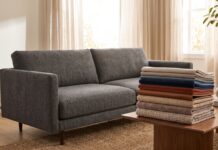












Kinds of sofa fabric matter more than most people realize. The wrong couch material can look beautiful for three weeks and then turn into a magnet for pet hair, stains, lint, scratches, fading, or sagging texture.
The right fabric depends on how the sofa is actually used. A formal living room sofa does not need the same material as a family-room couch with kids, dogs, movie nights, snack spills, and daily lounging.
The best sofa fabric for most busy homes is usually a durable performance fabric, microfiber, tightly woven polyester blend, or leather-style material that fits the room, cleaning routine, budget, and household traffic. Linen, cotton, velvet, chenille, wool blends, and faux leather can all work too, but each has trade-offs.

Watch: Types of Sofa Fabric and Common Buying Mistakes
This quick video explains the most common sofa fabric buying mistakes and compares popular couch materials for pets, kids, durability, cleaning, and everyday use.
Best overall: Performance fabric or tightly woven polyester blend.
Best for pets: Microfiber, performance fabric, leather, or tightly woven synthetic fabric.
Best for kids: Performance fabric, microfiber, or easy-clean polyester blend.
Best for formal rooms: Linen, velvet, wool blend, or high-end woven upholstery fabric.
Best budget-friendly choice: Polyester or microfiber sofa fabric.
Most important rule: choose fabric by lifestyle first, color second.
Before buying a sofa, ask for the fabric name, cleaning code, rub count or durability rating if available, whether the cushions have removable covers, and whether the fabric is treated as performance upholstery. Product photos alone do not tell you how a couch will handle real life.
What Kind of Fabric Is Used on Sofas?
Sofas are commonly made with polyester, performance fabric, microfiber, cotton, linen, velvet, chenille, wool blends, leather, faux leather, and mixed upholstery blends. Many modern couches use blended fabrics because blends can balance softness, durability, color, stain resistance, and cost.
There is no single best sofa fabric for every home. A fabric that works beautifully in a quiet sitting room may be a bad choice for a home with pets, kids, food, direct sunlight, or daily TV lounging.
Best Sofa Fabric by Situation
Performance fabric, microfiber, or durable polyester blend.
Microfiber, leather, performance fabric, or tight-weave synthetic upholstery.
Tightly woven microfiber or performance fabric. Avoid loose weaves that invite claw snagging.
Linen, velvet, wool blend, or textured woven upholstery.
Linen blend, cotton blend, or breathable woven fabric.
Polyester, microfiber, or faux leather for lower cost and easier upkeep.
Types of Sofa Fabric Compared
Every sofa fabric has a personality. Some are soft and cozy. Some are polished and formal. Some are easy to clean. Some look beautiful but punish careless living.
1. Performance Fabric
Best for: families, pets, kids, daily lounging, spills, and high-traffic rooms.
Performance fabric is designed to handle real use better than many traditional upholstery fabrics. It is often made to resist stains, moisture, fading, or wear, depending on the brand and fabric technology.
Pros: practical, family-friendly, easier to clean, good for busy rooms.
Cons: quality varies, not every “performance” label means the same thing, and some textures can feel less natural than linen or cotton.
Best advice: Ask for the exact care instructions and do not assume every performance fabric is pet-proof or stain-proof.
2. Microfiber
Best for: pets, kids, budget sofas, apartments, TV rooms, and easy everyday cleaning.
Microfiber is one of the most practical sofa fabrics because it is tightly woven, soft, and usually easier to maintain than loose natural weaves.
Pros: soft, durable, pet-friendly, budget-friendly, often easier to vacuum.
Cons: can show hand marks or nap direction, may feel less upscale than linen or leather, and quality varies by sofa.
Best advice: Choose microfiber when comfort and easy upkeep matter more than a formal designer look.
3. Polyester and Polyester Blends
Best for: affordable couches, family rooms, modern sofas, rentals, and everyday seating.
Polyester is extremely common in sofa upholstery because it can be durable, affordable, color-stable, and flexible in texture. Many couches use polyester blends rather than pure natural fibers.
Pros: affordable, versatile, widely available, often durable, many styles and colors.
Cons: can pill, can hold odors in some weaves, and cheaper versions may flatten or look shiny over time.
Best advice: Look at weave tightness, cushion quality, and cleaning code, not just the word “polyester.”
4. Velvet
Best for: dramatic living rooms, accent sofas, jewel-tone decor, formal rooms, and cozy statement seating.
Velvet sofa fabric has a soft pile that catches light and makes color look rich. Modern synthetic velvets can be more practical than old delicate versions, but velvet still needs more attention than basic microfiber.
Pros: luxurious look, soft feel, strong color depth, stylish for accent seating.
Cons: can show pressure marks, lint, pet hair, and pile direction. Some versions are harder to clean.
Best advice: Choose performance velvet if you want the look with more everyday practicality.
5. Linen and Linen Blends
Best for: relaxed formal rooms, coastal interiors, light living rooms, and breathable natural texture.
Linen sofa fabric looks natural, airy, and expensive. It is beautiful in the right room, but pure linen can wrinkle, stain, and wear more visibly than performance fabrics.
Pros: breathable, elegant, natural texture, great for calm interiors.
Cons: wrinkles, stains, and may not be ideal for messy households unless blended or treated.
Best advice: Choose linen blends or performance linen for a more realistic everyday sofa.
6. Cotton and Cotton Blends
Best for: casual homes, slipcovered sofas, breathable seating, and softer traditional upholstery.
Cotton can feel comfortable and natural, but pure cotton is not always the toughest upholstery choice. Cotton blends are usually more practical for sofas than pure cotton fabric.
Pros: breathable, soft, natural feel, good for slipcovered looks.
Cons: can wrinkle, stain, fade, and wear faster than many synthetic blends.
Best advice: Choose removable slipcovers or blended upholstery if cotton is used in a real family room.
7. Chenille
Best for: cozy family rooms, soft sofas, traditional decor, and comfortable everyday seating.
Chenille is soft and textured, which makes it feel warm and comfortable. It can be a nice middle ground between a plain woven sofa and a plush velvet sofa.
Pros: soft, cozy, textured, comfortable for lounging.
Cons: can snag, hold dust, show wear in heavy-use areas, and may not be ideal for cats that scratch.
Best advice: Choose tighter chenille weaves for durability and avoid loose textures with claw-happy pets.
8. Wool Blends
Best for: high-quality sofas, textured upholstery, cooler rooms, and grown-up living spaces.
Wool blends can be durable, textured, and handsome. They are often used in better upholstery fabrics, but they may cost more and need more careful cleaning than basic synthetics.
Pros: durable feel, rich texture, good structure, classic look.
Cons: higher cost, cleaning sensitivity, possible scratchier feel depending on blend.
Best advice: Test the fabric sample against your skin before committing to a wool-blend sofa.
9. Leather
Best for: long-term use, dogs, classic rooms, easy hair removal, and homes that like patina.
Leather is not technically a fabric, but it belongs in any sofa material comparison because many shoppers compare fabric sofas against leather sofas. It can be durable, easy to wipe, and good for pet hair, but it can scratch, crack, fade, or feel hot or cold depending on conditions.
Pros: durable, wipeable, good for pet hair, develops character over time.
Cons: expensive, can scratch, can feel temperature-sensitive, and needs conditioning.
Best advice: Leather is better for dog hair than cat claws. Check leather type before buying because bonded leather is not the same as full-grain or top-grain leather.
10. Faux Leather
Best for: budget-friendly wipeable sofas, apartments, small spaces, and modern rooms.
Faux leather gives a leather-like look at a lower price. It is usually easy to wipe clean, but lower-quality versions can peel, crack, or feel less breathable over time.
Pros: affordable, wipeable, modern look, no animal leather.
Cons: can peel or crack, less breathable, may not age as well as real leather.
Best advice: Faux leather works best when budget and easy wiping matter more than long-term patina.
Best Sofa Fabric for Pets
The best sofa fabric for pets is usually microfiber, performance fabric, leather, or a tightly woven synthetic upholstery. These materials are often easier to vacuum, wipe, or maintain than loose weaves.
Loose woven fabrics can snag more easily. Very textured fabrics can trap hair. Delicate fabrics can stain or scratch. If the sofa is a daily pet sofa, practical texture matters more than showroom texture.
Best Sofa Fabric for Dogs
For dogs, look for microfiber, performance fabric, leather, or tightly woven polyester. Dog owners usually need fabrics that handle hair, dirt, drool, occasional accidents, and heavy lounging.
Leather can be excellent for dog hair because hair does not embed like it can in some fabrics. The trade-off is scratching. If your dog jumps, digs, or has sharp nails, choose carefully.
Best Sofa Fabric for Cats
For cats, tightly woven microfiber or performance upholstery is usually safer than loose weaves. Avoid fabrics with obvious loops, open texture, or raised threads that invite claw snagging.
No sofa fabric is truly cat-proof. A scratching post near the sofa, trimmed claws, and consistent training matter just as much as the material.
Best Sofa Fabric for Kids
For kids, choose performance fabric, microfiber, or durable polyester blends. The best family sofa fabric should handle snacks, spills, sticky hands, forts, movie nights, and frequent cleaning.
Removable cushion covers are a major bonus. A beautiful fabric loses points fast if one spill becomes permanent because the cover cannot be removed or cleaned properly.
Best for Families: Performance Fabric Sofa
Best for: kids, pets, everyday lounging, spills, busy living rooms, and family movie nights.
Performance fabric is usually the safest first choice when the sofa has to look good and survive real use.
Sofa Fabric Cleaning Codes
Many upholstered sofas use cleaning codes. These codes tell you what type of cleaning method is recommended for the fabric. Always check the manufacturer’s care label before cleaning.
Water-based cleaner may be allowed.
Solvent-based cleaner may be required.
Water-based or solvent-based cleaning may be allowed, depending on the product instructions.
Vacuum or professional cleaning only. Do not use water or solvent cleaners unless the manufacturer says otherwise.
How to Choose Sofa Fabric Color
Color affects how much wear and dirt you notice. Very light sofas show stains faster. Very dark sofas can show lint, dust, and pet hair. Mid-tone textured colors are usually the most forgiving.
Most Forgiving Sofa Colors
- Warm gray
- Taupe
- Greige
- Charcoal with texture
- Olive or muted green
- Medium blue
- Brown leather
- Heathered or tweed-like blends
If you have pets, match the sofa color roughly to pet hair color when possible. That sounds unglamorous, but it makes daily life easier.
Should You Buy Fabric Samples?
Yes, fabric samples are worth it when available. A sofa can look completely different in your room than it does online. Light, wall color, flooring, and nearby furniture all change how fabric appears.
Rub the sample, bend it, check the weave, place it near your window, compare it with pet hair, and test how easily lint shows. A five-minute fabric sample check can prevent an expensive regret.
Useful Add-On: Sofa Fabric Care Kit
Best for: fabric sofas, microfiber couches, pet homes, kids, and routine upholstery cleaning.
A fabric-safe cleaner, lint roller, upholstery brush, and handheld vacuum can make a sofa easier to maintain between deep cleanings.
Common Sofa Fabric Buying Mistakes
Choosing Color Before Material
A beautiful color will not save a fabric that is wrong for pets, kids, stains, sunlight, or daily use.
Ignoring the Cleaning Code
The cleaning code tells you how the fabric should be cleaned. Ignoring it can leave rings, fading, stains, or fabric damage.
Assuming Performance Means Indestructible
Performance fabric is helpful, but it still has limits. Read care instructions and warranty language before trusting the label.
Buying Loose Weaves for Cat Homes
Loose weaves can snag more easily. Cat homes usually need tighter fabrics and proper scratching alternatives nearby.
Not Checking Cushion Covers
Removable covers can make maintenance easier. Fixed upholstery can be harder to clean after a major spill.
Final Verdict: Which Sofa Fabric Should You Choose?
For most busy homes, the best sofa fabric is performance fabric, microfiber, or a durable polyester blend. These materials usually offer the best balance of comfort, cleaning, durability, price, and everyday practicality.
Choose leather if you want a classic long-term material and can accept scratches, patina, and maintenance. Choose linen, cotton, velvet, chenille, or wool blends when style and texture matter more than heavy-use forgiveness.
The strongest choice is not the fabric that looks best in a showroom photo. It is the fabric that matches your pets, kids, sunlight, cleaning habits, climate, and how often people actually sit on the couch.
For more living room seating ideas, compare this with our guides to swivel accent chairs and bean bag chairs.
Types of Sofa Fabric FAQ
What are the most common kinds of sofa fabric?
The most common kinds of sofa fabric include polyester, performance fabric, microfiber, cotton, linen, velvet, chenille, wool blends, leather, faux leather, and mixed upholstery blends.
What is the best fabric for a sofa?
The best sofa fabric for most homes is performance fabric, microfiber, or a durable polyester blend because these options balance comfort, cleaning, durability, and everyday use.
What kind of fabric is best for a family sofa?
Performance fabric, microfiber, and durable polyester blends are usually best for family sofas because they handle kids, pets, spills, and daily lounging better than delicate fabrics.
What is the most durable sofa fabric?
Performance fabric, microfiber, leather, and tight synthetic weaves are often among the most durable sofa materials for everyday use. Actual durability depends on fabric quality, weave, care, and sofa construction.
What sofa fabric is easiest to clean?
Performance fabric, microfiber, faux leather, and leather are usually easier to clean than delicate natural fabrics. Always check the cleaning code before using any cleaner.
What is the best sofa fabric for dogs?
Microfiber, performance fabric, leather, and tightly woven synthetic upholstery are usually strong choices for dogs because they handle hair, dirt, and daily lounging better than loose weaves.
What is the best sofa fabric for cats?
Tightly woven microfiber or performance fabric is usually best for cats. Avoid loose weaves, looped textures, and fabrics that snag easily.
Is microfiber good for sofas?
Yes. Microfiber is a practical sofa fabric because it is soft, tightly woven, often durable, and usually easier to maintain than many loose woven fabrics.
Is velvet a good sofa fabric?
Velvet can be a good sofa fabric if you want a soft, dramatic, stylish look. Performance velvet is usually more practical than delicate velvet for everyday use.
Is linen good for sofas?
Linen looks elegant and breathable, but pure linen can wrinkle and stain more easily. Linen blends or performance linen are usually better for everyday sofas.
Is cotton good for sofas?
Cotton can feel soft and natural, but cotton blends or slipcovered cotton sofas are usually more practical than pure cotton upholstery in busy homes.
Is chenille good for sofas?
Chenille is soft and cozy, but some chenille fabrics can snag, hold dust, or show wear. Choose tighter chenille weaves for better durability.
Is leather better than fabric for sofas?
Leather is easier to wipe and can be excellent for pet hair, but it can scratch, fade, crack, or feel hot and cold. Fabric sofas usually offer more texture, color, softness, and price options.
Is faux leather good for sofas?
Faux leather can be affordable and easy to wipe, but lower-quality versions may peel or crack over time. It is best when budget and easy cleaning matter most.
What sofa fabric should I avoid?
Avoid fabrics that do not match your lifestyle. Loose weaves are risky with cats, white linen is risky with kids and pets, and cheap faux leather may age poorly in daily use.
What does performance fabric mean on a sofa?
Performance fabric usually means the upholstery is designed for easier cleaning, stain resistance, durability, fade resistance, or moisture resistance. Exact features vary by brand, so read the details.
What is couch fabric called?
Couch fabric is usually called upholstery fabric or sofa fabric. Retailers may also call it couch material, upholstery material, performance fabric, microfiber, woven fabric, or fabric upholstery.
Should I buy fabric samples before choosing a sofa?
Yes. Fabric samples help you judge color, texture, weave, pet hair visibility, lint, sunlight, and how the material looks in your room before buying the full sofa.
Join Garden Frontier for practical home decor, home improvement, gardening, outdoor living, tools, and seasonal maintenance advice.
100% free. No spam. Unsubscribe anytime.