














I used to stare at my unfinished attic and see nothing but wasted space. The joists were exposed, pink insulation was everywhere, and every time I needed to store a holiday decoration, I risked stepping through the drywall ceiling. After months of researching attic flooring options, I finally installed a proper raised floor. The transformation was huge—I gained hundreds of square feet of usable storage, and the house actually feels more solid.
Adding attic flooring is one of the smartest, highest-ROI home improvements you can make. It turns dead, dusty space into valuable real estate, improves your home’s organization, and increases your home’s overall value. But it is critical to choose the right material and install it without ruining your home’s energy efficiency.
In this complete 2026 guide, I will cover everything I learned during my project: the great plywood vs OSB debate, how to install an OSB floor over thick insulation without compressing it, exact material costs, and step-by-step DIY instructions that actually work in real homes.

Before you buy a single sheet of wood, understand this: Do not nail wood directly over fluffy insulation. Modern building codes require 10-14 inches of insulation, but attic joists are usually only 6-8 inches deep. If you squish the insulation down with plywood, you destroy its R-value, sending your heating and cooling bills through the roof. You must use a raised flooring system (see below).
Should You Add Flooring to Your Attic?
Before planning your attic flooring installation, ask yourself two questions: Do you genuinely need extra storage, and is your attic structurally ready? Most homes built after the 1980s have ceiling joists spaced 16 to 24 inches on center that can easily support light flooring. Older homes or those with heavily modified trusses may need reinforcement by a structural engineer.
Adding a floor for storage is almost always worth it. A properly installed floor can support 30 to 40 pounds per square foot (live load) — perfect for plastic bins, luggage, and seasonal clothing.
Best Materials for Attic Flooring: Plywood vs OSB
The three most common choices are plywood, OSB (Oriented Strand Board), and specialized attic decking panels. Here is the real-world comparison for 2026:
| Material | Avg. Cost per Sheet (4×8) | Strength | Best For |
|---|---|---|---|
| CDX Plywood (3/4″) | $45 – $65 | Excellent | Long-term durability, moisture resistance |
| OSB Sheathing (23/32″) | $28 – $40 | Very Good | Budget-friendly, large storage floors |
| Attic Decking Panels | $55–$75 (Equivalent sq ft) | Excellent | DIY ease, fitting through small hatches |
Plywood for an attic floor is the premium choice. It is lighter, stronger, and less likely to swell if you have roof humidity issues. OSB is heavier but significantly cheaper, making it perfectly suitable for dry storage.
Top Products for a Successful Attic Floor Install
If you want to do this right, avoid the hardware store lumber-aisle traps and use specialized gear designed to protect your home’s energy efficiency and your knees.
1. Loft Legs (The Secret to Not Crushing Insulation)
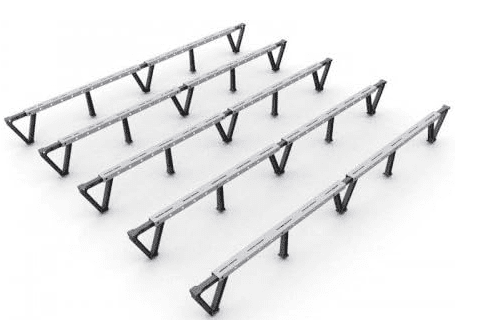
If you choose to use OSB or Plywood, you must elevate the floor above your deep insulation. Loft Legs screw directly into your existing joists, providing a 7-inch vertical lift. You then screw your wooden boards directly into the top of the legs.
✅ Pros:
- Preserves 100% of your insulation’s R-value.
- Creates space to run electrical wires safely beneath the floor.
- Incredibly strong (supports up to 1000 lbs per square meter).
❌ Cons:
- Requires buying an extra box of wood screws for installation.
2. Attic Dek Storage Panels (Best for Small Hatches)
If you cannot physically fit a 4×8 sheet of plywood through your tiny attic hatch, these modular plastic squares are your best friend. They screw directly into 16″ or 24″ spaced joists and act as heavy-duty, breathable flooring.
- Quick Installation – Install these lightweight, user-friendly panels in 15 minutes! Even the most inexperienced homeowner can set up the Attic Dek boards. It’s the only storage system designed for the unfinished areas over a garage or under a roof.

✅ Pros:
- Fits through any standard attic drop-down stairs.
- The vented design allows attic air to circulate properly.
- Zero cutting or sawing required.
❌ Cons:
- It can be expensive if you are trying to floor a massive 1,000 sq ft space.
Before you lay your floor, you must air seal the attic floor. Use expanding spray foam to seal gaps around wire penetrations, plumbing pipes, and recessed lights. Once the floor is covered, finding these HVAC leaks becomes impossible. Proper air sealing can reduce your energy bills by up to 15% overnight.
How to Install OSB Floor in Attic (Step-by-Step)
Installing an attic floor is straightforward if you follow the correct sequence.
- Measure and Plan: Check your joist spacing (usually 16″ or 24″ on center). Buy sheets that can actually fit through your attic hatch. *Hint: Have the lumber yard rip 4×8 sheets into 2×8 strips so you can carry them up the ladder.*
- Install the Risers: If your insulation extends above the joists, install Loft Legs or screw down perpendicular 2×4 “sleeper” beams to create a raised grid.
- Lay the Sheets: Start at the furthest corner and work toward the hatch. Lay the sheets perpendicular to the joists. Stagger the seams like brickwork for maximum structural integrity.
- Fasten Securely: Use 2.5-inch wood screws to secure the OSB every 8 inches along the edges and every 12 inches in the field. Never use a hammer and nails; the pounding will crack the drywall ceiling of the rooms below!
- Leave Expansion Gaps: Leave a 1/8″ to 1/4″ gap between the sheets to allow the wood to expand and contract with severe attic temperature swings.
Should I Insulate My Attic Floor or Ceiling?
This is the most common debate in DIY home improvement. The answer depends entirely on how you plan to use the space.
- For Storage Only: Insulate the attic floor. This keeps the conditioned air inside your living space below. Use unfaced fiberglass batts or blown-in cellulose between the joists, install your raised legs, and put the flooring on top.
- For Finished Living Space: Insulate the roof rafters (ceiling). This brings the entire attic space into your home’s “thermal envelope,” allowing you to use it as a bedroom or office.
Attic Flooring Cost Breakdown (2026)
Here is what you can expect to pay for a typical 400 sq ft storage area:
| Installation Type | Material Cost (Per Sq Ft) | Total Cost (DIY) |
|---|---|---|
| Standard OSB (No Risers) | $1.20 – $1.80 | $480 – $720 |
| Raised OSB Floor (With Loft Legs) | $2.50 – $3.50 | $1,000 – $1,400 |
| Attic Dek Modular Panels | $2.50 – $3.50 | $1,000 – $1,400 |
Note: Hiring a licensed contractor for attic flooring installation will typically add $4.00 to $6.00 per square foot in labor charges.
Frequently Asked Questions
What thickness plywood for an attic floor?
You must use a minimum of 23/32″ (commonly referred to as 3/4″) OSB or plywood. Thinner 1/2″ wood is too flexible for 16-inch or 24-inch joist spans and will dangerously sag or break when walked upon with heavy boxes.
How to floor an attic that is insulated?
Do not compress the insulation. You must install a raised flooring system, such as screwing 2×4 “sleeper” beams across the joists or using plastic Loft Legs. Once the support grid clears the top of the insulation, you can secure your OSB panels to the grid.
How much does it cost to floor an attic?
For a DIY project covering 400 square feet, expect to spend around $1,000 for 3/4″ OSB, raised loft legs, and screws. If you hire a professional carpenter to handle the installation and material transport, the total cost will range from ,500 to ,500.