
















Periwinkle plants remain among the most reliable flowering options for any garden. Modern breeding has brought significant improvements in recent years. Today’s incredible varieties offer enhanced disease resistance, vibrant colors, and much better plant vigor.
However, many gardeners get completely confused at the garden center. There are actually two entirely different plants sold under the exact same name. One loves deep shade, while the other craves blistering summer sun. Let’s break down exactly what you need for your yard.
The Two Types of Periwinkle Plants
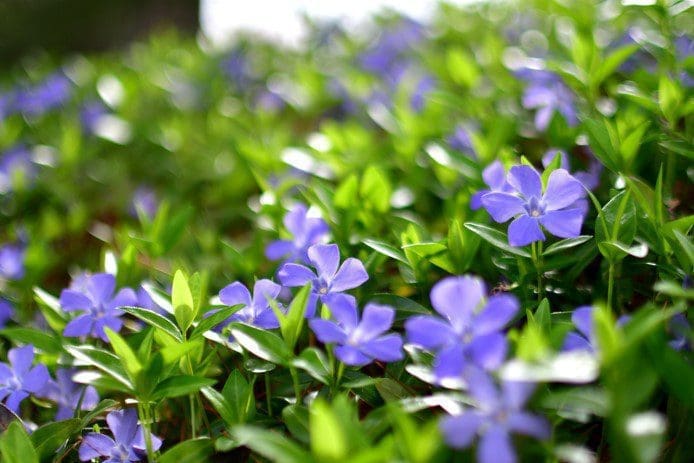
1. Vinca minor (Common Periwinkle)
- It is a low-growing evergreen ground cover (4 to 6 inches tall).
- It produces small blue, purple, or pure white star-shaped flowers.
- It is a highly hardy perennial used primarily for shade gardens and steep erosion control.
2. Catharanthus roseus (Madagascar Periwinkle)
- It is frequently called annual vinca or rosy periwinkle.
- It is an upright shrubby plant growing 10 to 20 inches tall.
- It features glossy green foliage with huge flowers in pink, purple, and red shades.
- It is a tropical perennial but is grown as a summer annual in most regions.
New Disease-Resistant Varieties
The garden market continues to evolve rapidly. Modern breeding has directly addressed old disease issues like fungal rot and blight. Look for these modern standouts at your local nursery.
- Titan-ium Series: Features incredibly high resistance to aerial Phytophthora blight. It flowers 14 days earlier than previous varieties and comes in Punch, Apricot, and Really Red.
- Cora XDR Series: Developed with university researchers to offer extreme disease resistance while maintaining highly attractive, large blooms.
- Solarscape XL Series: Offers a massive plant size (up to 20 inches wide). It features enormous flowers measuring almost 3 inches across in colors like Lilac Spark.
Essential Care Requirements
Sunlight and Temperature
Planting time is absolutely crucial for success. Madagascar periwinkle must be planted 2 to 3 weeks after your last spring frost. The garden soil must be thoroughly warm. Nighttime temperatures must stay completely above 60°F.
They demand full sun (6+ hours daily) to produce the most flowers. They will tolerate partial shade, but your flowering will be drastically reduced.
Soil and Watering
Well-draining soil is critical to prevent deadly root rot. These tough plants can actually thrive in very poor, sandy soil conditions. However, they may develop yellowing leaves (chlorosis) in highly alkaline soils.
You must practice moderate watering only until the roots are established. Once established, they become highly drought-tolerant. Overwatering is the single most common cause of plant death. Always allow the topsoil to dry completely between waterings.
Fertilizer and Spacing
Provide a very light feeding with a balanced granular fertilizer at planting time. For potted patio plants, apply a liquid fertilizer every 3 weeks. Do not overfeed them. Excessive nitrogen fertilizer forces the plant to grow leaves instead of flowers.
Space your new plants roughly 12 to 18 inches apart. They might look small at first, but they will branch out and fill the empty space very quickly during the hot summer.
Conclusion
Your instinct about this plant’s growing popularity is correct. Modern varieties offer radically improved disease resistance, vibrant tropical colors, and extreme heat tolerance.
These tough traits make them an absolute staple for reliable summer color. Just remember: do not plant them in cold soil, and never overwater them. Treat them right, and they will reward you with non-stop blooms until the first fall frost.