


















Whether you are a new homeowner staring at a mysterious hole in your basement floor or you have just woken up to an inch of standing water after a severe spring storm, the world of sump pumps can be incredibly confusing. It is the one appliance in your house that you completely ignore—until the moment it saves you from $20,000 in catastrophic flood damage.
When searching for a sump pump, most people find themselves in a state of panic due to the failure of their current unit or are meticulously planning a major basement renovation to safeguard their expensive drywall and flooring. You might be wondering, “Do I really need one? Are the cheap plastic ones from the local hardware store good enough? And what happens if the power goes out during a hurricane?
This comprehensive, in-depth guide explains exactly what this machine does, how its underlying mechanics work, how to calculate the correct horsepower for your home, and why skipping a battery backup system could be the most expensive homeownership mistake you ever make. By the end of this article, you will clearly understand which professional-grade pump to install to ensure your basement remains dry for the next decade.

- What does a sump pump do? Its sole job is to move groundwater that accumulates away from your home’s foundation. It sits in a pre-dug pit (the “sump basin”) carved into your lowest floor. When the water table rises during heavy rain, the water naturally flows into this pit instead of seeping through your basement walls.
- How does a sump pump work? Think of it like a giant, reverse toilet float. As the pit fills with water, a buoyant float switch rises. Once it reaches a predetermined critical height, it triggers the pump’s electric motor. The motor’s impeller forcefully pushes the water up through a PVC discharge pipe, routing it safely outside and downhill, far away from your house.
- Do I really need one? If your basement has ever flooded, if it constantly smells musty, if you have a French drain system installed, or if you live in a geographic area with a high water table, a sump pump is not a luxury upgrade—it is critical, non-negotiable infrastructure.
Submersible vs. Pedestal: Which is Better?
When browsing online or walking the aisles of a hardware store, you will immediately notice two distinct pump shapes. Understanding the difference is critical for long-term reliability.
Submersible pumps are shaped like large, heavy cylinders. As the name implies, they are designed to be fully submerged at the bottom of your basin. They are the top choice for modern homes because they are powerful, handle small debris well, and the water acts as a sound barrier, making them nearly silent. Their lifespan is typically 7 to 10 years because prolonged immersion in water eventually wears down the motor seals.
Pedestal pumps look like a motor mounted atop a long pole. The motor remains safely above the water line, while a shaft extends down into the pit to pump the water. Because the motor is exposed to the air, they are significantly louder. However, because they don’t sit in the water, they often last much longer (sometimes 15 to 20 years) and are cheaper to repair. They are mostly used today in older homes with extremely narrow, oddly shaped sump pits.
Horsepower Guide: How Much Power Do You Actually Need?
Buying the biggest, most powerful motor on the shelf is a classic amateur mistake. A pump that is too powerful will empty the pit in seconds, shut off, and turn back on a minute later. This rapid “short-cycling” will prematurely burn out the motor. You need the “Goldilocks” size for your specific home.
- 1/3 Horsepower (HP): This is the industry standard for the vast majority of residential homes. If your water table is relatively normal and your pump only runs occasionally during heavy rainstorms, a 1/3 HP motor is perfect. It can typically move about 2,000 to 3,000 gallons per hour (GPH).
- 1/2 Horsepower (HP): Upgrade to a 1/2 HP pump if you live in a flood plain, if your current 1/3 HP pump runs constantly (even during dry spells), or if your discharge pipe has to push water very high vertically (over 10 feet of “head lift”) before it exits the house.
- 3/4 to 1 Horsepower (HP): These are commercial-grade beasts. They are strictly reserved for homes with massive, deep basements, exceptionally high water tables, or extensive exterior French drain systems that simultaneously dump massive volumes of water into the sump pit.
Top Recommendations: The Best Sump Pumps to Buy in 2026
If you walk into a big-box hardware store, you will see rows of cheap, $80 plastic pumps. Avoid them at all costs. Plastic housings warp, crack, and fail when the motor heats up. Professional plumbers overwhelmingly trust cast-iron pumps because they dissipate heat rapidly, preventing the motor from burning out during a prolonged storm.
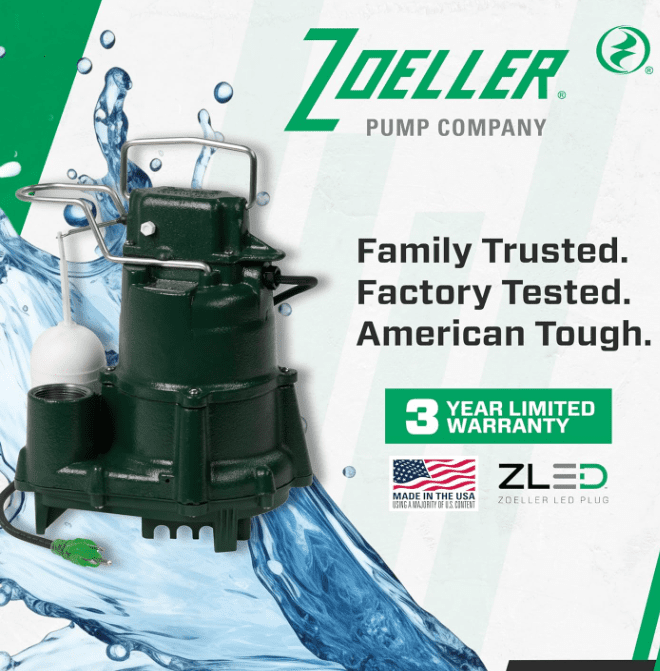
1. Zoeller M53 Mighty-Mate (The Industry Standard)
If you ask any professional, licensed plumber what the best primary pump is, 9 out of 10 will immediately say the Zoeller M53. This is a heavy-duty, 1/3 HP cast-iron submersible pump built in the USA. It is legendary for its bulletproof reliability. It runs quietly, easily handles standard residential water volumes, and features a mechanical vertical float switch. Unlike tethered floats that can easily get stuck against the wall of your pit (causing the pump to run dry and catch fire), the vertical float is fixed and flawlessly reliable.

2. Zoeller M98 Flow-Mate (For Heavy-Duty Homes)
If you live in an area prone to severe flooding, or if your basement requires a high vertical lift to get the water outside, the M53 might struggle. The Zoeller M98 is the M53’s bigger, meaner brother. It is a 1/2 HP cast-iron powerhouse that can move an astonishing 4,320 gallons of water per hour. It also features a larger discharge capacity, meaning it can easily pass small pebbles and debris without clogging the impeller.
The Backup Dilemma: Protecting Your Home When the Grid Fails
Severe storms that cause massive flooding are the exact same storms that knock out power lines. If your neighborhood goes dark, your primary sump pump becomes entirely useless, and your basement will flood within a matter of hours. You must have a backup system. You have two main choices:
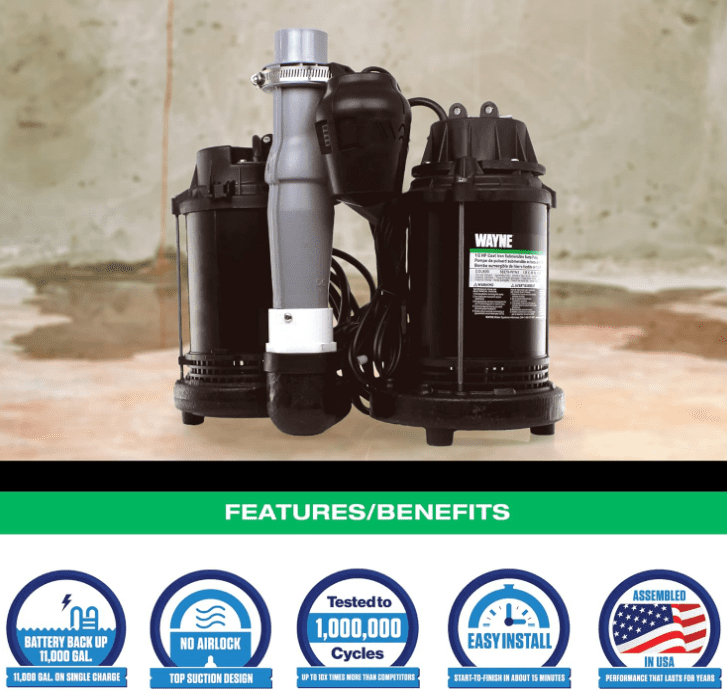
Option A: Battery Backup Systems (Wayne WSS30VN)
The most common solution is a sump pump battery backup. This is a pre-assembled combination system. It includes a powerful primary pump for daily use, paired with an emergency 12-volt backup pump that automatically takes over if power fails or the primary pump breaks.
The Wayne WSS30VN is a phenomenal, pre-plumbed unit that takes the guesswork out of installation. Note: You must purchase a high-quality Deep Cycle AGM (Absorbent Glass Mat) marine battery to power it, as standard car batteries cannot handle the deep discharging required by a water pump.
Option B: Water-Powered Backup Pumps (Liberty Pumps SJ10)
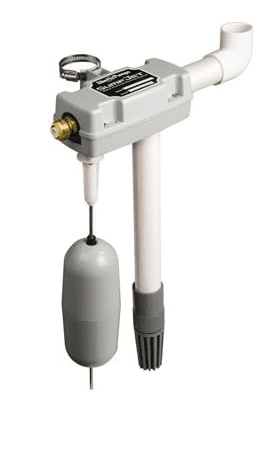
What if you are out of town for a week, the power goes out, and your backup battery dies after two days? Your basement still floods. Enter the water-powered backup pump.
Devices like the Liberty Pumps SJ10 connect directly to your home’s municipal water supply line. When the power goes out, and water rises in the pit, a valve opens. The pressure of the city water shooting through the pump creates a vacuum (the Venturi effect) that sucks the floodwater out of your basement. It requires zero electricity, has no batteries to replace every five years, and can run indefinitely as long as your city water has pressure. (Note: This device cannot be used if you have a private well, as well as pumps that require electricity.
Sump Pump Installation and Critical Maintenance
Sump pump installation can be a manageable weekend DIY project if you are simply replacing an existing, dead pump. You usually just need to disconnect the old PVC discharge pipe (often held by a simple rubber Fernco coupling), pull the old unit out, drop the new one in, and tighten the coupling.
However, if your basement has never had a pump, and you need to jackhammer the concrete floor to dig a sump pit, install interior French drains, and drill a discharge hole through the rim joist of your house, you truly must hire a licensed professional.
- Check the Weep Hole: Always ensure a 3/16-inch “weep hole” is drilled into the PVC pipe inside the pit, between the pump and the check valve. This prevents an “airlock,” which can cause the motor to spin helplessly without moving water.
- Test the Check Valve: The check valve prevents pumped water from falling back into the pit when the motor shuts off. If you hear water rushing back in every time the pump stops, replace the valve immediately.
- Clean the Basin: Every fall, remove the pump and clean the mud, gravel, and debris from the bottom of the basin. Debris can easily jam the impeller or get caught under the float switch.
- Winterize the Discharge: If you live in a freezing climate, ensure your exterior discharge line is sloped downhill so water doesn’t pool and freeze inside the pipe. Installing a slotted “Ice Guard” fitting outside prevents the pump from dead-heading if the yard pipe freezes solid.
🏡 Protect Your Home Infrastructure
Join our homeowner community! Get expert plumbing tips, emergency repair guides, and seasonal maintenance checklists sent straight to your inbox.
100% Free. No spam. Unsubscribe anytime.