














If you give sweet viburnum enough room, regular water during establishment, and a realistic pruning plan, it can become a beautiful living screen. If you cram it into a narrow foundation bed or plant it one foot from a fence, it quickly becomes a maintenance wrestling match.
The key is understanding its size, growth rate, spacing, pruning needs, botanical name, planting requirements, and climate limits before you plant the hedge.
Quick Answer: What Is Sweet Viburnum?
Sweet viburnum, commonly listed as Viburnum odoratissimum, is a large evergreen or semi-evergreen viburnum shrub often used for privacy hedges and landscape screening in warm climates. It can grow roughly 10 to 20 feet tall depending on conditions and pruning, with glossy green leaves, dense branching, and white flower clusters. It is best for larger spaces where a full hedge or screen is the goal.

Part of Our Viburnum Care Series
This sweet viburnum guide supports our main viburnum shrub guide, where we compare viburnum varieties, care, pruning, height and spread, bloom time, deer resistance, and landscape uses.
What Is Sweet Viburnum?
Sweet viburnum is commonly grown as a large hedge or screening shrub in warmer regions.
Its botanical name is often listed as Viburnum odoratissimum. Depending on cultivar and climate, it may be evergreen or semi-evergreen, which is one reason it is popular for privacy planting.
Unlike snowball viburnum, which is usually grown for big white flower clusters, or Korean spice viburnum, which is planted for fragrance, sweet viburnum is mostly valued for mass, density, and screening power.
Homeowners commonly use it for:
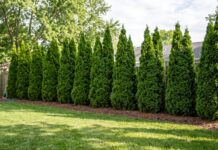
- Privacy hedges: blocking views from neighbors, roads, fences, or patios.
- Property-line screens: softening hard boundaries and creating a green wall.
- Backyard enclosure: making outdoor living areas feel more private.
- Evergreen structure: adding year-round greenery in suitable climates.
- Wind filtering: reducing exposure in open yards.
- Large landscape borders: creating a clean backdrop for smaller shrubs and perennials.
Best Use
Sweet viburnum is best when you actually need size. It shines as a privacy hedge or screen, not as a tiny foundation shrub that must be constantly cut back.
Viburnum Odoratissimum: Botanical Name and Planting Notes
Viburnum odoratissimum is the botanical name most commonly associated with sweet viburnum, the large glossy-leaved shrub often planted as a privacy hedge or evergreen-style screen in warm climates.
If you see a nursery tag that says Viburnum odoratissimum, sweet viburnum, or odoratissimum viburnum, the plant is usually being sold for the same core landscape purpose: fast-growing green screening, hedge structure, and broad property-line coverage.
The key thing to understand before planting viburnum odoratissimum is size. This is not a compact front-door shrub. It needs enough width, enough root space, and a realistic pruning plan if you want it to stay dense and attractive.
Quick Planting Rule
Plant viburnum odoratissimum where you actually need a large privacy shrub. Give it full sun to part shade, well-drained soil, consistent water during establishment, and enough spacing so the hedge can mature without becoming overcrowded.
Planting Viburnum Odoratissimum Correctly
- Choose the right site: best for warm-climate privacy hedges, fence lines, and large screening beds.
- Do not plant too close: allow room for mature width instead of spacing plants only by nursery pot size.
- Plant at root-ball level: the top of the root ball should sit level with or slightly above the surrounding soil.
- Water deeply after planting: new shrubs need consistent moisture while roots establish.
- Mulch the hedge line: use 2 to 3 inches of mulch, but keep it away from the stems.
- Start pruning early: light shaping while young creates a denser hedge than waiting until the plants are oversized.
Sweet Viburnum Size and Growth Rate
Sweet viburnum can become large.
That is the most important thing to know before planting it.
In warm climates with good soil, water, and room, sweet viburnum can grow into a tall, broad hedge. Many homeowners keep it pruned around 8 to 12 feet, but it can grow taller if left unmanaged.
| Feature | Typical Range | Why It Matters |
|---|---|---|
| Mature Height | Often 10–20 feet depending on climate and pruning | Excellent for privacy, too large for tight spaces |
| Mature Spread | Often 6–12+ feet | Needs width; narrow beds create maintenance problems |
| Growth Rate | Moderate to fast in good conditions | Can fill privacy gaps faster than slower shrubs |
| Growth Habit | Dense, upright, broad, hedge-forming | Works well for screening and living walls |
Spacing Warning
Sweet viburnum is not a “plant it anywhere” shrub. If you do not have room for the mature height and width, choose a smaller viburnum or a compact hedge plant instead.
Sweet Viburnum Hedge Spacing
Spacing is where many sweet viburnum hedge mistakes begin.
Plant too far apart, and the hedge takes longer to fill in. Plant too close, and the shrubs fight for light, airflow, water, and root space.
A common spacing range for sweet viburnum hedges is several feet apart, depending on the starting plant size, cultivar, desired hedge density, climate, and how quickly you want coverage.
| Goal | General Spacing Approach | Best For |
|---|---|---|
| Fast privacy fill | Closer spacing, with more future pruning | Backyard privacy, new homes, exposed patios |
| Long-term healthy hedge | Moderate spacing with room to mature | Property lines, wider landscape beds |
| Mixed screen | Staggered or layered spacing with other shrubs | Natural privacy borders and wildlife edges |
For a full layout breakdown, use our guide: Viburnum Hedge: Best Varieties, Spacing & Privacy Screen Tips.
How to Plant Sweet Viburnum
A sweet viburnum hedge is only as good as the planting job.
If the shrubs are planted too deep, too close, in poor drainage, or without enough water during establishment, the hedge can become patchy before it ever fills in.
Step 1: Choose the Right Location
Pick a site with enough room for both height and width.
Do not plant sweet viburnum directly against fences, walls, utility boxes, sidewalks, or windows unless the bed is wide enough for future growth and maintenance access.
Step 2: Improve the Planting Area
Loosen compacted soil and improve drainage where needed.
Sweet viburnum does not need luxury soil, but it will establish faster in a prepared bed than in hard, compacted construction soil.
Step 3: Plant at the Correct Depth
The root flare or top of the root ball should sit level with the surrounding soil or slightly above it.
Planting too deep can stress the shrub and slow establishment.
Step 4: Water Deeply
Water thoroughly after planting.
During the first growing season, consistent moisture is critical. A newly installed hedge can fail quickly if the root balls dry out while the surrounding soil still looks damp.
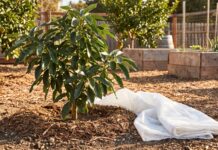
Step 5: Mulch the Hedge Line
Add mulch to conserve moisture and reduce weeds.
Keep mulch away from the main stems. Do not pile mulch directly against the trunk bases.
Sun, Soil, and Water Needs
Sweet viburnum is fairly adaptable, but hedge quality depends heavily on growing conditions.
Sunlight
Sweet viburnum grows best in full sun to part shade.
Full sun usually creates denser growth, stronger screening, and faster fill. Part shade can work, especially in hot climates, but too much shade may produce thinner growth.
Soil
Well-drained soil is best.
Sweet viburnum can tolerate average landscape soil once established, but soggy conditions can cause root problems. If water pools after rain, fix drainage before planting.
Watering
Water regularly during establishment.
A new sweet viburnum hedge needs deep watering until roots spread into the surrounding soil. Once established, it becomes more resilient, but drought stress can cause leaf drop, slower growth, and patchy hedge density.
Mulch
Mulch helps maintain even soil moisture and reduce weed competition.
A 2- to 3-inch mulch layer is usually enough. Keep it a few inches away from stems.
Fertilizer
Sweet viburnum usually benefits from steady, moderate feeding rather than heavy nitrogen blasts.
If growth is weak, use a balanced slow-release shrub fertilizer in spring. Avoid overfeeding, which can create soft growth and increase pruning work.
Hedge Establishment Tip
For the first year, water the root balls, not just the soil between plants. New shrubs can dry out inside the original root ball even when the surrounding bed looks moist.
When to Prune Sweet Viburnum
Sweet viburnum pruning depends on whether you are growing it as a hedge, screen, or large informal shrub.
For hedges, light trimming during active growth helps maintain shape and density. For natural screens, selective pruning can keep the plant healthy without turning it into a stiff wall.
Unlike spring-flowering ornamental viburnums, sweet viburnum is usually grown more for foliage and screening than for a dramatic flower show, so hedge maintenance often matters more than preserving every bloom.
Best Sweet Viburnum Pruning Rules
- Prune lightly during active growth: useful for hedge shaping.
- Remove dead or damaged wood anytime: especially after storms or freeze damage.
- Keep the base slightly wider than the top: this lets sunlight reach lower foliage.
- Avoid cutting too deeply into bare wood: recovery may be uneven.
- Do not let the hedge get too tall before managing it: neglected hedges are harder to correct.
Pruning Support Guide
For viburnum pruning timing across multiple varieties, including spring bloomers, read our guide on when to prune viburnum.
How to Prune a Sweet Viburnum Hedge
The best sweet viburnum hedges are shaped gradually.
If you wait until the hedge is twice as tall as you want, pruning becomes harsher, uglier, and more stressful for the plants.
Step 1: Decide the Final Hedge Height
Do this before the hedge gets huge.
A manageable 8-foot hedge is very different from a 16-foot screen that requires ladders or professional equipment.
Step 2: Start Light Shaping Early
Begin shaping while the plants are young enough to respond well.
Light trimming encourages branching and density.
Step 3: Keep the Bottom Wider
A hedge that is wider at the top shades its own base, causing lower foliage to thin out.
Shape the hedge so the base is slightly wider than the top.
Step 4: Thin Selectively When Needed
Do not rely only on hedge shears.
Use hand pruners or loppers to remove crossing, dead, or overly congested interior stems.
Step 5: Avoid Scalping the Hedge
Hard, deep cuts into old bare interiors can leave holes that take a long time to fill.
Gradual maintenance is safer than emergency renovation.
Useful tools for maintaining sweet viburnum hedges:
Sweet Viburnum Problems
Sweet viburnum is generally strong, but hedges can develop problems when they are stressed, overwatered, underwatered, crowded, frozen back, or pruned poorly.
| Problem | Common Cause | What to Do |
|---|---|---|
| Leaf drop | Drought stress, transplant shock, cold damage, watering swings | Check soil moisture, mulch, water deeply, avoid panic pruning |
| Yellow leaves | Overwatering, poor drainage, nutrient stress | Check drainage before adding fertilizer |
| Thin hedge base | Top-heavy pruning or lack of light at lower branches | Keep hedge slightly wider at bottom and avoid shading the base |
| Patchy growth | Uneven watering, poor soil pockets, plant spacing issues | Improve irrigation consistency and inspect root zones |
| Leaf spots | Humidity, poor airflow, overhead watering | Improve airflow and water at soil level |
Do Not Overreact to Leaf Drop
Sweet viburnum can drop leaves from stress, especially after planting, drought, cold, or watering swings. Check the cause before cutting the hedge hard or dumping fertilizer on it.
Is Sweet Viburnum Deer Resistant?
Sweet viburnum is sometimes described as deer resistant, but deer resistance is always local and conditional.
Some homeowners see little browsing. Others see deer nibble tender new hedge growth, especially during drought, winter stress, or heavy deer pressure.
Young sweet viburnum hedges are usually more vulnerable than established mature screens.
How to Reduce Deer Damage
- Protect new hedge rows with temporary fencing where deer pressure is high.
- Apply deer repellent before browsing starts.
- Avoid over-fertilizing, which can create soft tender growth.
- Keep the hedge healthy so it recovers from light browsing.
- Use layered planting if the hedge borders woods or open land.
For the full breakdown, read: Do Deer Eat Viburnum? Deer-Resistant Viburnum Shrubs Explained.
Helpful for protecting new sweet viburnum hedges from deer browsing:
Sweet Viburnum vs Other Viburnum Shrubs
Sweet viburnum is not automatically better than other viburnums. It is better for a specific job: privacy screening in warm climates.
If you need fragrance, Korean spice viburnum may be better. If you need a native wildlife shrub, arrowwood viburnum may be better. If you want dramatic white flowers, snowball viburnum may be better.
| Viburnum Type | Main Strength | Best Use |
|---|---|---|
| Sweet Viburnum Viburnum odoratissimum |
Large evergreen-style screening | Privacy hedges and green walls |
| Korean Spice Viburnum | Fragrant spring flowers | Walkways, patios, entries, foundation beds |
| Snowball Viburnum | Big white flower clusters | Specimen shrubs and spring display |
| Arrowwood Viburnum | Native value, berries, wildlife structure | Native hedges and wildlife borders |
For the full comparison, return to our main viburnum guide, or continue with Korean spice viburnum, snowball viburnum, and arrowwood viburnum.
Best Landscape Uses for Sweet Viburnum
Sweet viburnum is strongest when used boldly.
It is not a delicate accent plant. It is a structural shrub.
Best Uses
- Privacy hedge: one of its most common uses.
- Fence softening: hides hard fence lines with glossy foliage.
- Backyard screening: creates separation around patios, pools, and outdoor rooms.
- Property-line planting: useful where space allows a wide hedge.
- Wind filtering: helps soften exposed areas.
- Evergreen backdrop: supports smaller flowering shrubs and perennials in front.
Good Companion Plants
- Ornamental grasses
- Agapanthus in warm climates
- Loropetalum
- Boxwood
- Holly
- Podocarpus
- Daylilies
- Liriope
Planning a Sweet Viburnum Privacy Hedge?
A local landscaper can help with hedge spacing, soil prep, irrigation layout, pruning access, and privacy screen design so your sweet viburnum hedge fills in cleanly without crowding the yard.
Find Local Landscaping Pros on Angi
Sponsored affiliate link. Professional availability and pricing vary by location.
Sweet Viburnum Care Calendar
A seasonal routine keeps sweet viburnum hedges dense, healthy, and easier to maintain.
| Season | Care Tasks |
|---|---|
| Spring | Check new growth, fertilize lightly if needed, refresh mulch, and inspect for winter damage. |
| Late Spring to Summer | Shape the hedge lightly, water during dry periods, monitor leaf stress, and keep weeds away from the root zone. |
| Late Summer | Do light shaping if needed, avoid excessive late fertilizer, and check for patchy growth before fall. |
| Fall | Check irrigation, clean up diseased leaves if present, refresh mulch, and avoid hard pruning before cold weather. |
| Winter | Watch for cold damage in marginal climates and protect young plants from deer browsing if needed. |
Final Thoughts
Sweet viburnum is a powerful landscape shrub when used for the right purpose.
If you need a dense privacy hedge, evergreen-style screen, or glossy green backdrop in a warm climate, it can be a fantastic choice.
But it is not a small-space shrub.
Give it room, water it properly during establishment, prune it before it gets out of hand, and avoid planting it where constant size control will become a chore.
If your goal is fragrance, choose Korean spice viburnum. If your goal is dramatic white flowers, choose snowball viburnum. If your goal is native wildlife value, choose arrowwood viburnum.
If your goal is privacy, sweet viburnum may be exactly the workhorse shrub you need — especially when the plant tag lists it as Viburnum odoratissimum.
For the full variety comparison, return to our main viburnum guide.
Frequently Asked Questions
How big does sweet viburnum get?
Sweet viburnum can commonly reach about 10 to 20 feet tall depending on climate, soil, water, cultivar, and pruning. Many homeowners maintain it shorter as a hedge.
Is sweet viburnum the same as Viburnum odoratissimum?
Yes. Sweet viburnum is commonly listed by the botanical name Viburnum odoratissimum. Nurseries may label it as sweet viburnum, Viburnum odoratissimum, or odoratissimum viburnum.
How do you plant Viburnum odoratissimum?
Plant Viburnum odoratissimum in full sun to part shade with well-drained soil and enough room for mature width. Set the root ball level with or slightly above the surrounding soil, water deeply after planting, mulch the hedge line, and keep the root zone consistently moist during establishment.
Is sweet viburnum evergreen?
Sweet viburnum is often evergreen or semi-evergreen in warm climates. In cooler or marginal areas, cold damage or seasonal leaf drop may occur.
How fast does sweet viburnum grow?
Sweet viburnum can grow at a moderate to fast rate in warm climates with good soil, water, and sunlight. Growth is slower when plants are stressed, shaded, crowded, or poorly watered.
How far apart should sweet viburnum be planted for a hedge?
Spacing depends on plant size, cultivar, climate, and how quickly you want the hedge to fill in. Many hedges are planted several feet apart, with closer spacing for faster fill and wider spacing for long-term airflow and size.
When should sweet viburnum be pruned?
Sweet viburnum hedges can be lightly pruned during active growth to maintain shape and density. Remove dead or damaged branches anytime.
Why is my sweet viburnum dropping leaves?
Leaf drop may come from transplant shock, drought stress, overwatering, poor drainage, cold damage, or sudden watering changes. Check soil moisture and site conditions before fertilizing or hard pruning.
Is sweet viburnum deer resistant?
Sweet viburnum may be somewhat deer resistant in some areas, but it is not deer proof. Young plants and tender hedge growth may be browsed during heavy deer pressure.
Is sweet viburnum good for privacy?
Yes. Sweet viburnum is one of the better viburnum choices for privacy screens in warm climates because it can grow tall, dense, and evergreen or semi-evergreen where conditions are suitable.