












That is where people get into trouble.
Some viburnums are compact and fragrant. Some are native and wildlife-friendly. Some are big, glossy, and hedge-ready. Some lose their leaves in winter. Others stay evergreen or semi-evergreen in warmer climates.
If you choose the wrong viburnum for your hedge, you may end up with a screen that gets too large, grows too thin, drops leaves when you expected year-round coverage, or needs constant pruning just to stay out of the walkway.
The good news is that viburnum can be excellent for hedges when you match the variety to the job: privacy, flowers, berries, evergreen screening, wildlife value, or low-maintenance structure.
Quick Answer: Is Viburnum Good for a Hedge?
Yes, viburnum can make an excellent hedge when you choose the right variety. Sweet viburnum is one of the best choices for tall evergreen-style privacy screens in warm climates, while arrowwood viburnum works well for informal native hedges and wildlife borders. For flowering hedges, snowball viburnum and other spring-blooming types can work if you allow enough space and avoid heavy shearing.

Part of Our Viburnum Care Series
This viburnum hedge guide supports our main viburnum shrub guide, where we compare viburnum varieties, care, pruning, height and spread, deer resistance, bloom time, and landscape uses.
Best Viburnum Varieties for Hedges
The best viburnum hedge depends on what you want the hedge to do.
If you need year-round privacy in a warm climate, sweet viburnum is usually a stronger choice than a deciduous flowering type. If you want a native wildlife hedge, arrowwood viburnum makes more sense. If you want a loose flowering hedge, snowball viburnum can be beautiful, but it needs space and proper pruning.
| Viburnum Type | Best Hedge Use | Typical Size | Best For |
|---|---|---|---|
| Sweet Viburnum | Tall privacy hedge | Often 10–20 ft | Evergreen-style screening in warm climates |
| Arrowwood Viburnum | Informal native hedge | About 6–10 ft | Wildlife borders, berries, native plantings |
| Snowball Viburnum | Loose flowering hedge | Often 8–12 ft | Spring flower display and cottage-style borders |
| Korean Spice Viburnum | Low fragrant shrub row | About 4–6 ft | Walkways, entries, patios, fragrance gardens |
| Doublefile Viburnum | Wide ornamental screen | Often 8–10 ft and wide | Layered spring display and large mixed borders |
Best Overall Privacy Choice
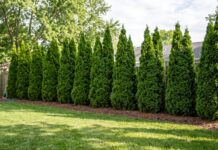
For a tall, dense privacy hedge in a warm climate, sweet viburnum is usually the strongest viburnum choice. For a native informal hedge with wildlife value, arrowwood viburnum is the better fit.
Viburnum Hedge Spacing
Viburnum hedge spacing depends on the mature size of the variety, how fast you want coverage, and whether you want a formal hedge, loose screen, or natural wildlife border.
This is where a lot of hedge projects go sideways.
Plant too far apart, and the hedge looks gappy for years. Plant too close, and the shrubs crowd each other, lose lower foliage, develop poor airflow, and require constant pruning.
| Hedge Goal | General Spacing Strategy | Best Viburnum Types |
|---|---|---|
| Fast privacy screen | Closer spacing, with more future pruning | Sweet viburnum, dense evergreen types |
| Long-term healthy hedge | Moderate spacing with room for mature width | Sweet viburnum, arrowwood viburnum |
| Loose flowering hedge | Wider spacing to preserve natural shape | Snowball viburnum, doublefile viburnum |
| Native wildlife hedge | Natural spacing, sometimes staggered | Arrowwood viburnum and native species |
As a general rule, tighter spacing fills faster but creates more pruning pressure later. Wider spacing looks slower at first but usually produces a healthier, longer-lasting hedge.
Spacing Reality Check
Do not space viburnum based only on how small the nursery pots look. Space the hedge based on the mature size of the variety you are planting.
Viburnum Privacy Screen: Evergreen vs Deciduous
If privacy is the main goal, you need to know whether your viburnum will keep leaves through winter in your climate.
Some viburnums are deciduous. They can make beautiful hedges during the growing season, but they lose leaves in winter.
Other viburnums are evergreen or semi-evergreen in warmer climates. These are usually better for year-round screening.
Choose Evergreen or Semi-Evergreen Viburnum If You Need:
- year-round backyard privacy
- a green screen around patios or pools
- property-line coverage in winter
- a hedge that blocks views even after fall leaf drop
- a glossy green backdrop for ornamental beds
Choose Deciduous Viburnum If You Want:
- spring flowers
- fall color
- berries for birds
- native wildlife value
- a softer seasonal hedge
- a natural mixed border instead of a formal screen
For pure privacy in warm climates, sweet viburnum is often a better fit. For wildlife and seasonal value, arrowwood viburnum may be more useful.
How to Plant a Viburnum Hedge
A viburnum hedge should be planned before the first hole is dug.
You are not planting one shrub. You are building a living structure that should grow together for years.
Step 1: Mark the Hedge Line
Use stakes, string, landscape paint, or a garden hose to visualize the hedge line.
Stand back from the patio, driveway, window, fence, and neighboring property before planting. Make sure the hedge will block what you want blocked without crowding what you need to access.
Step 2: Measure Mature Width
Check the mature spread of the specific viburnum variety.
A sweet viburnum hedge needs much more room than a row of Korean spice viburnums. A snowball viburnum hedge needs more natural width than a tightly clipped formal hedge.
Step 3: Prepare the Entire Bed
Do not just dig individual holes in compacted soil and hope for the best.
Loosen the full planting strip if possible. Remove weeds, improve drainage, and create a continuous root-friendly zone so the hedge grows evenly.
Step 4: Plant at the Correct Depth
Set each viburnum so the top of the root ball sits level with the surrounding soil or slightly above it.
Planting too deep can slow establishment and create long-term root stress.
Step 5: Water Deeply
Water each root ball thoroughly after planting.
For the first growing season, pay attention to the original root balls. They can dry out even when the soil around them looks damp.
Step 6: Mulch the Hedge Line
Mulch helps conserve moisture and reduce weed competition.
Keep mulch away from the stems. Do not pile mulch directly against the base of each shrub.
How Fast Does a Viburnum Hedge Grow?
Viburnum hedge growth rate depends on variety, climate, sunlight, soil, watering, and how well the plants were established.
Sweet viburnum can grow moderately fast to fast in warm climates with good moisture and care. Arrowwood viburnum is generally steady and dependable, especially once established. Flowering types like snowball viburnum may be more about seasonal display than rapid screening.
What Makes a Viburnum Hedge Fill In Faster?
- proper spacing
- full sun to part shade
- consistent watering during establishment
- mulch to reduce water stress
- good soil preparation
- light early shaping to encourage branching
- choosing the right variety for the climate
What Slows a Viburnum Hedge Down?
- deep shade
- poor drainage
- dry root balls after planting
- heavy deer browsing
- planting too close together
- planting too deep
- severe pruning before plants are established
Fast Privacy Tip
If you need privacy quickly, start with larger nursery plants and choose a strong screening type like sweet viburnum. Do not compensate for small plants by spacing them too tightly unless you are ready for more pruning later.
How to Prune a Viburnum Hedge
Viburnum hedge pruning depends on whether you want a formal hedge, loose flowering hedge, or natural wildlife border.
The worst mistake is treating every viburnum hedge like a boxwood hedge.
Sweet viburnum can handle more hedge-style shaping than many flowering viburnums. Snowball viburnum and Korean spice viburnum usually look better with selective pruning after flowering. Arrowwood viburnum works best as an informal native hedge if wildlife value matters.
Pruning Rules for Viburnum Hedges
- Prune spring-flowering viburnums after bloom: this protects next year’s flowers.
- Trim privacy hedges lightly during active growth: especially sweet viburnum.
- Keep the base wider than the top: this helps sunlight reach lower leaves.
- Thin selectively: remove dead, crossing, or congested interior stems.
- Avoid scalping: deep cuts into old bare wood may recover unevenly.
- Do not over-shear wildlife hedges: flowers and berries need natural growth.
For full timing guidance, use our complete article on when to prune viburnum.
Useful tools for pruning and maintaining viburnum hedges:
Viburnum Hedge Care
A viburnum hedge is not difficult to maintain, but it does need consistent care during establishment.
The first year matters most. A hedge that establishes evenly will be much easier to maintain later.
Watering
Water deeply and regularly during the first growing season.
Newly planted hedges often fail because the root balls dry out between waterings. The surrounding soil may look moist while the original root ball is dry inside.
Mulching
Mulch the full hedge line with a 2- to 3-inch layer.
Keep mulch away from stems to prevent moisture problems at the base.
Fertilizing
Use moderate feeding, not heavy nitrogen blasts.
Too much nitrogen can create soft growth, increase pruning work, and sometimes reduce flowering in ornamental types.
Weed Control
Keep weeds and grass away from young viburnum hedges.
Competition from turf can slow establishment, especially during dry weather.
Monitoring
Watch for leaf spots, mildew, deer browsing, drought stress, and uneven growth.
Early correction is easier than fixing a patchy hedge years later.
Is a Viburnum Hedge Deer Resistant?
A viburnum hedge can be moderately deer resistant, but it is not deer proof.
Deer pressure varies wildly by neighborhood. In one yard, deer may ignore viburnum. In another, they may browse tender new hedge growth, especially during winter, drought, or heavy population pressure.
Most Vulnerable Hedge Stages
- newly planted hedges
- tender spring growth
- flower buds on ornamental viburnums
- hedges along deer travel routes
- plants near wooded edges
- drought-stressed shrubs
How to Protect a Viburnum Hedge From Deer
- Use temporary fencing during establishment.
- Apply deer repellent before browsing starts.
- Protect the most exposed side of the hedge.
- Avoid over-fertilizing with nitrogen.
- Keep plants watered so they recover from light browsing.
- Use layered planting in high-deer areas.
For the full deer breakdown, read: Do Deer Eat Viburnum? Deer-Resistant Viburnum Shrubs Explained.
Helpful for protecting young viburnum hedges from deer browsing:
Viburnum Hedge Problems
Most viburnum hedge problems come from poor spacing, inconsistent watering, wrong variety choice, bad pruning, or planting in the wrong conditions.
| Problem | Likely Cause | Fix |
|---|---|---|
| Patchy hedge | Uneven watering, soil variation, poor establishment | Check root balls, improve irrigation, mulch evenly |
| Thin bottom growth | Top-heavy pruning or lack of light | Keep hedge wider at bottom and avoid shading lower branches |
| No flowers | Wrong pruning time or too much shearing | Prune flowering types after bloom |
| Leaf spots or mildew | Poor airflow, humidity, overhead watering | Thin crowded growth and water at soil level |
| Constant pruning battle | Wrong variety for the space | Replace with a smaller hedge shrub or widen the bed |
Biggest Hedge Mistake
The biggest viburnum hedge mistake is choosing a large variety for a narrow space. No pruning schedule can turn a naturally large shrub into a low-maintenance tiny hedge forever.
Viburnum Hedge vs Other Privacy Shrubs
Viburnum is not the only privacy hedge option, but it offers a useful balance of flowers, foliage, wildlife value, and screening potential.
| Hedge Plant | Strength | Weakness | Best Use |
|---|---|---|---|
| Viburnum | Flowers, foliage, berries, privacy options | Variety choice matters a lot | Mixed privacy screens and flowering hedges |
| Arborvitae | Narrow evergreen screening | Can suffer deer damage and browning | Tight evergreen privacy rows |
| Boxwood | Formal evergreen shape | Slow growth and disease concerns in some areas | Low formal hedges and foundation beds |
| Podocarpus | Dense evergreen screen in warm climates | Less showy flowering value | Modern privacy screens |
Viburnum is especially useful when you want the hedge to feel more garden-like and less like a plain green wall.
When to Hire a Landscaper for a Viburnum Hedge
A small viburnum hedge can be a DIY project.
But a large privacy screen, long property-line planting, or full backyard hedge is worth planning carefully. Mistakes in spacing, irrigation, drainage, and variety choice can take years to fix.
Consider hiring help if:
- you are planting a long hedge line
- you need fast privacy around a patio or pool
- your soil is compacted or poorly drained
- you need irrigation installed or adjusted
- you are unsure which viburnum fits your climate
- you need a mixed screen with multiple shrub types
- you want professional spacing and layout
Planning a Viburnum Privacy Hedge?
A local landscaper can help you choose the right viburnum variety, calculate spacing, prepare the soil, install irrigation, and design a privacy screen that fills in without overcrowding your yard.
Find Local Landscaping Pros on Angi
Sponsored affiliate link. Professional availability and pricing vary by location.
Final Thoughts
A viburnum hedge can be beautiful, practical, and surprisingly versatile.
But the hedge only works if the variety matches the job.
For year-round privacy in warm climates, sweet viburnum is usually the strongest choice. For wildlife value and native planting, arrowwood viburnum is better. For a loose flowering hedge, snowball viburnum can be gorgeous if you give it enough room. For fragrance near walkways or entries, Korean spice viburnum is the better plant, even if it is not a tall privacy screen.
Think about the final size, not the nursery pot. Plan the spacing. Decide whether you need evergreen coverage or seasonal beauty. Prune according to bloom type. Protect young hedges from deer if needed.
Do that, and a viburnum hedge can become one of the most useful living structures in your landscape.
For the full variety comparison, return to our main viburnum guide.
Frequently Asked Questions
Is viburnum good for a hedge?
Yes. Viburnum can make an excellent hedge when the right variety is chosen. Sweet viburnum is best for tall privacy screens in warm climates, while arrowwood viburnum works well for informal native hedges.
What is the best viburnum for a privacy hedge?
Sweet viburnum is one of the best viburnum choices for a tall privacy hedge in warm climates because it can grow dense, glossy, and evergreen or semi-evergreen where conditions are suitable.
How far apart should I plant viburnum for a hedge?
Spacing depends on the viburnum variety, mature width, plant size, and how quickly you want coverage. Closer spacing fills faster but requires more pruning later, while wider spacing usually creates a healthier long-term hedge.
How fast does a viburnum hedge grow?
Growth rate depends on variety and conditions. Sweet viburnum can grow moderately fast to fast in warm climates with good water and soil, while other viburnums may grow more steadily.
Can viburnum make an evergreen hedge?
Some viburnums can make evergreen or semi-evergreen hedges in warm climates. Sweet viburnum is commonly used for this purpose. Deciduous viburnums lose their leaves in winter.
When should I prune a viburnum hedge?
Spring-flowering viburnums should usually be pruned after bloom. Sweet viburnum hedges can be lightly shaped during active growth. Dead or damaged branches can be removed anytime.
Is a viburnum hedge deer resistant?
A viburnum hedge may be moderately deer resistant, but it is not deer proof. Young hedges and tender new growth may need protection in high-deer areas.
Why is my viburnum hedge thin at the bottom?
A viburnum hedge often gets thin at the bottom when the top is allowed to grow too wide and shade the lower branches. Shape the hedge slightly wider at the base so lower foliage receives light.