











But that is exactly why I like it.
Arrowwood viburnum is the kind of shrub that quietly does real landscape work. It fills space, supports birds, handles mixed borders, tolerates average soil, and can create a dense native hedge that looks better with age.
If you are building a wildlife-friendly yard, replacing weak foundation shrubs, softening a fence line, or designing a mixed-privacy border, arrowwood viburnum deserves a spot on your shortlist.
Quick Answer: What Is Arrowwood Viburnum?
Arrowwood viburnum is a native deciduous shrub, commonly known as Viburnum dentatum, grown for white spring flowers, glossy green foliage, blue-black berries, fall color, wildlife value, and dense hedge-like growth. It commonly reaches about 6 to 10 feet tall and wide, making it useful for native hedges, mixed shrub borders, and naturalized landscape plantings.

Part of Our Viburnum Care Series
This arrowwood viburnum guide supports our main viburnum shrub guide, where we compare viburnum varieties, size, bloom time, pruning, deer resistance, hedge uses, and landscape planning.
What Is Arrowwood Viburnum?
Arrowwood viburnum is a deciduous native shrub commonly grown in North American landscapes for its toughness, flowers, berries, fall color, and wildlife benefits.
Its botanical name is Viburnum dentatum. The “dentatum” part refers to the toothed edges of the leaves, which help distinguish it from some other viburnums.
In the landscape, arrowwood viburnum is especially useful because it can work as:
- A native hedge: dense enough to create seasonal screening and habitat.
- A wildlife shrub: flowers can support pollinators, while berries can feed birds.
- A mixed border plant: adds structure behind smaller perennials and shrubs.
- A naturalized screen: works well along woodland edges, fences, and property lines.
- A low-fuss landscape shrub: handles average conditions better than many showier shrubs.
Arrowwood viburnum is not usually planted for one dramatic moment. It is planted because it contributes across several seasons.
Arrowwood Viburnum Size and Growth Habit
Arrowwood viburnum is not a tiny foundation shrub.
Most plants mature somewhere around 6 to 10 feet tall and wide, although exact size depends on cultivar, climate, soil, moisture, sunlight, and pruning.
The shrub usually develops a dense, rounded to upright habit. When planted in groups, it can form an attractive informal hedge or wildlife border.
| Feature | Typical Range | Landscape Impact |
|---|---|---|
| Mature Height | About 6–10 feet | Good for hedges, borders, and screening |
| Mature Spread | About 6–10 feet | Needs spacing; can crowd narrow beds |
| Growth Habit | Dense, rounded to upright | Useful for natural hedges and wildlife cover |
| Seasonal Interest | Spring flowers, berries, fall color | Adds more than one season of value |
Spacing Warning
Do not plant arrowwood viburnum directly against a walkway, window, or tight foundation bed unless you are using a compact cultivar. Standard plants need room to develop their natural shape.
Arrowwood Viburnum Flowers and Berries
Arrowwood viburnum typically produces white flower clusters in spring.
The flowers are not giant snowball-style blooms. They are usually flatter clusters that fit the shrub’s more natural, wildlife-friendly look.
After flowering, arrowwood viburnum can produce berries that mature into blue-black fruit. These berries are one of the main reasons gardeners choose arrowwood for native and wildlife plantings.
Why Berries May Not Appear
If your arrowwood viburnum flowers but does not produce many berries, the issue may be pollination.
Many viburnums fruit better when compatible plants are nearby. A single isolated shrub may bloom well but fruit poorly.
- Plant more than one compatible viburnum: this can improve fruit set.
- Choose related cultivars with overlapping bloom time: timing matters for pollination.
- Avoid over-pruning after bloom: heavy pruning can remove developing fruit.
- Support pollinators: avoid unnecessary insecticide use during bloom.
Wildlife Tip
If berries are important to you, do not treat arrowwood viburnum like a formal hedge that gets constantly sheared. Let it flower, set fruit, and keep enough natural branching to support birds.
How to Grow Arrowwood Viburnum
Arrowwood viburnum is adaptable, but it performs best when planted where it has enough light, moisture, and space.
Sunlight
Arrowwood viburnum grows in full sun to part shade.
Full sun usually produces denser growth, better flowering, and stronger berry potential. Part shade can still work, especially in hotter regions, but deep shade may reduce bloom and density.
Soil
Average, well-drained garden soil is usually fine.
Arrowwood viburnum is more adaptable than many ornamental shrubs, but constantly soggy soil can still create root stress. If your site holds water after rain, improve drainage or choose a more suitable location.
Watering
New arrowwood viburnum shrubs need regular watering during the first growing season.
Once established, they become more forgiving, but drought can reduce flowering, berry production, and overall plant vigor.
Mulch
Use a 2- to 3-inch layer of mulch around the root zone to conserve moisture and suppress weeds.
Keep mulch away from the trunk and main stems. Mulch volcanoes are bad for shrubs, not just trees.
Fertilizer
Arrowwood viburnum usually does not need heavy feeding in decent soil.
If growth is weak and soil fertility is poor, a slow-release shrub fertilizer or compost topdressing can help. Avoid dumping high-nitrogen fertilizer around the shrub, especially if you want flowers and fruit.
When to Prune Arrowwood Viburnum
The best time to prune arrowwood viburnum depends on what you want from the shrub.
If flowers and berries matter, prune lightly right after flowering. That gives the shrub time to develop fruit and prepare for the next season.
If the plant is badly overgrown and you care more about structure than fruit for one season, you can do selective dormant thinning in late winter or early spring.
Best Pruning Approach
- Remove dead, damaged, or diseased wood anytime.
- Prune lightly after flowering if you want to protect bloom and berry potential.
- Thin older stems near ground level to renew overgrown shrubs.
- Avoid constant shearing if wildlife value matters.
- Do not remove too much of the shrub in one year unless renovation is necessary.
Pruning Timing Guide
For a full breakdown by variety and bloom type, read our complete guide on when to prune viburnum.
Arrowwood Viburnum as a Hedge
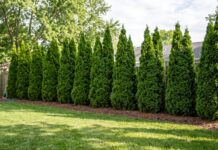
Arrowwood viburnum makes a strong informal hedge, especially where you want a natural, wildlife-friendly look instead of a tightly clipped wall.
It is a better fit for mixed borders, property edges, native hedgerows, and layered screens than formal geometric hedges.
Why It Works as a Hedge
- Dense branching creates seasonal screening.
- Spring flowers add ornamental value.
- Berries can support birds when pollination is good.
- Native character fits naturalistic landscapes.
- It blends well with other shrubs and small trees.
Spacing for a Hedge
For a dense hedge, arrowwood viburnum is commonly planted several feet apart, depending on cultivar size and how quickly you want the plants to fill in.
Do not plant them too tightly unless you are prepared for crowding later. Crowded shrubs often develop poor airflow, weaker interiors, and more maintenance problems.
Hedge Planning Support
For spacing, privacy-screen layout, and variety selection, see our upcoming viburnum hedge guide.
Is Arrowwood Viburnum Deer Resistant?
Arrowwood viburnum is often considered moderately deer resistant, but it is not deer proof.
Deer may browse young plants, tender shoots, or accessible foliage when food is limited. Mature shrubs may tolerate light browsing better than newly planted ones.
The most vulnerable stage is usually the first few seasons after planting.
How to Protect Young Arrowwood Viburnum
- Use temporary fencing until shrubs are established.
- Apply deer repellent before browsing starts.
- Protect plants during winter food shortages.
- Avoid over-fertilizing, which can create soft tender growth.
- Plant in groups or layered borders rather than isolated deer-accessible spots.
For a full deer-resistance breakdown, read: Do Deer Eat Viburnum? Deer-Resistant Viburnum Shrubs Explained.
Helpful for protecting young arrowwood viburnum from deer browsing:
Arrowwood Viburnum Problems
Arrowwood viburnum is generally dependable, but stress, crowding, pests, and disease can still cause issues.
| Problem | Possible Cause | What to Do |
|---|---|---|
| Poor flowering | Too much shade, wrong pruning time, young plant | Increase light if possible and prune after bloom |
| No berries | Poor pollination or incompatible nearby plants | Plant compatible viburnums with overlapping bloom time |
| Leaf spots | Humidity, poor airflow, overhead watering | Thin crowded growth and water at soil level |
| Powdery mildew | Crowded or shaded conditions | Improve spacing and airflow |
| Viburnum leaf beetle | Regional pest pressure | Monitor early and choose resistant varieties where pressure is known |
Do Not Ignore Repeated Defoliation
If your arrowwood viburnum loses a large amount of foliage year after year, identify the cause early. Repeated defoliation can weaken the shrub and reduce flowering, fruiting, and long-term structure.
Arrowwood Viburnum vs Snowball Viburnum
Arrowwood viburnum and snowball viburnum are both viburnums, but they serve different design goals.
Snowball viburnum is usually grown for dramatic spring flower clusters. Arrowwood viburnum is often chosen for native value, berries, natural hedges, and wildlife-friendly structure.
| Feature | Arrowwood Viburnum | Snowball Viburnum |
|---|---|---|
| Main Appeal | Native value, berries, natural structure | Large white flower clusters |
| Best Use | Wildlife hedge, native border, natural screen | Specimen shrub, cottage garden, spring display |
| Flowers | Usually flat white clusters | Round snowball-like clusters |
| Wildlife Value | Strong, especially with fruiting | More ornamental-focused |
For the showier flowering option, see our full snowball viburnum care guide.
Best Landscape Uses for Arrowwood Viburnum
Arrowwood viburnum is at its best when used naturally rather than forced into a stiff, formal shape.
Best Uses
- Native hedges: excellent for informal screening and habitat.
- Wildlife borders: flowers, berries, and branching structure support garden wildlife.
- Woodland edges: blends well with trees, understory shrubs, and native perennials.
- Mixed privacy screens: works with evergreens and other deciduous shrubs.
- Rain garden edges: useful where soil is moist but not constantly flooded.
- Property-line plantings: softens hard edges and creates seasonal interest.
Good Companion Plants
- Native grasses
- Serviceberry
- Dogwood shrubs
- Inkberry holly
- Winterberry holly
- Bee balm
- Black-eyed Susan
- Native asters
Planning a Native Shrub Border?
A local landscaper can help you combine arrowwood viburnum with native shrubs, pollinator plants, privacy screening, and deer-resistant layers that actually fit your yard.
Find Local Landscaping Pros on Angi
Sponsored affiliate link. Professional availability and pricing vary by location.
Arrowwood Viburnum Care Calendar
A simple seasonal rhythm keeps arrowwood viburnum healthier and easier to maintain.
| Season | Care Tasks |
|---|---|
| Spring | Watch for bloom, avoid unnecessary insecticides, water new shrubs |
| After Flowering | Prune lightly if needed, avoid removing developing fruit if berries matter |
| Summer | Water during drought, monitor pests, maintain mulch |
| Fall | Enjoy fall color and berries, clean up diseased leaves if needed |
| Winter | Protect young shrubs from deer, plan dormant thinning if structure is poor |
Final Thoughts
Arrowwood viburnum is not just another green shrub.
It is a practical native plant for gardeners who want spring flowers, berries, wildlife value, hedge potential, and a shrub that can hold its place in a real landscape.
It may not be as showy as snowball viburnum or as fragrant as Korean spice viburnum, but it often provides more ecological value and long-term structure.
Plant it where it has room to grow, give it enough sun for good flowering and fruiting, protect it from deer while young, and prune it with a light hand if berries and wildlife matter.
For the full viburnum cluster, return to our main viburnum guide, or continue with our upcoming guides to Korean spice viburnum, sweet viburnum, and viburnum hedges.
Frequently Asked Questions
How big does arrowwood viburnum get?
Arrowwood viburnum commonly reaches about 6 to 10 feet tall and wide, depending on cultivar, climate, soil, moisture, sunlight, and pruning.
Is arrowwood viburnum native?
Yes. Arrowwood viburnum, commonly known as Viburnum dentatum, is widely valued as a native shrub for wildlife-friendly landscapes and naturalized plantings.
Does arrowwood viburnum have berries?
Yes, arrowwood viburnum can produce blue-black berries after flowering. Fruit set is usually better when compatible viburnums are planted nearby for pollination.
When should arrowwood viburnum be pruned?
Prune lightly after flowering if you want flowers and berries. Dead or damaged branches can be removed anytime. Older overgrown shrubs can be thinned during dormancy if structure matters more than one season of bloom or fruit.
Is arrowwood viburnum deer resistant?
Arrowwood viburnum is often considered moderately deer resistant, but it is not deer proof. Young plants and tender growth may still be browsed during heavy deer pressure.
Can arrowwood viburnum be used as a hedge?
Yes. Arrowwood viburnum works well as an informal native hedge, wildlife border, or natural privacy screen. It is usually better for loose hedges than tightly clipped formal shapes.
Why does my arrowwood viburnum not have berries?
The most common reason is poor pollination. Many viburnums produce better fruit when a compatible viburnum with overlapping bloom time is planted nearby.
Does arrowwood viburnum grow in shade?
Arrowwood viburnum can grow in part shade, but full sun usually produces denser growth, better flowering, and stronger berry potential.