












A crawl space dehumidifier is one of the most practical tools for keeping the area under your home dry, stable, and less likely to support mold, mildew, wood rot, pests, and musty odors. If your living room smells damp after rain or your floors feel cold and humid, the problem may be starting below your feet.
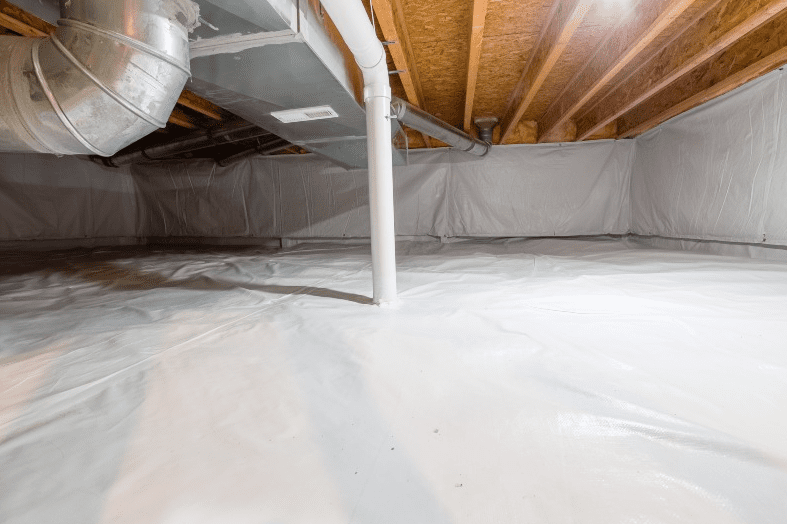
Crawl spaces are easy to ignore because you do not see them every day. But moisture under the house can move upward through the stack effect, carrying musty air, odors, and humidity into the rooms above. A good dehumidifier helps control that moisture, but it works best as part of a complete crawl space moisture plan.
If your main concern is existing mold, read this first: dehumidifier and mold removal. A dehumidifier can help prevent mold by lowering humidity, but it does not remove mold already growing on wood, drywall, insulation, carpet, or stored items.
You likely need a crawl space dehumidifier if the space stays above 60% relative humidity, smells musty, has condensation, shows mold staining, has damp wood, or remains humid after installing drainage and a vapor barrier. The best setup usually combines water control, a vapor barrier, air sealing, humidity monitoring, and the right dehumidifier.
A crawl space dehumidifier controls humidity. It does not fix standing water, plumbing leaks, bad grading, missing vapor barriers, or existing mold by itself. Fix the water source first, then use the dehumidifier to keep the space dry.
Why Crawl Spaces Get Damp
Crawl spaces are naturally prone to moisture because they sit close to the soil, foundation walls, plumbing lines, ducts, vents, and outdoor drainage conditions. Even a small amount of water under the home can raise humidity and create a damp environment.
Common moisture sources include:
- Ground moisture evaporating from exposed soil
- Water entering after heavy rain
- Short downspouts dumping water near the foundation
- Poor grading that slopes toward the house
- Foundation cracks or gaps
- Plumbing leaks
- Open crawl space vents pulling in humid outdoor air
- Condensation on ducts, pipes, insulation, or joists
- Missing, damaged, or poorly installed vapor barrier
If you already have standing water, start with our guide to water in crawl space. A dehumidifier can help after the water source is controlled, but it should not be forced to fight active water intrusion every day.
What Is a Crawl Space Dehumidifier?
A crawl space dehumidifier is a moisture-control appliance designed to remove excess humidity from the air under your home. It pulls in damp air, condenses moisture out of that air, drains the collected water, and blows drier air back into the crawl space.
Unlike many basic room dehumidifiers, crawl space models are usually built for harder conditions. They often include continuous drainage, optional pump drainage, automatic defrost, washable filters, humidistat control, and a more rugged housing.
Crawl Space Dehumidifier vs Basement Dehumidifier
A basement dehumidifier can work well in finished or unfinished lower-level rooms where access, power, and drainage are easy. A crawl space dehumidifier is built for tighter, dirtier, harder-to-service spaces.
If you are shopping for basement units, see our guide to the best basement dehumidifiers on Amazon. If your crawl space is large, wet, or restoration-level damp, compare heavier equipment in our best commercial crawl space dehumidifier guide.
Continuous drainage: You do not want to crawl under the house to empty a bucket.
Pump option: Useful when water must be pushed up or across to a drain point.
Auto-defrost: Important in cooler crawl spaces.
Durable housing: Crawl spaces are dusty, tight, and rough on equipment.
Remote humidity control: Helpful when the unit is hard to access.
Does a Crawl Space Dehumidifier Prevent Mold?
A crawl space dehumidifier can help prevent mold conditions by reducing humidity. Mold needs moisture to grow, and crawl space wood framing can stay damp when humidity remains high. Keeping the air drier helps protect joists, subfloors, beams, insulation, and stored materials.
However, a dehumidifier does not remove existing mold. If mold is already growing on wood, the wood needs proper cleaning and drying. For detailed surface cleanup, see our guide on how to get rid of mold on wood.
For the full explanation of what a dehumidifier can and cannot do with mold, read dehumidifier and mold removal.
Ideal Crawl Space Humidity
A practical target for many crawl spaces is around 45% to 50% relative humidity. EPA guidance recommends keeping indoor humidity below 60%, ideally between 30% and 50% when possible. A crawl space that regularly stays above 60% is more likely to develop mold, mildew, musty odors, wood moisture problems, and pest activity.
30% to 50%: Good target range when practical.
45% to 50%: A realistic setting for many crawl space dehumidifiers.
50% to 60%: Monitor closely, especially during humid seasons.
Above 60%: Moisture problems become more likely and should be corrected.
Signs You Need a Crawl Space Dehumidifier
You may need a crawl space dehumidifier if the area under your home stays damp even after basic drainage and sealing improvements.
- Musty smell inside the house
- Humidity readings above 60%
- Condensation on ducts or pipes
- Damp or stained floor joists
- Mold spots on wood or insulation
- Sagging or wet insulation
- Rust on metal components
- Cold, damp floors above the crawl space
- Pest activity linked to damp conditions
- Dehumidifier bucket filling quickly in a nearby basement
Do not rely on smell alone. Put a digital hygrometer in the crawl space and check real humidity readings during different weather conditions.
Fix These Problems Before Installing a Dehumidifier
A crawl space dehumidifier works best after water entry is controlled. If rainwater keeps entering the crawl space, the unit may run nonstop and still fail to protect the structure.
Gutters: Clean them and make sure they move water away from the home.
Downspouts: Extend them away from the foundation.
Grading: Soil should slope away from the house, not toward it.
Leaks: Repair plumbing, foundation, roof, and drainage problems quickly.
Debris: Remove wet cardboard, wood scraps, and moldy insulation.
Vapor barrier: Cover exposed soil to reduce ground moisture evaporation.
For the ground moisture layer, read our crawl space vapor barrier guide. If airflow is your main concern, see our crawl space exhaust fan guide.
Types of Crawl Space Dehumidifiers
Most crawl space dehumidifiers fall into two broad categories: refrigerant dehumidifiers and desiccant dehumidifiers.
Refrigerant Dehumidifiers
Refrigerant dehumidifiers use coils to cool moist air until water condenses out. These are the most common choice for residential crawl spaces, basements, and encapsulated under-home spaces.
They work well in typical crawl space temperatures, especially when the unit has automatic defrost protection.
Desiccant Dehumidifiers
Desiccant dehumidifiers use a moisture-absorbing material instead of cold coils. They can perform better in colder environments where refrigerant units may struggle.
They are less common for normal residential crawl spaces but can be useful in specific low-temperature or specialty drying situations.
Features to Look For in a Crawl Space Dehumidifier
The best crawl space dehumidifier is not always the one with the biggest number on the box. You want the right capacity, drainage, controls, durability, and service access for your actual crawl space.
Correct capacity: Match the unit to crawl space size and moisture load.
Built-in humidistat: Lets the unit maintain a target humidity.
Continuous drainage: Avoids manual bucket emptying.
Condensate pump option: Useful when gravity drainage will not work.
Auto-defrost: Helps in cooler crawl space conditions.
Auto-restart: Restarts after power outages.
Washable filter: Protects coils and improves airflow.
Service access: You need to reach filters, hoses, and controls without a wrestling match.
How to Size a Crawl Space Dehumidifier
Sizing depends on square footage, crawl space height, moisture load, temperature, drainage, and whether the crawl space is sealed or open to outside air. A clean, encapsulated crawl space is easier to control than a vented crawl space with bare soil and water entry.
Use square footage as a starting point, not the whole answer.
- Small crawl spaces: May only need a compact 50 to 55 PPD unit if moisture is mild.
- Medium crawl spaces: Often need a 70 PPD class unit with continuous drainage.
- Large or very damp crawl spaces: May need 90 PPD or commercial-grade equipment.
- Flooded or restoration conditions: May need commercial LGR equipment and air movers.
For severe moisture, flood recovery, or large spaces, compare heavy-duty options in our best commercial crawl space dehumidifier guide.
Best Crawl Space Dehumidifier Models to Consider
These are not the only good options, but they represent the kind of capacity and feature set I would look for in a real crawl space moisture project.
AlorAir Sentinel HD55
A compact crawl space dehumidifier option for moderate humidity problems and smaller under-home spaces.
AprilAire E070
A strong choice for larger crawl spaces where dependable whole-home moisture control matters.
AlorAir Storm Pro
A heavier-duty option for extensive moisture problems, larger spaces, or more demanding crawl space conditions.
Digital Hygrometer
A simple humidity meter is essential. Without real readings, you are only guessing whether the crawl space is safe.
Installation Basics
Some homeowners install crawl space dehumidifiers themselves, but professional setup is often worth it when electrical access, drainage, vapor barrier work, or encapsulation is involved.
Good installation includes:
- Place the unit on a stable surface. Do not set it in mud, standing water, or loose debris.
- Leave airflow clearance. The intake and exhaust sides need room to breathe.
- Route drainage correctly. Water should drain to a sump, condensate pump, safe exterior discharge, or approved drain point.
- Protect the power supply. Crawl spaces need safe, code-compliant electrical access.
- Set the humidistat. Start around 45% to 50% and adjust based on real readings.
- Monitor after storms. Heavy rain can reveal drainage problems that the dehumidifier cannot solve alone.
Drainage Options
Drainage is one of the most important parts of crawl space dehumidifier setup. If the unit cannot get rid of collected water, it cannot protect the crawl space.
Gravity drain: Works only if the drain hose can slope continuously to a lower drain point.
Built-in pump: Pushes water up or across when gravity drainage is not possible.
External condensate pump: Useful when the dehumidifier does not include a pump.
Sump system: Often used when the crawl space also has groundwater or perimeter drainage issues.
Maintenance Checklist
A crawl space dehumidifier is not a “set it and forget it forever” machine. It needs basic maintenance to keep airflow, drainage, and moisture removal working properly.
Monthly: Check humidity readings and confirm water is draining correctly.
Every 1 to 3 months: Clean or replace filters according to the manufacturer’s instructions.
After storms: Inspect for standing water, new leaks, clogged drains, or longer run times.
Seasonally: Check the vapor barrier, sump pump, gutters, downspouts, and crawl space door or access panel.
If it smells musty: Inspect the unit, drain hose, filter, and crawl space materials for mold, debris, or hidden moisture.
Can a Dehumidifier Replace a Vapor Barrier?
No. A crawl space dehumidifier should not replace a vapor barrier. The vapor barrier reduces ground moisture before it enters the air. The dehumidifier removes moisture that still gets into the crawl space.
In many crawl spaces, the best result comes from using both. The vapor barrier reduces the load, and the dehumidifier maintains the target humidity.
For installation details, see our full crawl space vapor barrier guide.
Crawl Space Dehumidifier vs Exhaust Fan
A crawl space exhaust fan moves air. A dehumidifier removes moisture from the air. Those are different jobs.
In some climates, pulling outdoor air into a crawl space can make humidity worse, especially during warm, humid weather. Exhaust fans can help in certain setups, but they need to be planned carefully.
For more detail, read our crawl space exhaust fan guide.
Cost, Energy Use, and Noise
Crawl space dehumidifiers often cost more than basic room units because they are built for harder work. Many quality units range from several hundred dollars to over $2,000 depending on capacity, pump options, controls, and build quality.
Energy use depends on the unit, humidity load, runtime, and crawl space condition. A sealed, dry crawl space costs less to maintain than a wet, vented crawl space with bare soil and active water entry.
Noise usually matters less in a crawl space than in a bedroom, but vibration and placement still matter. Install the unit on a stable surface and keep it away from loose materials that can rattle.
When to Call a Professional
Call a professional if you have standing water, widespread mold, rotten joists, wet insulation, electrical hazards, sewage contamination, severe drainage problems, or a crawl space you cannot safely enter.
You should also get help if mold keeps returning after cleaning. That usually means the moisture source is still active or hidden.
If your crawl space has standing water, structural wood damage, widespread mold, or musty odors that keep coming back, get a professional inspection or remediation estimate.
Official Mold and Moisture References
For safety guidance, review EPA’s mold and moisture guide, EPA’s basic mold cleanup steps, and CDC’s mold cleanup recommendations.
Frequently Asked Questions
What does a crawl space dehumidifier do?
A crawl space dehumidifier removes excess moisture from the air under your home. This helps reduce humidity, musty odors, condensation, and conditions that support mold, mildew, pests, and wood moisture problems.
What humidity should a crawl space be?
A good practical target is usually around 45% to 50% relative humidity. EPA guidance recommends keeping indoor humidity below 60%, ideally between 30% and 50% when possible.
Will a crawl space dehumidifier remove mold?
No. A crawl space dehumidifier helps prevent mold conditions by lowering humidity, but it will not remove existing mold from wood, insulation, drywall, or stored items.
Do I need a vapor barrier if I have a dehumidifier?
Often, yes. A vapor barrier reduces ground moisture entering the crawl space, while the dehumidifier controls remaining humidity. They work best together.
Can I use a regular dehumidifier in a crawl space?
You can in mild conditions, but a regular room dehumidifier may not be durable enough, may lack pump drainage, and may struggle in tight or cool crawl spaces.
How big of a crawl space dehumidifier do I need?
Size depends on square footage, humidity level, temperature, drainage, and whether the crawl space is sealed or vented. Damp, open, or large crawl spaces need more capacity than clean encapsulated spaces.
Should crawl space vents be open or closed with a dehumidifier?
In many modern encapsulated crawl spaces, vents are sealed so the dehumidifier can control the air more effectively. However, the right approach depends on climate, local code, and crawl space design.
How often should I clean a crawl space dehumidifier?
Check the unit monthly and clean or replace filters every 1 to 3 months, depending on dust, runtime, and manufacturer instructions. Inspect drainage after storms.
Does a crawl space dehumidifier help with musty smells?
Yes, if the musty smell is caused by high humidity or damp materials. If the smell is from active mold, standing water, or wet debris, those problems still need to be cleaned or removed.
Is a crawl space dehumidifier worth it?
Yes, if your crawl space has persistent humidity, musty odors, condensation, damp wood, or mold-prone conditions. It is most effective when combined with drainage correction, vapor barrier work, and humidity monitoring.
Conclusion
A crawl space dehumidifier is one of the best tools for protecting the area under your home from excess humidity. It can help reduce musty odors, protect wood framing, improve moisture control, and make the crawl space less friendly to mold and pests.
But it is not a magic fix. Start by correcting water entry, drainage, grading, plumbing leaks, and vapor barrier problems. Then use a properly sized dehumidifier to maintain safe humidity levels over time.
For the strongest crawl space moisture plan, use this article together with our guides on water in crawl spaces, crawl space vapor barriers, commercial crawl space dehumidifiers, and dehumidifier and mold removal.
Join the free Garden Frontier list for crawl space moisture control, basement care, mold prevention, home repair, and practical equipment guides.
100% free. No spam. Unsubscribe anytime.