












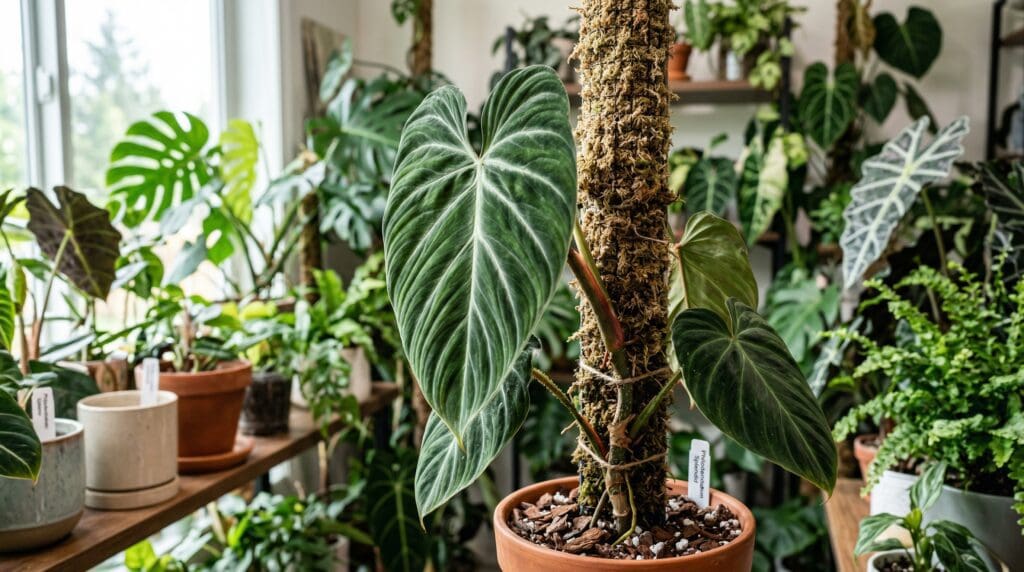
I still remember the day I brought home my first tiny Philodendron Splendid cutting in early 2023. It was barely 6 inches tall with two small, slightly fuzzy leaves. Today, that same plant climbs a 7-foot moss pole, produces velvety leaves over 18 inches long, and is one of the most admired plants in my collection.
Philodendron Splendid (Melanochrysum × Verrucosum) is a hybrid that combines the best traits of its two stunning parents. It has the deep green, velvety texture of a Melanochrysum and the impressive leaf size and climbing habit of a Verrucosum. While it looks like a high-maintenance collector’s plant, I’ve found it to be surprisingly forgiving and faster-growing than either parent once you understand its needs.
In this guide, I share everything I’ve learned from growing multiple Splendids over the past three years—from small cuttings to mature, pole-climbing specimens. This is not theory copied from a care sheet. It’s real experience from someone who has killed (and saved) enough rare aroids to know what actually matters.
The “Must-Have” Secret: Why a Moss Pole Is Non-Negotiable
If there is one thing that separates a mediocre Philodendron Splendid from a jaw-dropping specimen, it is a proper moss pole.
Without vertical support, the plant stays in a juvenile phase, producing smaller, less velvety leaves. Once it starts climbing a consistently moist moss pole, the aerial roots latch on, the leaves dramatically increase in size, the velvety texture becomes more pronounced, and the plant shifts into its mature form.
I use 4–6-inch-diameter moss poles made from natural sphagnum moss wrapped around a PVC or wooden core. I keep the moss moist (not soggy) by misting daily and watering the pole directly every 3–4 days. The plant responds almost immediately with bigger leaves.
💡 Pro tip from experience: Never let the moss pole dry out completely. A consistently moist pole is the single biggest factor in producing those legendary 18–24 inch leaves.
Soil Mix: The Chunky Aroid Recipe That Actually Works
Philodendron Splendid hates wet feet but loves oxygen around the roots. After years of trial and error, this is the exact chunky aroid mix I use for all my Splendids and other velvety aroids:
My Ultimate Aroid Soil Recipe
- 40% Orchid Bark (medium to large chunks)
- 25% Perlite (coarse)
- 20% Coco Coir or Coco Chips
- 10% Horticultural Charcoal
- 5% Worm Castings or slow-release fertilizer pellets
This mix drains quickly while still retaining enough moisture for the thick, velvety leaves. I repot every 12–18 months in spring, moving up one pot size only.
Light Requirements: Bright but Never Harsh
Philodendron Splendid wants bright, indirect light—the kind you get a few feet back from an east or west window. In my grow room, I keep them under 2,500–3,500 foot-candles. Too little light and the leaves stay small and dark; too much direct sun and they scorch.
If your plant is stretching or producing small leaves, add a good full-spectrum grow light 12–18 inches above the top of the plant for 12–14 hours a day. I’ve seen the biggest improvement in leaf size when I supplement with grow lights during the darker winter months.
Watering Schedule: The “Wait Until Dry” Rule
I water when the top 2 inches of soil feel dry to the touch (usually every 7–10 days in summer, every 10–14 days in winter). I thoroughly soak the pot until water runs out the bottom, then let it drain completely.
Never let it sit in water. Overwatering is the fastest way to lose a Splendid to root rot. Underwatering is much easier to fix—the leaves will droop dramatically as a warning before any permanent damage occurs.
Humidity & Temperature: What Actually Works
Splendid tolerates average household humidity (40–50%) surprisingly well, but it thrives at 60–75%. I run a whole-room humidifier in winter and keep a pebble tray under the plant in summer.
Temperature range: 65–85°F during the day and no lower than 60°F at night. Avoid cold drafts and sudden temperature swings.
Philodendron Splendid vs Melanochrysum vs Gloriosum
Philodendron Splendid vs Melanochrysum
Splendid is a hybrid of Melanochrysum and Verrucosum. It grows faster and is generally easier to care for than pure Melanochrysum. The leaves are slightly broader and the velvety texture is comparable, but Splendid is much more forgiving of lower humidity and inconsistent watering. Melanochrysum is slower and notoriously finicky.
Philodendron Splendid vs Gloriosum
This is the most common point of confusion. Gloriosum is a crawler that stays low to the ground and needs a long, rectangular pot. Splendid is a climber that desperately wants to go up a moss pole. The leaf shape is similar, but splendid leaves are usually larger once established on a pole, and the plant grows vertically, not horizontally.
Common Problems & How I Fix Them
- Yellowing leaves: Usually overwatering or poor drainage. Let the soil dry more between waterings and check for root rot.
- New leaves stuck in the cataphyll: Increase humidity and ensure the moss pole is consistently moist. Gentle misting around the emerging leaf helps it unfurl safely.
- Small or pale new leaves: Not enough light or fertilizer. Move closer to a light source and feed with a balanced liquid fertilizer every 2 weeks during the growing season.
- Pests (mealybugs, spider mites): I inspect every new plant carefully. If I see any, I treat them immediately with neem oil or insecticidal soap.
FAQ – Philodendron Splendid Questions I Get Asked Constantly
Is Philodendron Splendid rare?
It was very rare a few years ago, but tissue culture has made it much more available in 2026, while it still remains a prized collector’s plant.
How fast does it grow?
With proper care, chunky soil, and a moist moss pole, it can put out a new leaf every 4–6 weeks during the active growing season.
Can it live in low light?
It will survive, but it will not thrive. Bright indirect light or supplemental LED grow lights are absolutely essential for producing those massive, velvety leaves.
Is it toxic to pets?
Yes, like most Philodendrons, it contains calcium oxalate crystals and is toxic to dogs, cats, and humans if ingested.
How big will it get?
With a tall moss pole and good care, mature Philodendron Splendid leaves regularly exceed 18–24 inches in length.
Philodendron Splendid is one of those plants that rewards patience and attention. Give it the right conditions—especially a consistently moist moss pole and bright indirect light—and it will become one of the most spectacular plants in your collection.