


















Most attic doors look harmless, but a poorly sealed attic access door can leak heat, create drafts, pull humid air into the attic, and make your hallway, closet, or upstairs room uncomfortable. If the hatch is warped, uninsulated, hard to open, or loose around the edges, it is not just an ugly ceiling panel — it can affect comfort and energy efficiency.
The right attic door depends on how you use the space. Some homes only need a simple ceiling attic access panel. Others need pull-down attic stairs, a knee wall attic door, or an insulated attic hatch that seals tightly.
In my experience, the biggest mistake homeowners make is choosing an attic door based only on opening size. Size matters, but you also need to think about insulation, air sealing, ladder access, ceiling height, weight rating, fire rating, and how often you actually go into the attic.
🏠 Quick Picks: Best Attic Door Options
- Best for Basic Access: Ceiling attic access panel
- Best for Frequent Use: Pull-down attic stairs
- Best for Energy Savings: Insulated attic door or attic stair cover
- Best for Side Attics: Knee wall attic door
- Best for Finished Rooms: Hidden or flush attic access panel
- Best Budget Fix: Weatherstripping and attic stair insulation cover
What Is an Attic Door?
An attic door is any access point that lets you enter an attic, crawl attic, storage loft, or roof cavity. It may be a simple removable ceiling panel, a hinged hatch, a pull-down stair unit, or a small vertical door in a knee wall.
The purpose is simple: you need safe access to insulation, wiring, HVAC equipment, storage, ductwork, plumbing vents, roof leaks, or pest inspections. But because attic spaces are usually hot, cold, dusty, and unconditioned, the attic door also needs to separate your living space from the attic.
A bad attic door can cause drafts, heat loss, humidity movement, dust leaks, and uncomfortable rooms. A good attic door should fit properly, open safely, close securely, and seal well.
Types of Attic Doors
1. Ceiling Attic Access Door
A ceiling access door is the simplest option for entering the attic. It is usually a framed opening in the ceiling with a removable or hinged panel. These are common in closets, hallways, garages, laundry rooms, and upstairs bedrooms.
This type works well if you only enter the attic occasionally for inspections or maintenance. The main downside is that you need a separate ladder every time you access the attic.
Best for: Basic attic access, small homes, closets, hallways, garages, and occasional maintenance.
- Pros: Simple, affordable, easy to install, takes little space.
- Cons: Requires a separate ladder, often poorly insulated unless upgraded.
2. Pull-Down Attic Stairs
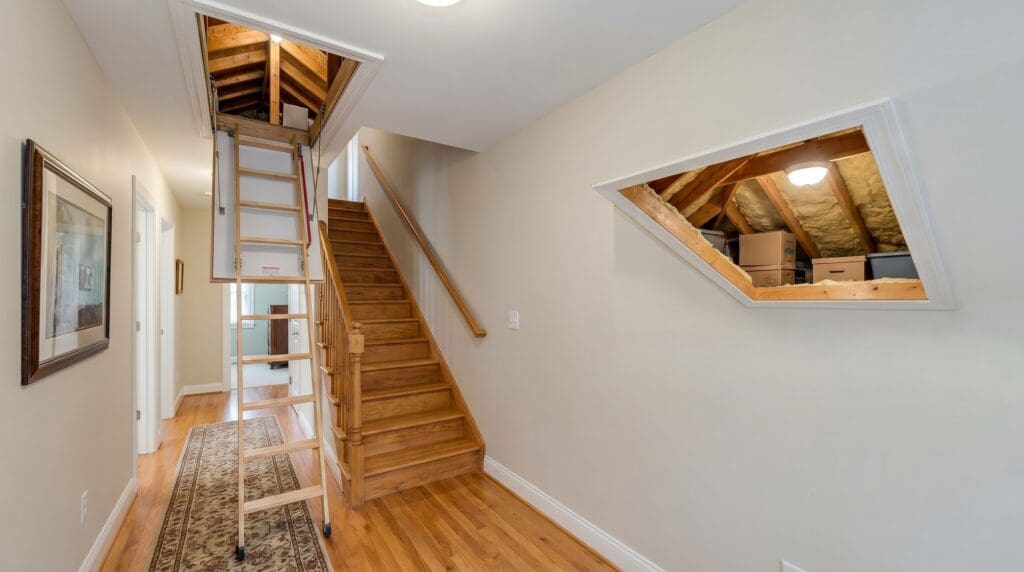
Pull-down attic stairs are the best choice if you go into the attic often. The stairs fold into the ceiling opening and pull down when needed. This makes attic access much safer and more convenient than carrying a ladder through the house.
They are especially useful if you use the attic for storage. However, they must be installed correctly because they carry body weight and need proper framing support.
Best for: Frequent attic access, storage attics, garages, and homes where carrying a ladder is inconvenient.
- Pros: Convenient, safer than a loose ladder, good for storage access.
- Cons: More expensive, requires proper framing, can leak air if not insulated well.
3. Knee Wall Attic Door
A knee wall attic door is a vertical access door built into a short wall, usually in a finished attic room, bonus room, cape cod upstairs space, or sloped-ceiling bedroom.
These doors are useful because they provide side access to attic storage or mechanical spaces. The big issue is insulation. A knee wall door separates conditioned living space from a hot or cold attic cavity, so it needs to seal tightly.
Best for: Finished attics, bonus rooms, sloped ceilings, cape cod homes, and side attic storage.
- Pros: Easy side access, good for storage, works in finished attic spaces.
- Cons: Must be insulated and sealed carefully to prevent drafts.
4. Insulated Attic Door
An insulated attic door is designed to reduce heat transfer and air leakage between the attic and living space. This can be a pre-insulated attic access panel, an insulated knee wall door, or a standard attic hatch upgraded with foam board, weatherstripping, and an attic stair cover.
This is one of the smartest upgrades if your attic hatch feels drafty, hot in summer, cold in winter, or dusty around the edges.
Best for: Energy savings, draft control, hot or cold upstairs rooms, and attic doors near living areas.
- Pros: Improves comfort, reduces drafts, helps separate attic air from living space.
- Cons: Requires careful sealing; insulation alone does not stop air leaks.
5. Hidden or Flush Attic Access Panel
A hidden attic access panel is designed to blend into the ceiling or wall. These are useful in finished rooms where you do not want an obvious attic hatch interrupting the ceiling.
Some panels are paintable. Others are designed to sit flush with drywall. They look cleaner, but they still need to be accessible and easy to open when maintenance is needed.
Best for: Finished rooms, hallways, closets, modern interiors, and clean ceiling designs.
- Pros: Cleaner appearance, paintable, better for finished spaces.
- Cons: Can be harder to find, may need more precise installation.
Attic Access Door vs. Pull-Down Attic Ladder
The biggest decision is whether you need simple attic access or built-in attic stairs.
If you only go into the attic once or twice a year, a basic access door may be enough. If you use the attic for storage, pull-down attic stairs are usually worth the upgrade.
| Option | Best For | Pros | Cons |
|---|---|---|---|
| Attic Access Door | Occasional access | Cheaper, simple, compact | Requires separate ladder |
| Pull-Down Attic Stairs | Frequent access and storage | Convenient, safer access, built-in ladder | Costs more and needs proper installation |
How to Choose the Right Attic Door Size
Attic door sizing depends on the type of access, ceiling framing, ladder requirements, and how much room you have below the opening.
Measure the Rough Opening
The rough opening is the framed hole where the attic door or ladder unit fits. Measure width and length carefully. Do not assume the old hatch is square.
Check Ceiling Joist Direction
Ceiling joists determine where a larger attic ladder can fit. Cutting structural framing without proper reinforcement can be dangerous, so be careful before enlarging an opening.
Check Floor-to-Ceiling Height
Pull-down attic ladders are designed for specific ceiling heights. If the ladder is too short or too long, it will not sit safely on the floor.
Check Swing Clearance
Pull-down stairs need room to open. Make sure furniture, doors, hallway walls, light fixtures, and closet shelving do not block the ladder path.
Consider What You Carry Into the Attic
If you store boxes, decorations, luggage, or bulky items, a tiny ceiling hatch will be frustrating. A larger attic ladder opening may be worth it.
For pull-down attic stairs, measure both the rough opening and the floor-to-ceiling height. A ladder that fits the opening but does not match the ceiling height can be unsafe.
How to Insulate an Attic Door
If your attic door is drafty, insulation and air sealing should be the first upgrade. The goal is to stop both heat transfer and air leakage.
A common mistake is adding insulation without sealing the gaps. Insulation slows heat movement, but air leaks still let hot, cold, humid, or dusty attic air move into the house.
Basic Attic Door Insulation Steps
- Check for gaps: Look for light, dust lines, drafts, or loose edges around the attic hatch.
- Add weatherstripping: Apply gasket tape where the door meets the frame.
- Add rigid foam board: Attach foam insulation to the attic side of a flat hatch when appropriate.
- Seal edges carefully: Use compatible tape or sealant to reduce air leakage.
- Use an attic stair cover: For pull-down stairs, an insulated cover box is often easier than insulating the door panel alone.
If drafts or heat loss are your main problem, read our full guide on how to insulate an attic door.
How Much Does Attic Door Installation Cost?
Attic door installation cost depends on the type of door, size of the opening, ceiling height, framing work, ladder style, and whether insulation or trim is included.
A simple attic access panel is usually the cheapest. Pull-down attic stairs cost more because the installer must secure the ladder unit properly and make sure the stairs open safely. Custom attic access doors, fire-rated doors, and finished-room panels may also cost more.
Costs can rise if the existing opening needs to be enlarged, ceiling framing must be adjusted, drywall repairs are needed, or the attic door is in a difficult location.
If you already know you need a new access point, read our detailed guide to attic door installation.
Common Attic Door Problems
Drafts Around the Attic Door
Drafts are usually caused by missing weatherstripping, warped panels, loose trim, or gaps between the hatch and frame. Add gasket tape and insulation before replacing the whole door.
Attic Door Will Not Close Properly
If the door sticks, sags, or does not sit flat, check the hinges, latch, frame, and panel warping. A door that does not close tight will not seal well.
Pull-Down Ladder Feels Loose
A loose pull-down attic ladder can be dangerous. Check mounting screws, hinge hardware, spring arms, and the ladder feet. Do not use the stairs if they feel unstable.
Mold or Condensation Around the Attic Door
Mold, staining, or condensation near an attic access door may point to air leakage, humidity movement, poor insulation, or an attic ventilation issue. Fixing the door seal may help, but you should also check for roof leaks, bathroom fan problems, or moisture sources.
The Attic Door Looks Ugly in a Finished Room
If appearance is the problem, consider a flush, paintable, or hidden attic access panel. This works especially well in finished hallways, closets, bonus rooms, or sloped-ceiling spaces.
DIY vs. Professional Attic Door Installation
Installing a small attic access panel can be a reasonable DIY project if you are comfortable cutting drywall, framing an opening, and trimming the panel neatly.
Pull-down attic stairs are more serious. They must support body weight, fit the ceiling height, attach securely to framing, and open safely. If the installation requires cutting joists or enlarging the rough opening, hire a professional.
| Project | DIY Friendly? | Why |
|---|---|---|
| Adding weatherstripping | Yes | Simple, low-risk, inexpensive upgrade. |
| Insulating a flat hatch | Usually | Can often be done with foam board and sealing materials. |
| Replacing a small access panel | Sometimes | Depends on drywall, framing, and trim work. |
| Installing pull-down attic stairs | Only for experienced DIYers | Must be safely supported and matched to ceiling height. |
| Cutting or modifying ceiling joists | No | Structural framing changes should be handled by a qualified professional. |
Never cut ceiling joists or install pull-down attic stairs without understanding the framing. Attic ladders must support weight safely. When in doubt, hire a qualified carpenter, handyman, or contractor.
Best Attic Door Accessories
Sometimes you do not need a completely new attic door. A few accessories can make the existing opening more comfortable, cleaner, and easier to use.
- Attic stair insulation cover: Helps seal and insulate pull-down attic stairs.
- Weatherstripping tape: Reduces drafts around the hatch or knee wall door.
- Rigid foam board: Adds insulation to a flat attic hatch.
- Foil-faced insulation: Useful in some attic access upgrades.
- Pull cord or handle: Makes ceiling hatches easier to open.
- Latch hardware: Helps pull the door tight against the frame.
- Trim kit: Gives the opening a cleaner finished look.
Final Verdict: What Is the Best Attic Door?
The best attic door depends on how you use the attic. For basic maintenance access, a simple ceiling attic access panel is usually enough. For frequent attic storage, pull-down attic stairs are the most convenient option. For finished attic rooms or side storage spaces, a knee wall attic door is usually the right choice.
If your main problem is drafts, heat loss, or uncomfortable rooms, start with insulation and air sealing before replacing the entire door. An attic stair cover, weatherstripping, or insulated hatch upgrade can make a big difference.
My simple rule is this: choose a basic access panel for occasional use, pull-down stairs for storage access, and an insulated attic door or cover if comfort and energy loss are the real problem.
📚 More Home Improvement Guides
Planning more practical upgrades around the house? Start here:
Frequently Asked Questions
What is an attic door called?
An attic door may be called an attic access door, attic hatch, attic access panel, attic ladder door, knee wall door, or pull-down attic stair door, depending on the type of access.
What is the best type of attic door?
The best type depends on how often you use the attic. A ceiling access panel is best for occasional access, pull-down attic stairs are best for frequent access, and an insulated attic door is best for reducing drafts and heat loss.
Can I install an attic door myself?
You can install some simple attic access panels yourself if you are comfortable with drywall and basic framing. Pull-down attic stairs are more difficult and should be installed carefully because they must support body weight.
How do you insulate an attic door?
You can insulate an attic door by adding weatherstripping around the frame, attaching rigid foam board to the hatch, sealing air gaps, or using an attic stair insulation cover for pull-down stairs.
Why is my attic door drafty?
A drafty attic door usually has air leaks around the frame, missing weatherstripping, a warped panel, poor insulation, or gaps around pull-down attic stairs.
Are pull-down attic stairs worth it?
Pull-down attic stairs are worth it if you enter the attic often or use it for storage. They are more convenient than carrying a ladder, but they must be installed safely and insulated properly.
What size attic access door do I need?
The right size depends on the framed opening, ceiling joists, access needs, and whether you need a ladder. Always measure the rough opening and check product requirements before buying.
Can an attic door cause heat loss?
Yes. An unsealed or uninsulated attic door can allow heat, cold air, dust, and humidity to move between the attic and living space. Air sealing and insulation can help reduce this problem.
How do you hide an attic door in the ceiling?
Use a flush, paintable attic access panel, clean trim, matching ceiling paint, or a hidden access panel designed to blend into drywall. The door should still remain easy to open for maintenance.