
















St. Augustine grass (Stenotaphrum secundatum) is the undisputed king of Southern lawns. With its wide, coarse blades and exceptional tolerance for heat and humidity, it forms a thick, carpet-like turf that naturally chokes out weeds. Whether you are growing standard varieties or popular cultivars like Floratam, Raleigh, or Seville, this grass thrives in coastal regions from Florida to Texas.
However, St. Augustine is a heavy feeder and is highly sensitive to cold weather and specific pests (like chinch bugs). If you want that deep, emerald-green look, you need to know exactly what to feed it. In this 2026 guide, we will reveal the best fertilizer for St. Augustine grass, provide a complete month-by-month maintenance calendar, and show you exactly how to protect your lawn from devastating summer pests.

Stop guessing what your lawn needs. St. Augustine has unique nitrogen requirements depending on your exact climate zone. Use our interactive planner below to generate a custom N-P-K fertilizer and watering schedule tailored specifically for your yard.
The Best Fertilizer for St. Augustine Grass in 2026
Because St. Augustine grass grows so vigorously during the summer, it requires consistent, slow-release nitrogen to maintain its color without causing excessive, uncontrollable top growth. It also benefits greatly from added iron.
1. Scotts Southern Turf Builder (Best Overall for Southern Lawns)
If you are looking for the absolute best lawn fertilizer for St. Augustine grass, Scotts Southern Turf Builder is the industry standard. It is specially formulated to protect against the extreme heat and drought common in Florida and Texas, while delivering a massive nitrogen payload (32-0-10) for rapid greening.
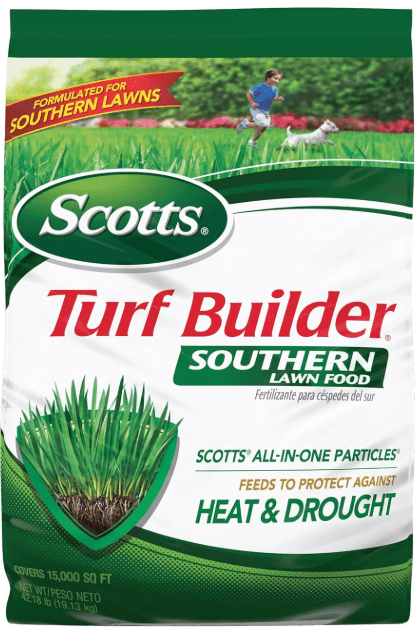
- Custom-built for Southern grasses like St. Augustine and Centipede.
- All-in-one particle technology ensures even feeding.
- Protects against heat and drought stress.
- Does not contain weed control (fertilizer only).
2. Simple Lawn Solutions 15-0-15 (Best Liquid Option)
If you need rapid results or want to correct a nutrient deficiency quickly, this phosphate-free liquid fertilizer is exceptional. The 15-0-15 ratio provides a perfect balance of nitrogen for growth and potassium for root health and stress tolerance.
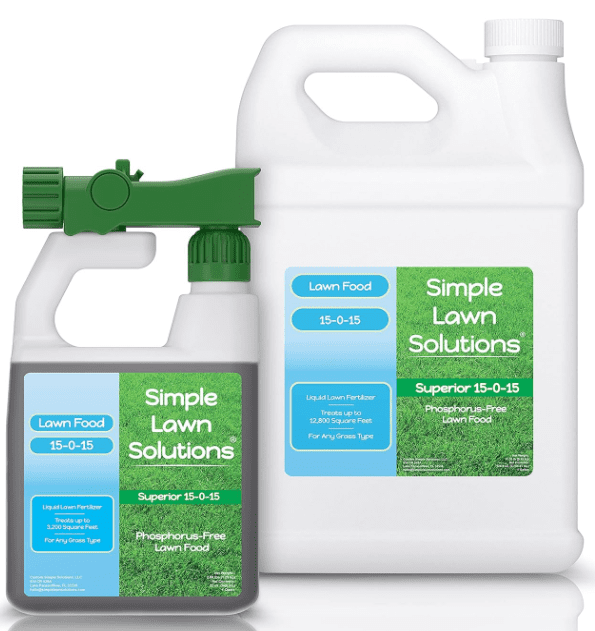
- Foliar absorption results in visible greening within 48 hours.
- Contains humic acid to improve soil quality.
- Easy to apply with a standard hose-end sprayer.
- It is more expensive per square foot than granular options.
St. Augustine grass is incredibly sensitive to many common herbicides. If you are looking for a weed and feed, you must ensure the label explicitly states it is safe for St. Augustine (especially the Floratam cultivar). Never use products containing heavy doses of 2,4-D, as it will scorch and kill your lawn. Always look for products utilizing Atrazine instead.
St. Augustine Grass Maintenance Calendar
To keep your lawn thick and healthy year-round, you must adapt your mowing, watering, and feeding habits to the seasons. Follow this ultimate St. Augustine grass maintenance calendar.
Spring (March – May): The Wake-Up Phase
- March: As temperatures rise, monitor your soil moisture. Once your soil temperature consistently reaches 65°F, it is time for your first major fertilizer application using a slow-release nitrogen product.
- April: Increase your watering frequency to encourage deep root development. Inspect your lawn for yellowing patches or loose grass—this is a primary indicator of White Grubs damaging the root system.
- May: Raise your mower deck. Cutting St. Augustine too short (scalping) exposes the runners (stolons) to extreme solar radiation. Maintain a cutting height of 3.5 to 4 inches to prepare the grass for the summer heat.
Summer (June – August): The Danger Zone
- June: Keep your mowing height elevated. Watch closely for the arrival of Chinch Bugs, which thrive in hot, dry weather and can destroy a St. Augustine lawn in days. Apply a targeted insecticide if you notice irregular brown patches expanding rapidly.
- July: Heavy summer rains can lead to fungal diseases like Brown Patch. If you spot circular brown lesions, apply a commercial fungicide. Water only in the early morning to ensure the grass blades dry out before nightfall.
- August: Continue to mow high. This is a great time to patch any bare spots using sod plugs, as the intense heat will force the runners to spread rapidly if properly watered.
Fall (September – November): Preparation & Recovery
- September: Apply your final nitrogen fertilizer application of the year. This helps the grass recover from summer stress before going into winter dormancy.
- October: If you have low spots in your yard, this is the perfect time for topdressing. Use sterilized topsoil or sand to level the yard, being careful not to completely bury the green leaf blades.
- November: As growth slows drastically, reduce your mowing frequency. Never cut more than one-third of the leaf blade at a time to protect the grass from impending cold snaps.
Winter (December – February): Dormancy
- December – February: St. Augustine is highly susceptible to cold. Watering should be light and infrequent—only enough to keep the roots from completely drying out. Do not fertilize during these months, as the grass is dormant and cannot absorb the nutrients.
Frequently Asked Questions
What is the best fertilizer for St. Augustine grass in Florida?
Because Florida has sandy soil that drains nutrients quickly, the best fertilizer is a slow-release granular blend high in nitrogen and potassium (like a 16-0-8 or 15-0-15), supplemented with iron for a deep green color without extreme growth.
What cutting height is best for St. Augustine grass?
St. Augustine grass should be maintained at a height of 3.5 to 4 inches. Mowing it any lower than 3 inches can permanently damage the stolons (above-ground runners) and allow weeds to penetrate the canopy.
How much water does St. Augustine grass need?
During the active growing season (summer), St. Augustine requires about 1 to 1.5 inches of water per week. It is much better to water deeply and infrequently (e.g., twice a week for 45 minutes) rather than watering a little bit every day, which promotes shallow, weak roots.







Comments are closed.