
















Hedge trimming is the difference between a dense, attractive privacy screen and a woody, top-heavy wall of bare stems. A hedge may look like one solid green block, but it is still a living row of shrubs. Trim it at the right time, with the right shape, and it stays thick from top to bottom. Trim it badly, and the bottom can become shaded, thin, and patchy.
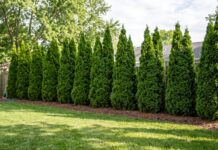
The golden rule is simple: keep the hedge slightly wider at the base than at the top. This slight A-shape lets sunlight reach the lower branches, which helps the hedge stay green and full near the ground.
This guide covers when to trim different hedge types, how to shape a hedge straight, which tools to use, what safety gear matters, how to avoid bird-nesting problems, and how to renovate an old overgrown hedge without killing it.

- Best shape: Trim hedges slightly narrower at the top and wider at the bottom so light reaches the lower growth.
- Best timing: Lightly trim many evergreen hedges in late spring or early summer, then again in late summer if needed. Flowering hedges are often trimmed after flowering.
- Bird warning: Check for active nests before cutting. Avoid heavy hedge trimming during nesting season where birds are using the hedge.
- Best tools: Manual shears for small or detailed work, cordless hedge trimmer for most privacy hedges, long-reach trimmer for tall hedges, loppers or pruning saw for thick old stems.
- Safety gear: Wear safety glasses, gloves, long sleeves, hearing protection for power tools, and stable footwear.
- Big mistake: Do not cut conifers such as leylandii or arborvitae hard into old brown wood unless you know they can regrow from it.
Why Trim Hedges?
Regular hedge trimming is not only about looks. It controls size, improves density, keeps paths clear, and prevents a privacy hedge from turning into a tall green roof with bare legs.
It Keeps the Hedge Dense
Light trimming of new growth encourages branching. More side shoots usually means a thicker hedge and better privacy.
It Controls Height and Width
Hedges can quickly swallow walkways, driveways, windows, fences, and garden beds. Routine trimming keeps them in scale with the landscape.
It Lets Light Reach the Lower Branches
If the top becomes wider than the bottom, it shades the lower growth. Over time, the base becomes thin, brown, or bare. A slight taper prevents this.
It Reduces Disease Pressure
Removing crowded or dead growth can improve airflow. This is especially useful for dense evergreen hedges in humid climates.
It Protects the Shape You Want
A hedge is easiest to maintain when you trim little and often. Waiting too long often forces harsher cuts that can leave brown patches.
When Is the Best Time to Trim Hedges?
The best time to trim a hedge depends on the plant species, whether it is evergreen or deciduous, whether it flowers, and whether birds are nesting in it. There is no single perfect month for every hedge.
| Hedge Type | Best Timing | Notes |
|---|---|---|
| Evergreen formal hedges | Late spring or early summer, then late summer if needed | Avoid cutting during extreme heat, drought stress, or active nesting. |
| Deciduous non-flowering hedges | Late winter for heavier shaping; summer for light maintenance | Winter structure is easier to see after leaves drop. |
| Spring-flowering hedges | Soon after flowering | If you trim too late, you may remove next year’s flower buds. |
| Beech and hornbeam hedges | Late summer for a tidy shape | A late-summer trim can help retained brown leaves stay neater through winter. |
| Boxwood hedges | After new growth firms up; avoid hot sun and wet conditions | Clean tools and airflow matter because boxwood can be disease-prone. |
| Conifer hedges | Light trims during active growth | Many conifers do not regrow from old brown wood, so avoid hard cutting. |
| Overgrown deciduous hedges | Late winter for renovation pruning | Renovate gradually if the hedge is valuable or severely overgrown. |
Check for Bird Nests Before Trimming
Hedges are not just garden boundaries. They are also shelter, nesting habitat, and travel corridors for birds and other wildlife. Before trimming, walk both sides of the hedge and look for active nests, repeated bird traffic, alarm calls, or chicks.
If birds are nesting, delay trimming that section until the nest is no longer active. Rules vary by country and region, but disturbing active nests can be illegal and is always bad garden practice.
For more wildlife-friendly ideas, see our guide on how to attract birds to your yard.
Best Time of Day to Trim Hedges
Trim when the hedge is dry and the weather is mild. Mid-morning after dew evaporates is often a good window. Late afternoon can also work if the weather is not extremely hot.
Avoid trimming:
- During heavy rain or when foliage is wet.
- In extreme heat or strong direct afternoon sun.
- During drought stress.
- Right before a hard freeze.
- When birds are actively nesting.
- When you are tired, rushed, or working from an unstable ladder.
How to Trim a Hedge Step by Step
These steps work for routine hedge trimming. For neglected hedges with thick wood, see the renovation section below.
- Identify the hedge. Know whether it is boxwood, privet, yew, holly, laurel, beech, hornbeam, arborvitae, leylandii, viburnum, or another shrub before making heavy cuts.
- Check for nests. Look inside the hedge before starting, especially in spring and summer.
- Put on safety gear. Wear eye protection, gloves, long sleeves, closed-toe shoes, and hearing protection for power tools.
- Clear the area. Remove toys, hoses, stones, and garden decor. Keep pets and children away.
- Set a string line. For a formal hedge, run a taut string at the desired top height.
- Start with the sides. Trim from the bottom upward, keeping the hedge slightly wider at the base.
- Trim the top last. Use the string line as a guide and cut slowly for a clean finish.
- Step back often. Check the hedge from a distance instead of staring only at the section in front of you.
- Clean up clippings. Remove heavy piles from the top and base so they do not smother growth.
- Water if needed. If the weather is dry and the hedge is newly planted or stressed, water deeply after trimming.
How to Shape a Hedge Correctly
The best hedge shape is usually wider at the base and slightly narrower at the top. This does not need to be dramatic. Even a subtle taper helps the lower leaves get more light.
Formal Hedge Shape
A formal hedge has clean lines, straight sides, and a flat or slightly rounded top. It looks polished, but it requires more frequent trimming.
Informal Hedge Shape
An informal hedge follows the natural outline of the shrubs. It is easier to maintain, better for flowers and wildlife, and more forgiving for beginners.
Rounded Top
A rounded top can look softer and may shed snow better than a completely flat top in cold climates.
Flat Top
A flat top is classic for formal hedges, but it needs a string line and regular trimming to stay level.
Do not let the top become wider than the base. A top-heavy hedge shades itself, and the lower branches can thin out over time.
Hedge Trimming Tools: What to Use and When
Manual Hedge Shears
Use manual shears for small hedges, boxwood, topiary, and detail work. They are slower than power tools but give a cleaner, more controlled finish.
Cordless Hedge Trimmer
Use a cordless hedge trimmer for routine maintenance on medium and large hedges. Choose a model with enough blade length and cutting capacity for the stems you are trimming.
Long-Reach Hedge Trimmer
Use a long-reach hedge trimmer for tall hedges where ladder work would be unsafe or awkward. These tools can be heavy, so take breaks and avoid overreaching.
Loppers
Use loppers for stems too thick for hedge trimmer blades. This is especially important when renovating old hedges.
Pruning Saw
Use a pruning saw for older woody stems. Do not force a hedge trimmer through branches beyond its rated capacity.
String Line
Use a string line for straight formal tops. Your eye will trick you, especially on a long hedge.
Tarp or Ground Sheet
Lay a tarp along the hedge before trimming. It catches clippings and makes cleanup much faster.
Hedge Trimmer Safety
Hedge trimmers are convenient, but they can be dangerous when used carelessly. Treat them like cutting tools, not like harmless garden gadgets.
- Wear safety glasses or a face shield.
- Wear gloves and long sleeves.
- Use hearing protection for loud power tools.
- Keep both hands on the tool handles.
- Do not cut above shoulder height with a standard trimmer.
- Do not work from an unstable ladder.
- Keep the cord behind you if using a corded trimmer.
- Remove the battery or unplug before clearing jams.
- Do not trim near power lines.
- Keep children, pets, and bystanders away from the work area.
How to Trim Different Hedge Plants
Boxwood Hedges
Boxwood can be clipped into tight shapes, but avoid trimming in hot sun or when foliage is wet. Clean tools are important because boxwood can suffer from disease problems. Light, regular shaping is better than harsh cutting.
Privet Hedges
Privet grows fast and tolerates frequent trimming. It is a good candidate for formal hedges, but it can become overgrown quickly if ignored.
Yew Hedges
Yew is one of the more forgiving evergreen hedges and can often recover from harder pruning better than many conifers. Still, renovate gradually if the hedge is old or valuable.
Holly Hedges
Holly can be prickly, so gloves and eye protection matter. Use loppers for thicker stems and avoid shredding large leaves more than necessary.
Laurel Hedges
Large-leaved laurels often look better when cut with secateurs or loppers rather than being shredded by a power trimmer. If using a trimmer, expect some cut leaves to brown at the edges.
Beech and Hornbeam Hedges
Beech and hornbeam are often trimmed in late summer for a neat shape. Beech can retain brown leaves through winter, which helps privacy.
Arborvitae and Leyland Cypress Hedges
Be careful. Many conifers do not regrow from old brown interior wood. Keep trims light and regular, and do not cut beyond green growth unless you know the species can recover.
Flowering Hedges
Flowering hedges such as viburnum, forsythia, and many honeysuckles are usually pruned after flowering. If you trim them at the wrong time, you may remove flower buds and lose next year’s bloom.
For related plant-care guides, see our articles on snowball bush viburnum, honeyberry, and butterfly bush pruning.
How to Trim a Hedge Straight
A straight hedge is mostly about preparation, not talent.
- Set posts at each end. Use stakes, bamboo canes, or temporary posts.
- Tie a string line. Stretch it tightly at the desired height.
- Check from a distance. Make sure the line looks level from the main viewing angle.
- Cut just below the line. Leave a little room so you do not accidentally cut the string.
- Work slowly across the top. Keep the trimmer or shears level.
- Step back often. Fix small waves before they become obvious.
For very long hedges, divide the job into sections. Trying to trim the whole top in one pass usually leads to dips and uneven spots.
How Often Should You Trim Hedges?
Fast-growing formal hedges may need trimming two or three times during the growing season. Slower evergreen hedges may need only one or two trims. Informal flowering hedges may need only selective pruning after bloom.
As a general rule:
- Formal hedges: Trim lightly and regularly to keep clean lines.
- Informal hedges: Prune selectively to keep natural shape and flowering.
- Fast growers: Check several times during the season.
- Slow growers: Trim only when needed.
- New hedges: Use formative pruning early so they branch from the base.
Renovating Old, Overgrown Hedges
An old hedge can often be improved, but the right method depends heavily on the plant. Some deciduous hedges can recover from hard renovation pruning. Many conifers cannot.
First, Identify the Hedge
Do not start with a chainsaw until you know what you are cutting. Privet, hawthorn, beech, yew, and some deciduous hedges may respond to renovation. Leyland cypress, arborvitae, and many conifers may not regrow from bare old wood.
Renovate in Stages
For valuable hedges, renovate gradually over two or three years instead of cutting everything at once. Reduce one side first, let it recover, then work on the other side later.
Use the Right Tools
Thick old stems need loppers, a pruning saw, or professional equipment. A hedge trimmer is for smaller growth, not woody renovation cuts.
Feed and Water After Recovery Starts
Do not overfeed a stressed hedge immediately after brutal pruning. Once new growth appears, mulch, water during dry spells, and keep weeds or grass away from the base.
Common Hedge Trimming Mistakes
- Making the top wider than the base: This shades lower branches and causes bare bottoms.
- Trimming at the wrong time: You can remove flower buds or disturb nesting birds.
- Cutting too hard into conifers: Many do not regrow from old wood.
- Using dull blades: Dull tools tear leaves and stems instead of cutting cleanly.
- Ignoring safety gear: Eye injuries and hand cuts are avoidable.
- Working from unstable ladders: Long-reach tools or professional help are safer for tall hedges.
- Leaving clippings on the hedge: Heavy clippings can block light and encourage decay.
- Trying to fix years of neglect in one cut: Renovation is often better in stages.
Should You Trim a Hedge Yourself or Hire a Pro?
You can trim a low or medium hedge yourself if you have the right tools, safe access, and enough time. Hire a professional if the hedge is very tall, near power lines, badly overgrown, planted on a slope, or requires chainsaw work.
DIY Is Reasonable When:
- The hedge is reachable from the ground.
- The stems are small enough for your tools.
- You can work safely without leaning from a ladder.
- You know the hedge species.
- You are doing light maintenance, not heavy renovation.
Hire a Pro When:
- The hedge is taller than you can safely manage.
- Branches are thick or woody.
- The hedge is close to utility lines.
- You need large-scale renovation.
- You need debris hauled away.
- You are unsure whether the hedge will regrow after hard pruning.
Hedge Trimming Cleanup
Cleanup is easier if you plan for it before you cut. Lay tarps along the base, rake clippings as you go, and keep heavy piles off the hedge top.
Small, disease-free clippings can often be composted or shredded for mulch. Avoid composting diseased boxwood clippings, pest-infested material, or seed-heavy invasive hedge material. Bag or dispose of those according to local guidelines.
Final Verdict: The Best Way to Trim Hedges
The best way to trim hedges is to cut little and often, keep the base slightly wider than the top, use sharp tools, and time the cut for the hedge species. A healthy hedge should look dense at the bottom, controlled at the top, and natural enough to keep growing strongly after each trim.
Before cutting, check for active nests. After cutting, clean up clippings and inspect the shape from a distance. If the hedge is old, woody, or coniferous, identify it first and renovate carefully instead of cutting blindly into bare wood.
A good hedge is more than a green wall. It adds privacy, structure, wildlife value, wind protection, and a finished look to the garden. Trim it with patience, and it will reward you for years.
Hedge Trimming FAQ
When is the best time to trim hedges?
The best time depends on the hedge. Many evergreen hedges can be trimmed in late spring or early summer and again in late summer if needed. Flowering hedges are often trimmed after flowering so you do not remove next year’s buds.
How do you trim a hedge so it stays thick?
Trim lightly and regularly, and keep the hedge slightly wider at the base than the top. This lets light reach lower branches and helps prevent bare patches near the ground.
Should a hedge be wider at the bottom?
Yes. A hedge should usually be slightly wider at the bottom and narrower at the top. This shape helps sunlight reach the lower growth.
Can I trim hedges in summer?
Light summer trimming is fine for many hedges, but avoid extreme heat, drought stress, and active bird nests. Heavy renovation pruning is usually better outside the main growing and nesting season.
Can I trim hedges in winter?
Some deciduous hedges can be pruned or renovated in winter when dormant. Avoid trimming tender evergreen growth right before severe freezing weather.
How often should I trim a privacy hedge?
Fast-growing privacy hedges may need two or more trims per year. Slower hedges may need only one annual trim. Formal hedges need more frequent maintenance than informal hedges.
What tools do I need for hedge trimming?
Common hedge trimming tools include manual shears, a cordless hedge trimmer, long-reach hedge trimmer, loppers, pruning saw, string line, gloves, safety glasses, and a tarp for cleanup.
Can I cut a hedge back hard?
It depends on the plant. Many deciduous hedges can recover from hard pruning, but many conifers will not regrow from old brown wood. Identify the hedge before making severe cuts.
How do I fix a hedge that is bare at the bottom?
Start by reshaping it so the base is wider than the top. Improve light, water during dry spells, and renovate gradually if the plant can handle hard pruning. Some conifer hedges may not refill bare lower areas.
Is it illegal to trim hedges with birds nesting?
Laws vary by location, but active bird nests are protected in many places. Check for nests before trimming and delay cutting if birds are actively nesting in the hedge.
Should I use a hedge trimmer or shears?
Use a hedge trimmer for faster maintenance on medium and large hedges. Use manual shears for small hedges, detail work, topiary, and plants with large leaves that look ragged after power trimming.
What should I do with hedge clippings?
Rake them up after trimming. Compost healthy small clippings, shred woody material if practical, and dispose of diseased or pest-infested clippings according to local guidance.
Join Garden Frontier for practical landscaping, pruning guides, gardening tools, lawn care, privacy hedge ideas, and outdoor maintenance tips.
100% free. No spam. Unsubscribe anytime.







Comments are closed.