


















Choosing the right insulation for a home improvement project can be incredibly confusing, especially when deciding between faced vs unfaced insulation. Making the wrong choice isn’t just a matter of energy efficiency; installing the wrong type of insulation or installing it backward can trap moisture inside your walls and lead to devastating mold and structural rot.
To help you protect your home and lower your energy bills, this comprehensive guide explains the difference, the golden rules of vapor barriers, and which insulation type you must use in your attic, crawl space, and garage.
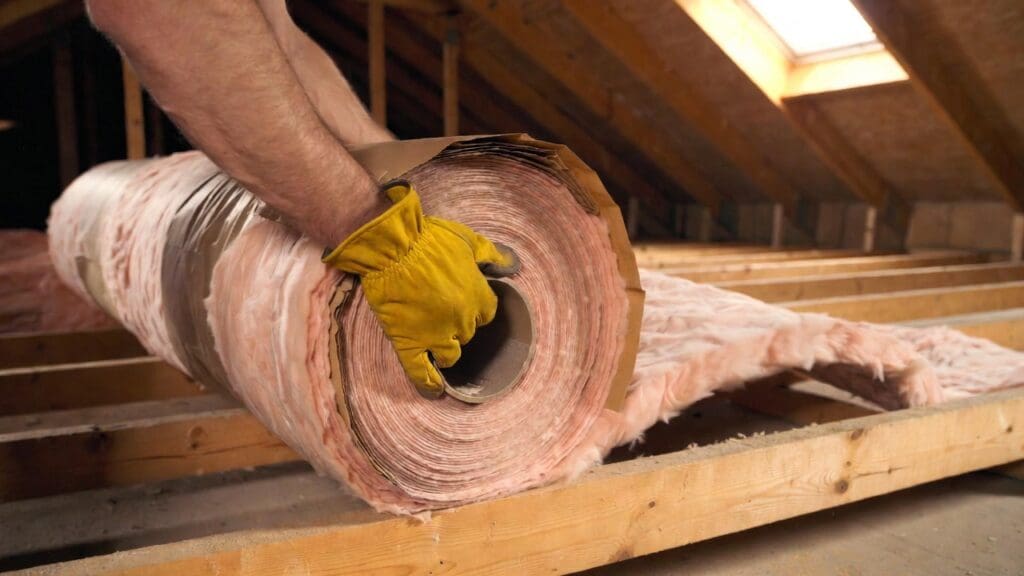
- What is Faced Insulation? It has a kraft paper, vinyl, or foil layer on one side. This layer acts as a vapor barrier (or vapor retarder) to prevent moisture from moving through the walls.
- What is Unfaced Insulation? It is plain fiberglass or mineral wool with no backing. It provides thermal resistance and fire ratings but allows moisture to pass through freely.
- The Golden Rule: The paper side of faced insulation must ALWAYS face the warm-in-winter side of the house. You should NEVER sandwich a vapor barrier between two layers of insulation.
Head-to-Head: Faced vs Unfaced Insulation Differences
While both materials use the exact same fiberglass or mineral wool core to provide thermal resistance, the presence of the paper backing completely changes how and where they are installed.
| Feature | Faced Insulation | Unfaced Insulation |
|---|---|---|
| Vapor Retarder | Yes (Kraft paper or foil) | No |
| Ease of Installation | Easier (Has stapling tabs) | Harder (Relies on friction fit) |
| Average Cost | $0.50 – $2.00 per sq. ft. | $0.50 – $1.75 per sq. ft. |
| Fire Rating | Highly Flammable (Paper) | Non-combustible options available |
| Best Location | Exterior walls & ceilings | Interior walls & layering |
How Climate Dictates Your Choice
If you read the rule above, you know the paper face must point toward the “warm-in-winter” side of the house. But what if your winters aren’t cold? Your local climate changes everything:
- Cold Climates: If you use a heater during the winter, the vapor barrier must face the interior of the home. This prevents warm indoor air from condensing against cold exterior sheathing.
- Hot, Humid Climates: If you live in a deep southern climate (like Florida), where air conditioning runs constantly to combat extreme outdoor humidity, the rule flips. The vapor barrier must face the exterior of the home to prevent humid outdoor air from condensing on your cool, air-conditioned, drywall.
Faced vs Unfaced Insulation in Attic Spaces
The attic is the most critical area of the home for heat loss. When comparing faced vs. unfaced insulation for attic applications, the choice depends entirely on whether the attic already has insulation.
If you are installing the very first layer of insulation between the floor joists of an uninsulated attic, use faced insulation. Push the insulation down so the paper side faces directly against the ceiling drywall below.
If you are adding a second layer of insulation over an existing layer to increase your R-value, you must strictly use unfaced attic insulation. Placing a new layer of faced insulation over an old layer creates a “double vapor barrier,” which traps rising condensation and inevitably causes severe mold.
Cut Insulation Cleanly and Safely
Fiberglass insulation is notoriously difficult to cut with a standard utility knife. A specialized, serrated insulation knife prevents tearing and ensures a perfect, snug fit between joists.
Faced vs Unfaced Insulation for Crawl Space
Crawl spaces are naturally damp environments. When deciding between faced vs unfaced insulation in crawl space subfloors, faced insulation is generally the standard choice.
When insulating the ceiling of a crawl space (the floor of the room above), the paper side must be pushed up so it touches the wooden subfloor of the heated living space. The raw fiberglass side should face down toward the dirt. Because you cannot staple the paper flaps when pushing it upward, you must secure the insulation from falling out by using specialized metal wire supports (often called “lightning rods”) wedged between the joists.
Faced vs Unfaced Insulation Garage
Garages present unique challenges because they are often unconditioned spaces. When tackling faced vs unfaced insulation garage projects, follow these rules:
- Shared Walls: If you are insulating a wall shared between an attached garage and the main house, use faced insulation. The paper side must face the drywall of the heated interior of the house.
- Exterior Garage Walls (Heated): If your garage is fully climate-controlled and heated, use faced insulation with the paper facing the interior of the garage.
- Exterior Garage Walls (Unheated): If the garage is used solely for cold storage, building codes in many regions recommend using unfaced insulation to allow the wall cavity to breathe, as there is no significant temperature difference to cause condensation.
The Essential Insulation Tool
To securely fasten the paper flanges of faced insulation to wooden wall studs, you need a highly reliable, heavy-duty staple gun that won’t jam during the job.
🔨 Master Your Home DIY Projects
Join our community and get the best home improvement guides, step-by-step DIY tutorials, and landscaping tips sent straight to your inbox.
100% Free. No spam. Unsubscribe anytime.